Full Article
about Alcaine
Hide article Read full article
A village above the mist
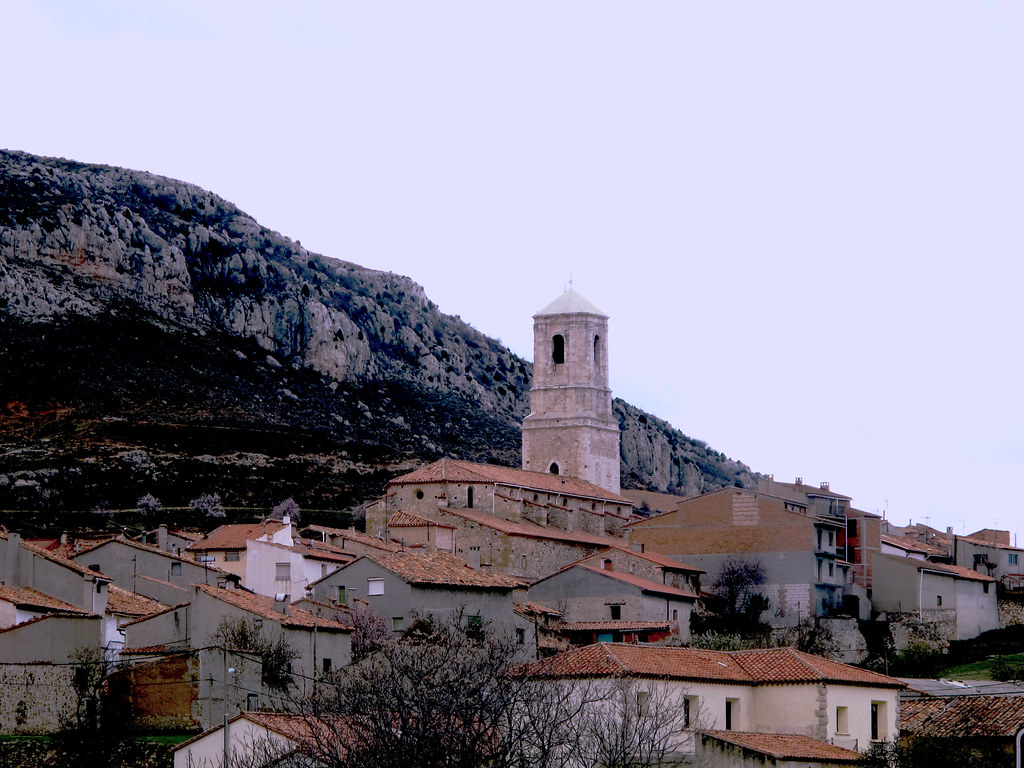
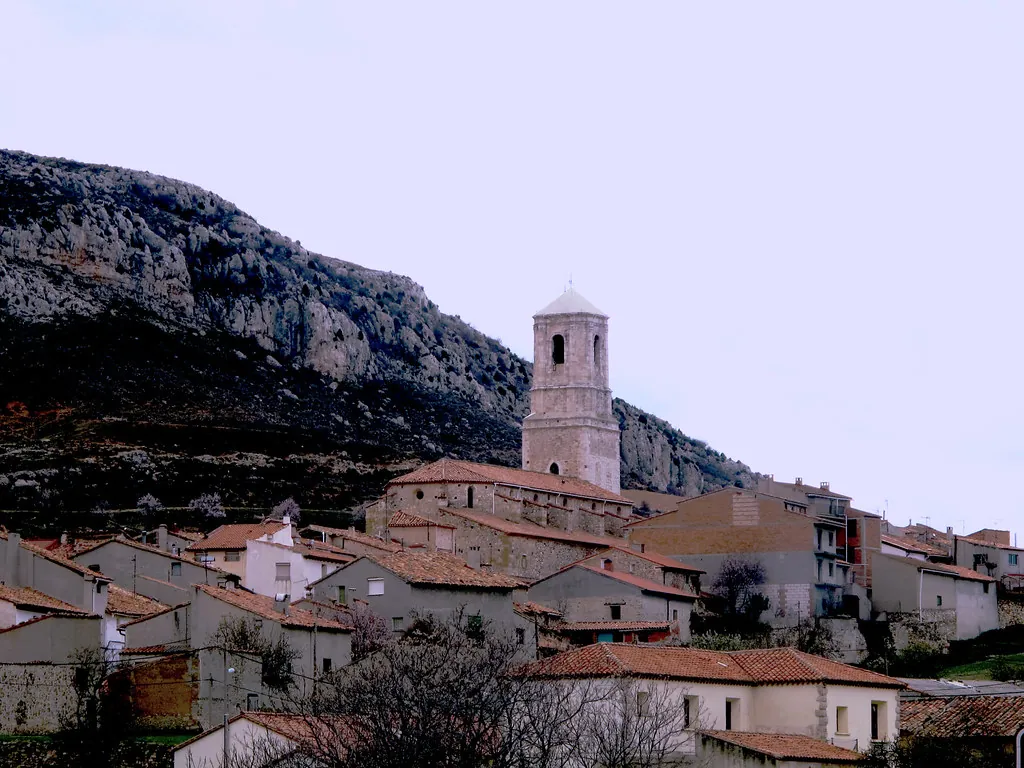
At eight in the morning, before the sun reaches the Martín valley, mist clings to the roofs of Alcaine like damp cotton. From the road that drops towards the valley, the village seems to float on a white sea. Only the towers rise above it, several still standing, each with its uneven outline against a pale sky. In that brief hour, before the first cars appear near the reservoir, Alcaine looks much as it always has: a settlement perched like a fortress above the river.
Stones that still speak
Entering along the only street wide enough for a car feels like slipping into a crack in the limestone. Buildings lean in close, almost touching. Some rise four or five storeys where you might expect just two. Flat ground is scarce here, so houses have grown upwards, adapting to the rock beneath them.
In the main square, the town hall rests on two old stone arches that have seen centuries pass, season after season. Beneath them, in the lonja, there are still Saturdays when the smell of bread drifts out as the communal oven is lit.
The village ice house, known as the nevera, lies along a street that takes its name from it. It is carved directly into the rock. Today people step inside more out of curiosity than need, yet the cool air remains. Even in August, the temperature drops suddenly and can make you pull your jacket closed if you arrive warm from the uphill walk. Marks on the walls recall the work of those who cut into the stone to store snow and preserve food when there was no other option.
When quiet gives way
For much of the year, Alcaine is defined by silence. Footsteps, perhaps a passing car, the faint echo of the river deep in the ravine.
That calm shifts during the autumn festivities dedicated to the Virgen del Rosario. Many who once left return for these days, and the village fills with voices that recognise one another even after years apart. In the square, a shared meal is often prepared over wood gathered from the river. Smoke rises slowly between the façades, and the scent of tomato and rosemary lingers on clothes long after.
Early February brings another moment of activity with San Blas. It is traditional to bless bread and nuts in the church. Neighbours lay out walnuts or almonds on blankets spread across the ground and, once blessed, each person takes their share home. Some still keep a few aside for when the first winter cold arrives.
Flavours that linger
On Saturday mornings, the smell of sweet dough often drifts from one of the village bakeries. Arrive early and you might find muñuelos, a simple treat made with honey, often rosemary honey, and dough that has been left to rest overnight.
In winter, people still speak of the matacía, the traditional pig slaughter that once formed part of rural life across much of Spain. Not every household continues the practice, but some families still prepare morcilla, chorizo or salchichón in the same way as before. For a few days, the air in the village changes. It smells of paprika, crushed garlic and meat slowly curing. It is a scent that does not last long, yet those who know it recognise it instantly.
Walking out into the landscape
Behind the cemetery begins the path that climbs towards the Cañada de Marco. It is not especially long, though it keeps a steady incline. The route winds through Aleppo pines, gorse and the occasional prickly pear that withstands the valley sun. As you gain height, the Martín river appears below, narrow and bright between limestone walls.
Another path leads to the rock art of the Cueva Foradada. It is short, though the ground requires some care. The reddish figures on the rock have been there for thousands of years. There are few explanations on site and little in the way of infrastructure, which seems fitting. You arrive on foot, in quiet, and the paintings appear suddenly when you look up.
From the viewpoint of San Ramón, the reservoir fills the lower stretch of the landscape. Its edges form irregular inlets where birds can sometimes be seen resting on the الصخور. At sunset, when the light falls towards Sierra Palomera, the water takes on a copper tone and the village towers stand sharply against the sky.
Getting there and choosing the moment
Alcaine is reached by a local road that descends into the valley from the main network in the area. The final kilometres are winding, and in winter there may be ice early in the day.
If arriving by car, it makes sense to leave it at the entrance and continue on foot. Within the old centre, streets are narrow and often end in slopes or steps.
Spring is usually the most pleasant time to walk in the surrounding countryside. The hills are greener and the river carries more water. In August, the atmosphere shifts as many families return and the village becomes livelier. In January, when snow falls, Alcaine settles back into near silence, like a watchful tower above the valley.