Full Article
about Castel de Cabra
Hide article Read full article
A village that never rushed
There are places where time seems to have followed its own pace, even as everything around them has shifted. Tourism in Castel de Cabra fits that idea quite closely. This small village in the Cuencas Mineras of Teruel sits at just over a thousand metres above sea level, and it still carries the imprint of decades shaped by mining.
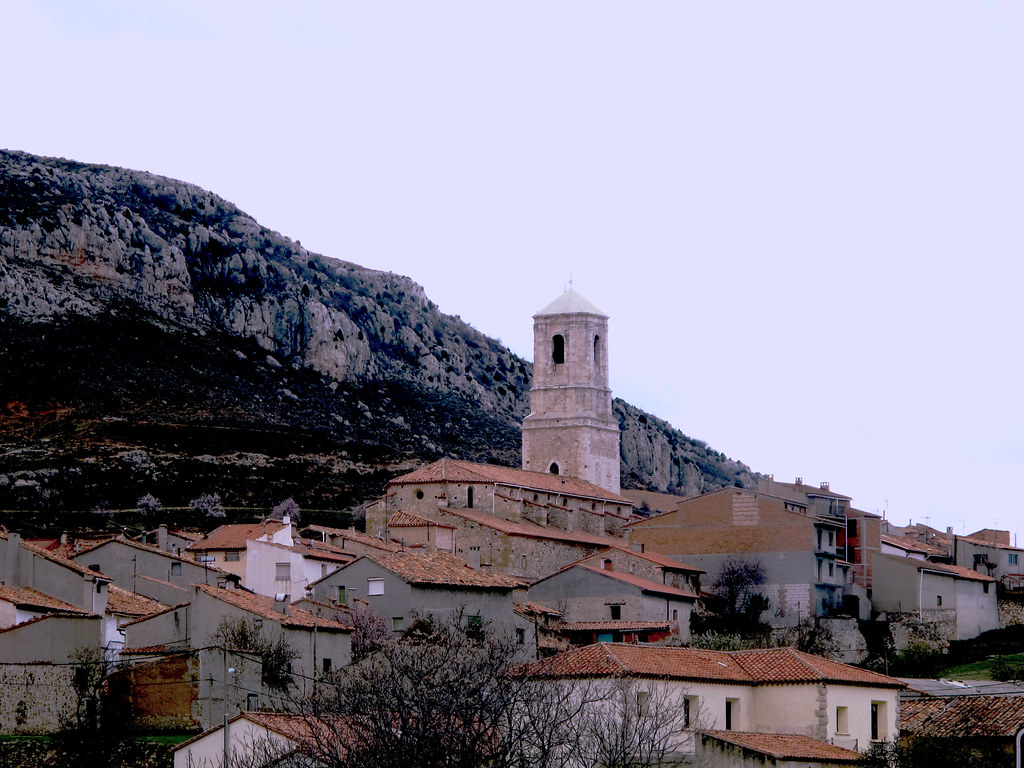
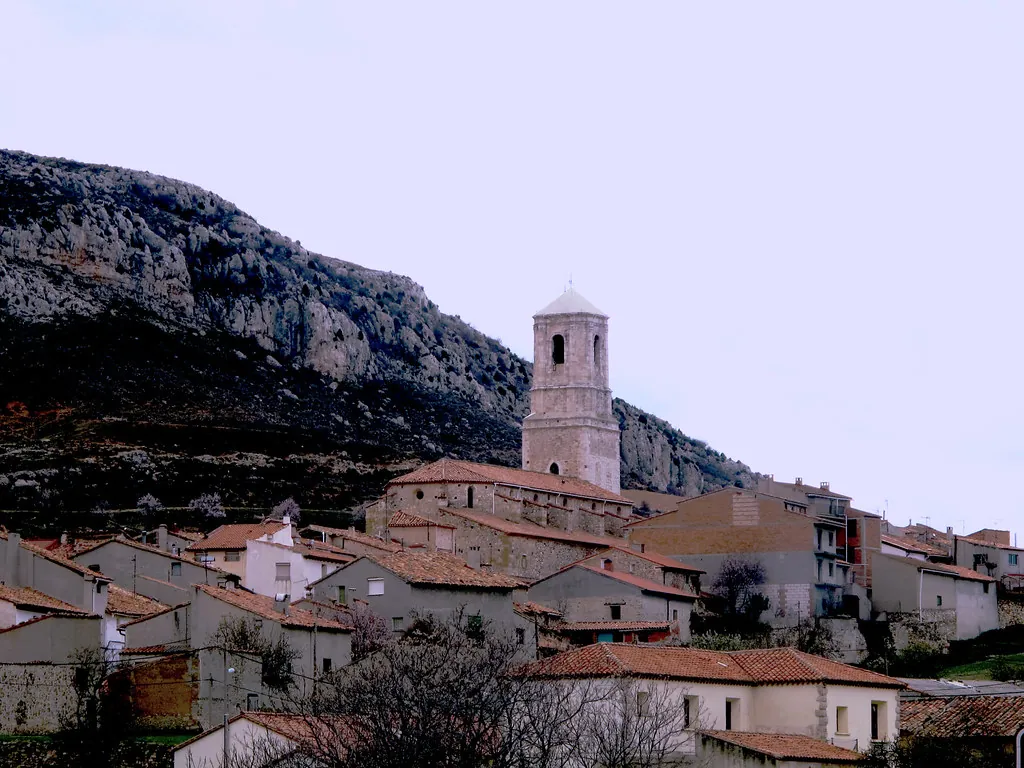
Fewer than a hundred people live here, around 80 in total. The village has kept the look of a place that never had to adjust to waves of visitors. Narrow streets, stone houses and a quietness where even a passing car draws attention all define the atmosphere.
It is not a destination that tries to impress at first glance. Instead, it unfolds slowly, in the details and in the sense that daily life continues much as it always has.
Streets shaped by a mining past
Castel de Cabra is small enough to cross without thinking about it. The layout rises and falls unevenly, with masonry and stone houses that show their age without disguise.
The parish church, dedicated to San Pedro Apóstol, stands out as one of the main points of interest when walking through the village. It is not grand or heavily decorated. Its appeal comes from something simpler, the sense of a building that has served the community for generations without needing to change.
Around the square and along streets such as Calle Mayor or calle La Mina, the organisation of the village becomes clear. Everything sits close together. Distances are short, and moving around is always done on foot.
There is a practical logic to the layout, shaped by everyday needs rather than aesthetics. That gives the place a coherence that is easy to recognise once you start wandering through it.
Landscapes marked by extraction
Step just beyond the built area and the defining feature of this part of Teruel comes into view: its mining past.
The surroundings still show traces of decades of work. Old mine entrances, now sealed, appear here and there. Altered slopes and flat areas that once supported mining activity remain visible. It is not a postcard landscape, but it becomes interesting if the aim is to understand how a territory has been used and transformed.
Over time, vegetation has started to reclaim much of this ground. Shrubland, young pine trees and low mountain growth now cover areas that were once industrial. The result is a layered landscape where different periods are easy to read. What used to be extraction is slowly turning back into countryside.
This contrast defines the character of the area. It is neither fully natural nor fully industrial, but something in between, shaped by both.
Walking through quiet terrain
For those who feel like walking, several rural tracks and simple paths begin around the village and link to other points in the comarca, a local administrative region.
These are not high mountain routes or demanding climbs. The paths are better suited to unhurried walks through gentle hills, ravines and open stretches of land. Some sections can be uneven, with loose stones underfoot, so proper footwear makes a difference.
On clear days, it is common to spot birds of prey using the air currents. Buzzards and booted eagles often glide above the landscape, barely moving their wings as they follow the contours of the terrain.
The experience is not about reaching a summit or ticking off a route. It is more about moving through a space that feels open and largely undisturbed, where the traces of human activity sit alongside the gradual return of vegetation.
Solid food from inland Aragón
In this part of Aragón, cooking has traditionally been about substance rather than decoration. The dishes reflect long winters and physically demanding work.
Migas aragonesas, made from fried breadcrumbs, remain common, as do sopas de ajo, a garlic soup, and lamb stews. There are also cured sausages prepared in a traditional way, as in many villages across the province.
Nothing here aims to be elaborate. The appeal lies in how satisfying these meals are, especially after a walk or a morning spent outdoors.
Food in Castel de Cabra follows the same rhythm as the rest of the village. It is tied to habit, to season, and to the kind of nourishment that made sense when mining defined daily life.
Festivities at their own pace
The annual calendar in Castel de Cabra centres mainly on summer, when relatives and former residents return. The patron saint festivities are traditionally held in August, bringing together religious events, shared meals and the familiar atmosphere of reunion found in small villages.
At Christmas, celebrations are more subdued. There are services in the church, decorations made by the residents themselves and family gatherings. It is not a place of large-scale events or a packed schedule.
The pace remains consistent with everything else in the village. Life is marked by moments of gathering rather than constant activity.
What Castel de Cabra really offers
Castel de Cabra is not somewhere to visit in search of a perfect photograph. Its value lies elsewhere. It offers a way to understand what the Cuencas Mineras were like when coal shaped everyday life.
That story appears in the houses, in the surrounding landscape and in the remnants scattered beyond the village. Walking through its streets makes it easy to imagine a time when many more people lived here and the mines were still active.
It is not a spectacular place in the usual sense. Yet it provides something quieter and more reflective. It helps make sense of the territory and its past, and sometimes that carries more weight than any viewpoint.