Full Article
about Escucha
Hide article Read full article
A place that needs context
Some places make sense within minutes. Others take a bit longer. Escucha, in the Cuencas Mineras of Teruel, belongs firmly to the second group.
Arriving here without any background can feel slightly disorienting. It is not the kind of village that matches postcard expectations. The key is knowing what shaped it. For decades, this was mining country, and everything else followed from that.
Escucha works much like those towns built around a single industry. When that industry dominates, the whole place ends up orbiting it.
A town shaped by coal
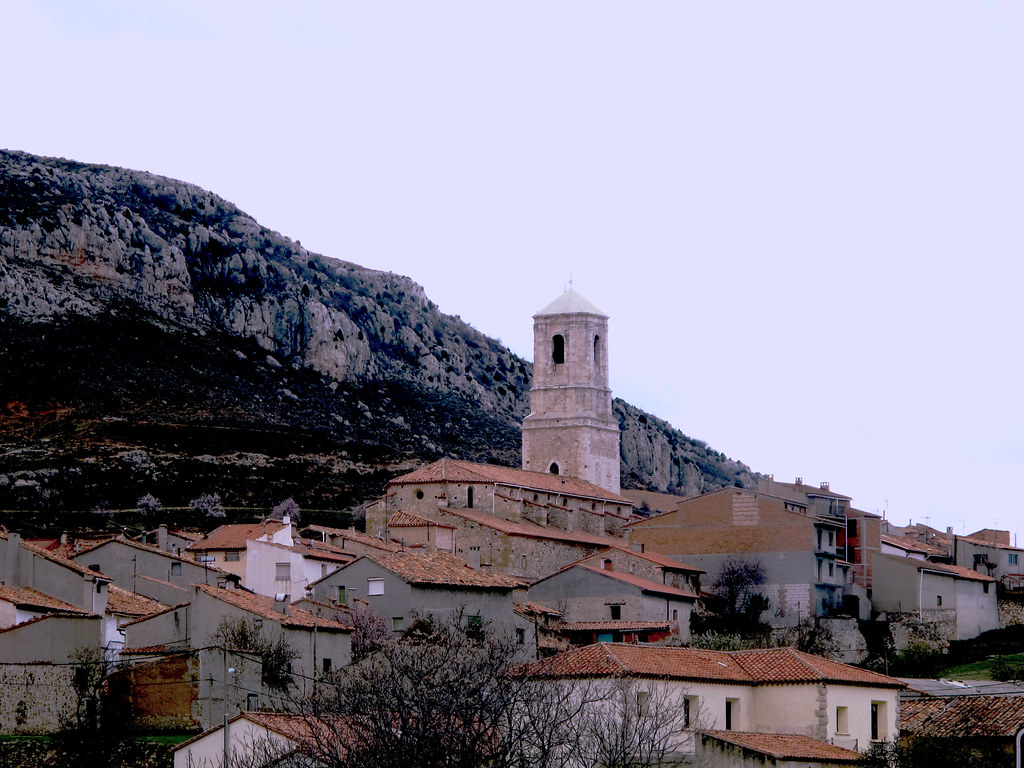
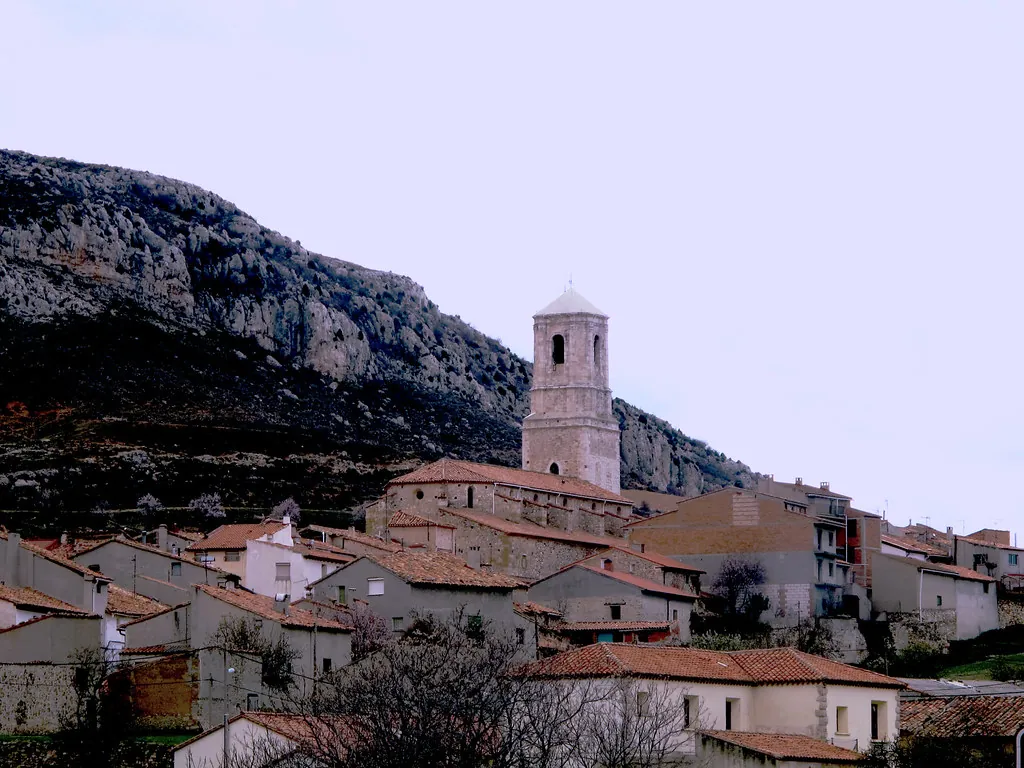
The road into Escucha winds through the Sierra de San Just, giving the impression of heading towards somewhere small, which it is. Then the town appears, pressed against the hillside.
What stands out first is the quiet. It is not the calm of a tourist village in the low season. It feels more recent, more industrial in tone. For years, daily life here was set by the rhythm of mining shifts.
A walk along Calle Mayor brings you past the town hall, which has older origins but has been altered over time, and the church of Santo Domingo de Silos, rebuilt in the 18th century. Close by sits the Museo Minero, and its presence is no coincidence. It tells the story of Escucha in a direct way.
Lignite mining began to gain importance in the 19th century and went on to shape almost everything: the local economy, the surrounding landscape and even the population, as workers arrived from other areas to labour underground. For decades, coal explained nearly everything about life here.
One hundred metres underground
The experience that defines a visit to Escucha takes place at the Museo Minero. It offers the chance to descend into a real former mine, something not especially common in Spain and a very direct way of understanding the work.
Visitors are given a helmet and a high-visibility vest before entering a lift that drops around one hundred metres. The descent leaves an impression.
At the bottom, the environment shifts completely. The tunnels are narrow, the air is damp, and the walls still carry the marks of tools. The guides often have personal connections to mining in the town. Many grew up hearing about it at home, and that comes through when they describe the shifts, the noise of the wagons or what it meant to spend hours down there.
At one point, the lights are switched off. The darkness is absolute. There is no gradual adjustment, no faint outline of shapes. Nothing.
It becomes easier to imagine what eight hours in those conditions might have felt like.
Walking through the mining landscape
The Sierra de San Just offers several walking routes that help make sense of the mining past written into the terrain.
One of the best-known paths links the museum with former extraction sites such as Pozo Pilar. Here, the impact of open-cast mining is clearly visible in the form of large cuts into the mountainside, a reminder of how much the area was altered.
There are also gentler walks near the course of the Escucha river. These are shorter, manageable routes that pass through patches of vegetation and traces of earlier history. Among them is a small Iberian settlement in the area. It is not monumental, but it is enough to show that people lived here long before coal defined the place.
For those interested in longer walks, some routes connect with other mining towns in the region, including Utrillas, following old paths once linked to mining activity.
Food that keeps things simple
After time spent walking or underground, sitting down to eat feels like the natural next step. The cooking in this area is straightforward and filling.
Ternasco de Aragón, a type of young lamb typical of the region, appears frequently, often served with potatoes cooked in a simple style. Migas are also common, prepared here with grapes and local cured meats.
During mushroom season, dishes featuring produce from the nearby pine forests are easy to find. For something sweet, rosemary honey from the Sierra de San Just often turns up at breakfast or in desserts.
Nothing elaborate, but satisfying in a way that suits the setting.
Moments when the town gathers
Escucha does not depend on mass tourism, so the atmosphere does not shift dramatically across the year. Still, there are certain times when the town becomes more active.
In autumn, there are usually events linked to the mining tradition, when former workers and families connected to the mines return. Spring brings the romería to the hermitage of San Just, a day centred on outdoor meals and meeting up with others from the area.
Summer is marked by the patron saint festivities, with the typical mix of gatherings in the square, music and community activities.
Understanding Escucha
Escucha is not a place that impresses at first glance. It does not have the kind of historic centre that fills calendars.
Yet something changes once the pieces come together. Going down into the mine, walking through the Sierra de San Just and seeing how the landscape was shaped over time gives the town a different weight.
It starts to make sense as a whole.