Full Article
about Huesa del Común
Hide article Read full article
A detour into the Cuencas Mineras
Some places appear everywhere, while others turn up almost by chance, the sort you reach after taking a side road just to see where it leads. Huesa del Común sits firmly in that second group. Set in the Cuencas Mineras of Teruel, it makes more sense once you stop the car, look around and realise the pace runs differently here.
The village lies at about 869 metres above sea level and today has around fifty residents. There are no headline sights and no square designed for photos. What defines it is something quieter: stone buildings, dry ravines, open silence and the stark landscape typical of inland Teruel. The presence of former mining activity nearby has also shaped the area. Traces of that past still linger in the surroundings, a reminder of how much it influenced life across the region.
Streets that reflect everyday life
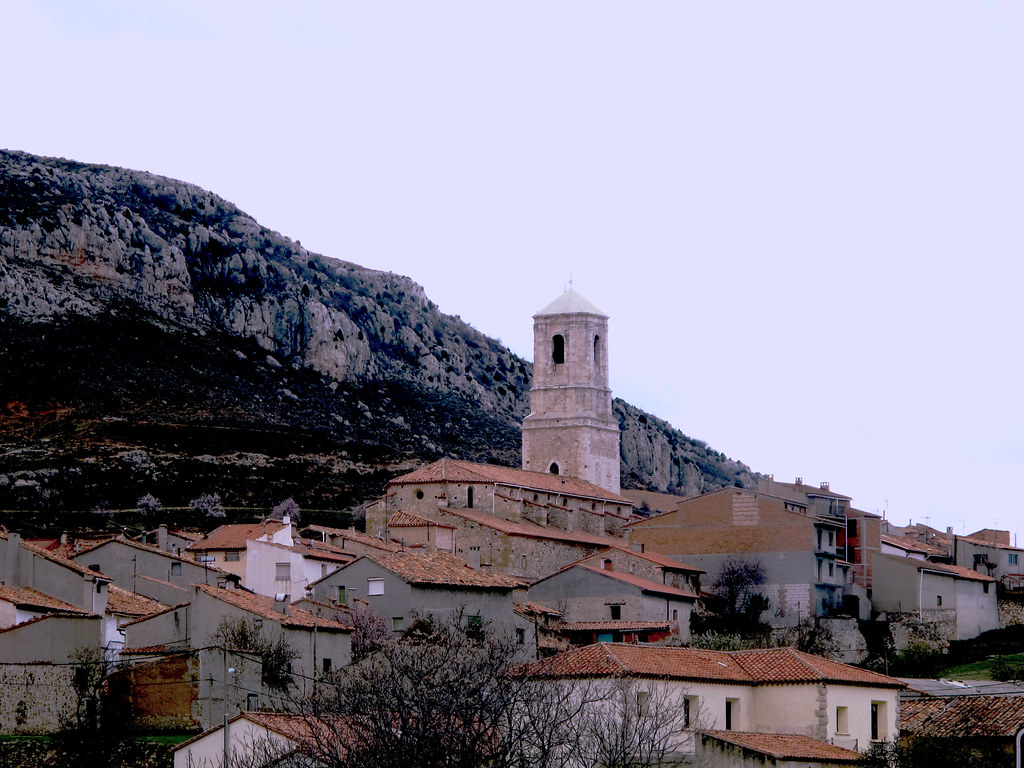
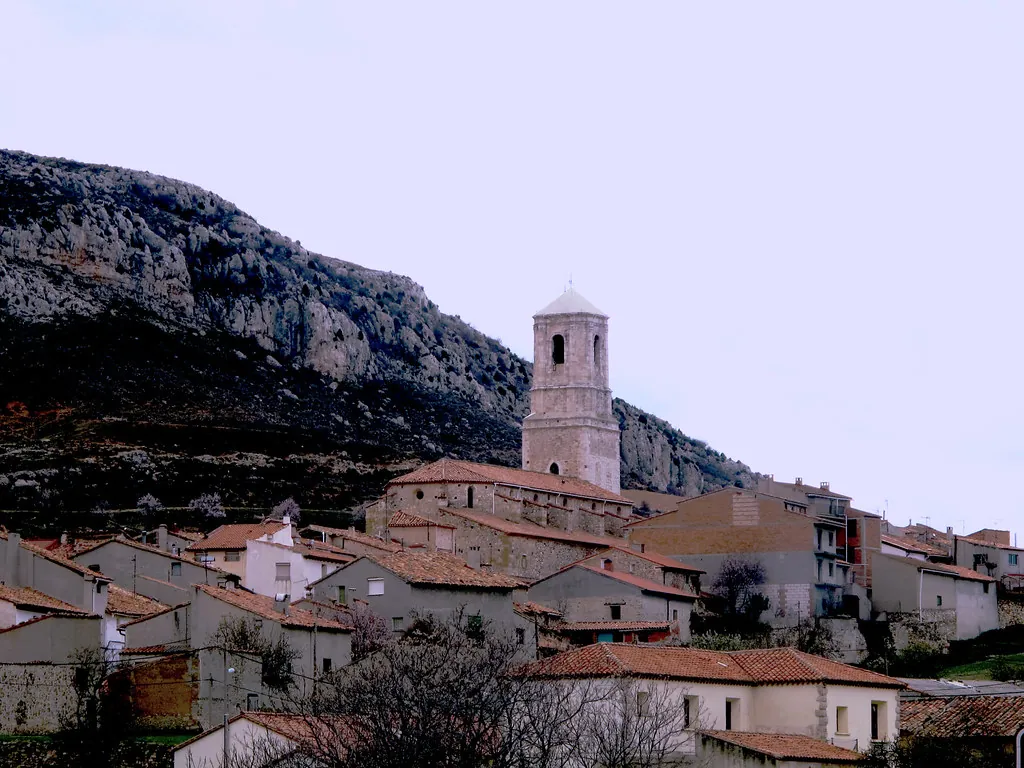
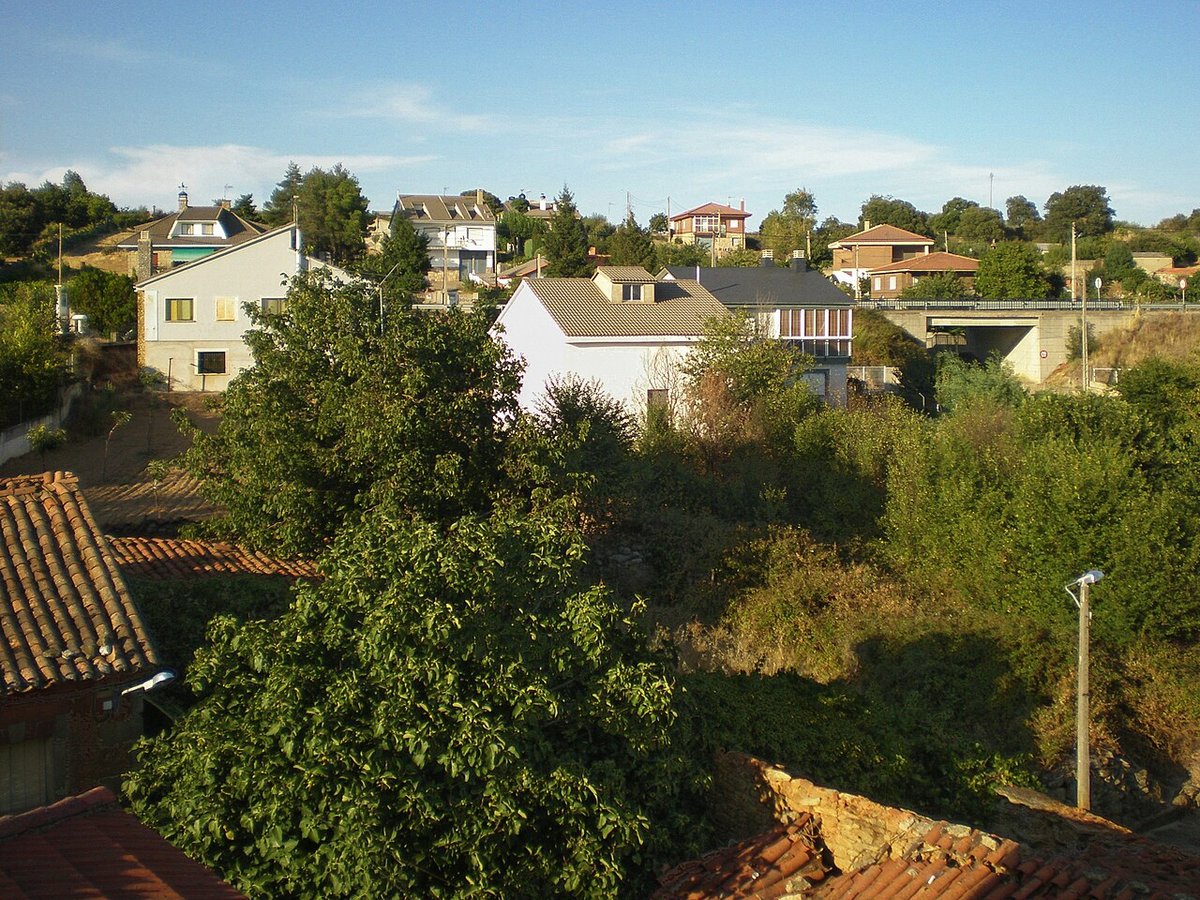
The built heritage in Huesa del Común is modest, which is part of its appeal. There is a simple parish church, a bell tower rising above the cluster of houses, and several masonry homes that seem to have stood in place for generations.
Walking through the streets, where patches of asphalt still give way to bare earth, small details begin to stand out more than any signboard could. Arched doorways, wooden balconies and animal enclosures attached to houses speak of how people once lived and worked here. Some homes are well maintained, while others clearly show the wear of time. The overall impression is of a place that has slowed down, leaving space to imagine when there was more movement and daily activity in the village.
Ravines and the landscape of Teruel
What really defines Huesa del Común is not the village itself but the terrain around it. The ravines, with their reddish and orange tones, are characteristic of this part of Teruel. Their appearance shifts throughout the day. In the late afternoon, when the sun sits lower, the colours deepen noticeably.
Vegetation follows the rhythm of a dry environment. Thyme and rosemary grow among scattered holm oaks, shaping a landscape that feels sparse but alive. A short walk outside the village can bring sudden movement, a partridge taking flight, or the distant sound of goats. It is not dramatic in the conventional sense, yet there is a rough, grounded quality that draws attention in a quieter way.
Paths that follow old routes
Marked walking routes are limited. Instead, the area relies on traditional paths: tracks leading out of the village, trails passing near old animal pens, and routes descending into shallow valleys where a spring may appear from time to time.
These are gentle walks rather than long excursions. It does not take long to leave behind any sense of noise and find yourself almost alone with the land. On clear days, birds of prey can often be seen circling above the hills, moving slowly on rising air.
Food and spending time here
Huesa del Común has very little in the way of visitor infrastructure. It suits a simple plan: a walk through the village, time spent in the surrounding countryside, and an unhurried pace.
For those staying a few hours, it is usually practical to bring something with you or eat in another village in the area before or after arriving. Traditional cooking in this part of Aragón centres on lamb, hearty stews and game when the season allows.
Night skies and silence
Night brings a noticeable shift. Once the sun sets and the village settles into quiet, the sky fills with stars in a way that has become rare in urban settings.
If the weather is clear, stepping just beyond the built-up area is enough. Looking up for a while becomes the focus. It is a simple experience, yet often the one that stays longest in memory.
Getting there
Huesa del Común lies about 50 kilometres from the city of Teruel. The usual approach is towards the area of Montalbán, then continuing along secondary roads that cross the Cuencas Mineras.
The final stretches require steady driving. There are bends, narrower sections and wide views of the surrounding landscape. That, too, forms part of the journey. In this region, the more interesting moments often begin once the main roads are left behind.