Full Article
about Martín del Río
Hide article Read full article
Shade on Calle Mayor
The narrow streets in Martín del Río hold on to the morning shade, pressed against stone and adobe walls. Sunlight takes its time reaching parts of Calle Mayor. When it finally arrives, it lands softly on reddish roof tiles, with that muted tone typical of inland Aragón. Sound barely travels. A dry leaf scrapes along the ground, a door opens somewhere, birds settle on overhead wires.
This village has just over three hundred residents. It sits within the Cuencas Mineras region of Teruel, at around 900 metres above sea level. Low hills stretch around it, covered in scrub and patches of farmland. The terrain feels dry and rough, with browns and ochres dominating much of the year. When the wind picks up, it threads through the streets and carries the metallic rattle of a loose shutter.
Stone and Slope
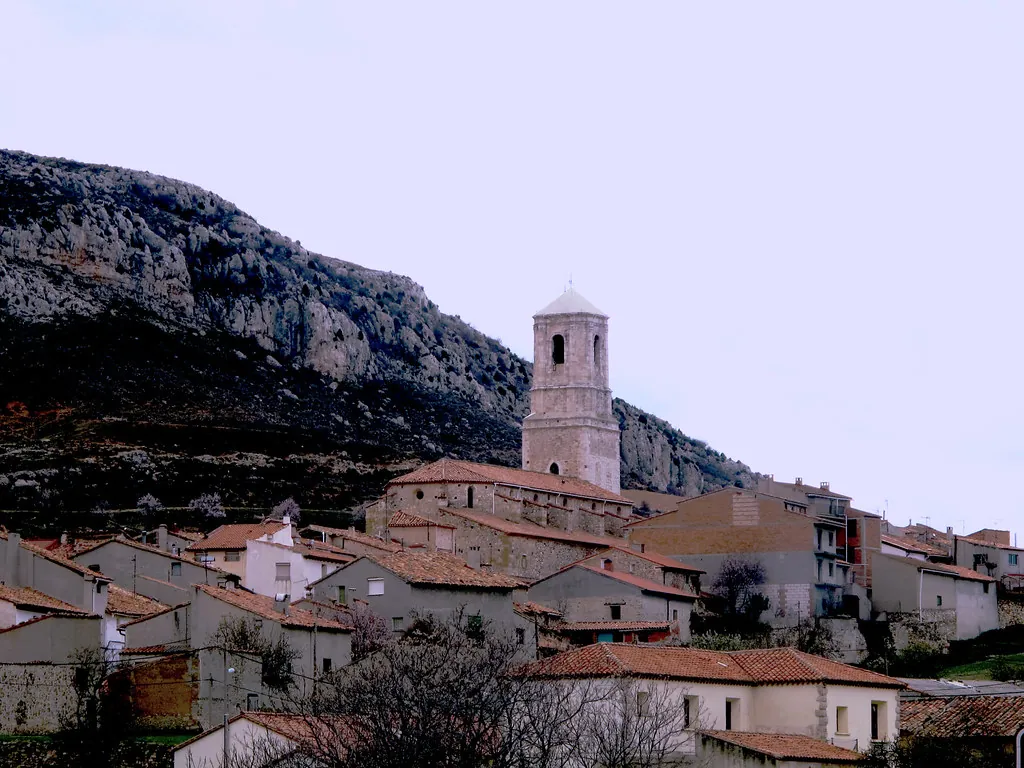
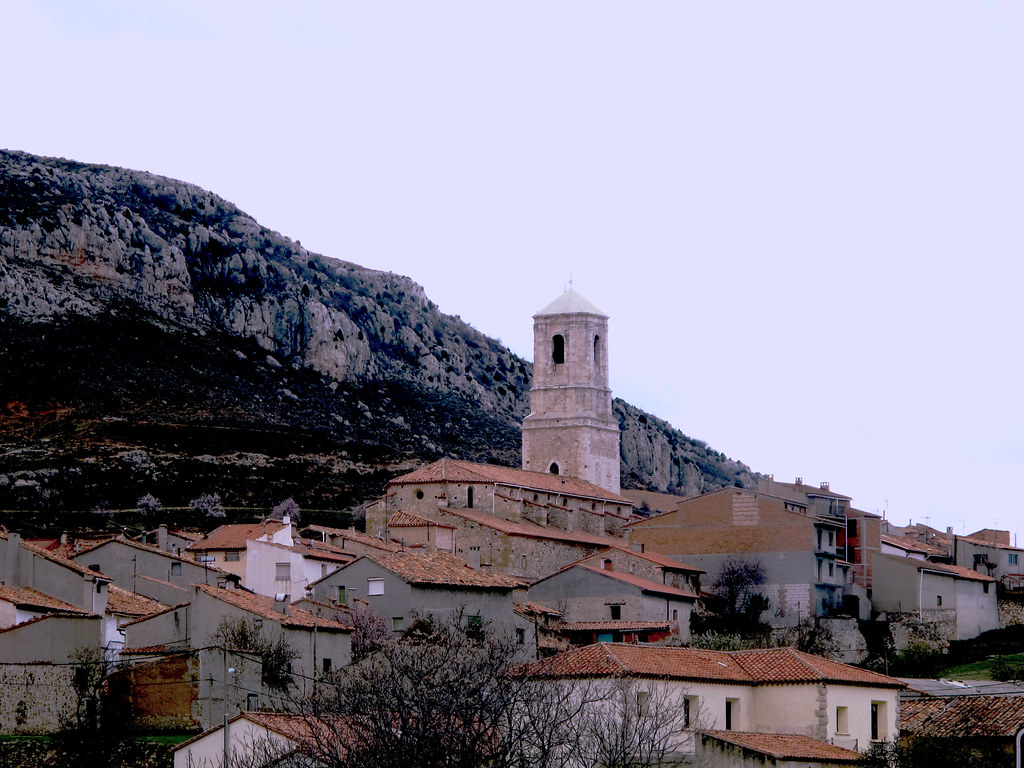
The parish church stands at the highest point. It is a simple building of local stone, altered at different moments over time. Its bell tower, lighter in structure, carries sound well across the valley. When bells ring in nearby villages, you can often hear them here too.
Houses cluster around the church, following the natural slope. There is no strict grid. Streets climb, narrow, and turn without warning. Many homes still show wooden balconies and exposed beams. Others reveal more recent changes, sometimes done quickly. That mix is common here, where buildings evolve according to the needs of each household.
In the main square, stone benches sit alongside an old water point. On quiet days, neighbours pause there for brief conversations before continuing on their way.
Paths leading out of the village connect to small vegetable plots and former threshing areas. Spring brings a quick flush of green after rain. By mid-summer, the colours retreat to the usual dry palette. Slopes are constant, so wear sturdy footwear if you plan to walk.
The Shape of Work
The area rewards unhurried exploration, even if signposting is limited. Many routes are old agricultural or mining paths used for generations.
From nearby high points, the mining footprint becomes clearer. You see wide flattened areas, steep embankments and sealed entrances to former galleries. These scattered remains are not always easy to interpret. They show how the landscape was reshaped during the last century.
Standing still on the edge of the village, the quiet feels clean. Branches brush against the ground, a tractor hums somewhere in the distance, small birds of prey pass low over the fields.
Daily life here connects closely to traditional cooking. Meals tend to be filling and practical: slow-cooked stews, lamb, migas made from stale bread, cured meats prepared during the colder months. These dishes come from the need to sustain long working days.
The agricultural calendar guides routines. Nearby fields hold cereal crops alongside small family gardens. In summer, tomatoes, peppers and beans appear. Autumn brings the season of home slaughter and the preparation of embutidos, a practice that remains part of life in many households.
The Return
During summer, Martín del Río shifts pace for a few days with the festivities dedicated to San Bartolomé. Many people who live elsewhere return at this time. Streets that remain quiet for much of the year fill again with conversation and music at night.
Food plays a central role then. Families prepare homemade sweets and traditional dishes passed down through generations. Hornazos appear on many tables; these are breads enriched with egg or sugar depending on the family recipe.
Easter is observed in a more understated way. Processions move through the streets without elaborate staging. Participation is open to anyone who wishes to join.
Getting There
Martín del Río lies in the Cuencas Mineras region, in the north-east of Teruel province. You reach it by road from nearby villages or from the main route linking Teruel and Zaragoza, followed by smaller secondary roads.
Winter conditions can affect the journey. The altitude makes itself felt when cold spells or snowfall arrive. Smaller roads may become difficult early in the day. If you come between December and February, check forecasts before setting out and expect temperatures that drop sharply after sunset.