Full Article
about Muniesa
Hide article Read full article
A place that reveals itself slowly
There are villages you pass through by car and assume nothing much happens there. Then you stop, walk around for a while, and realise things do happen, just at a different rhythm. Tourism in Muniesa follows that pattern. It does not try to catch your eye from a distance, yet after a little time the place begins to show what it is: a working village where daily life carries on, not a stage set.
Muniesa has just over five hundred residents and sits in the Cuencas Mineras district of Teruel, a few kilometres from the provincial capital. On arrival, the atmosphere stands out straight away. It feels calm without trying to prove anything. Cars are parked in their usual spots, people cross the square, conversations drift out from doorways.
Walking through the centre
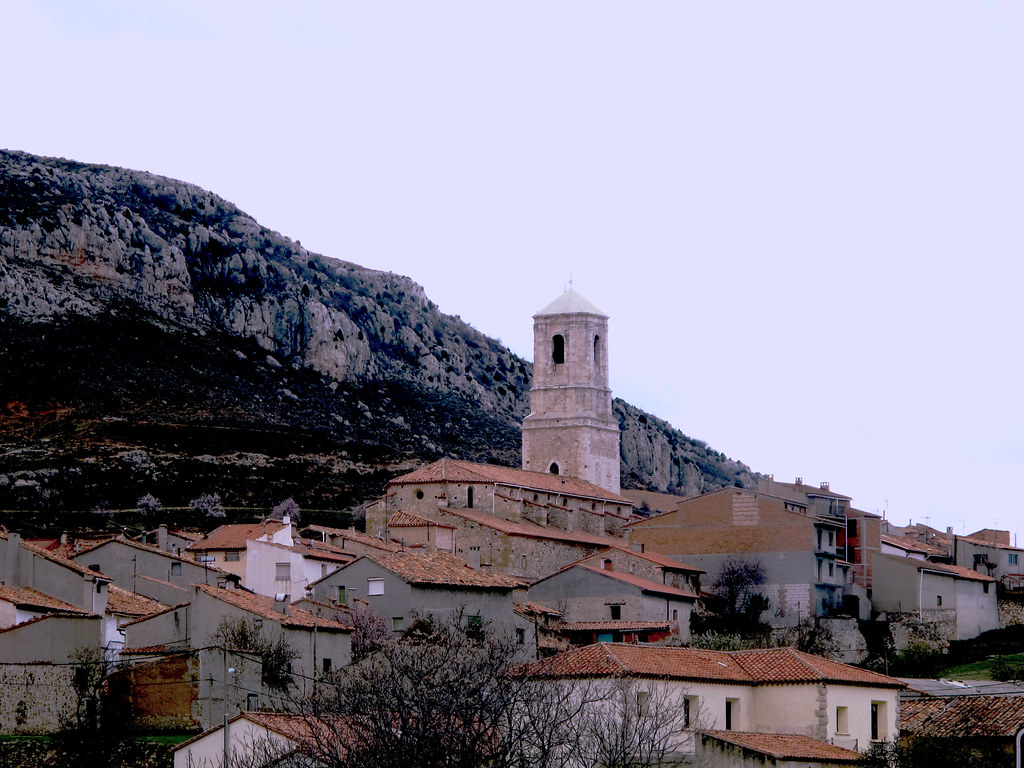
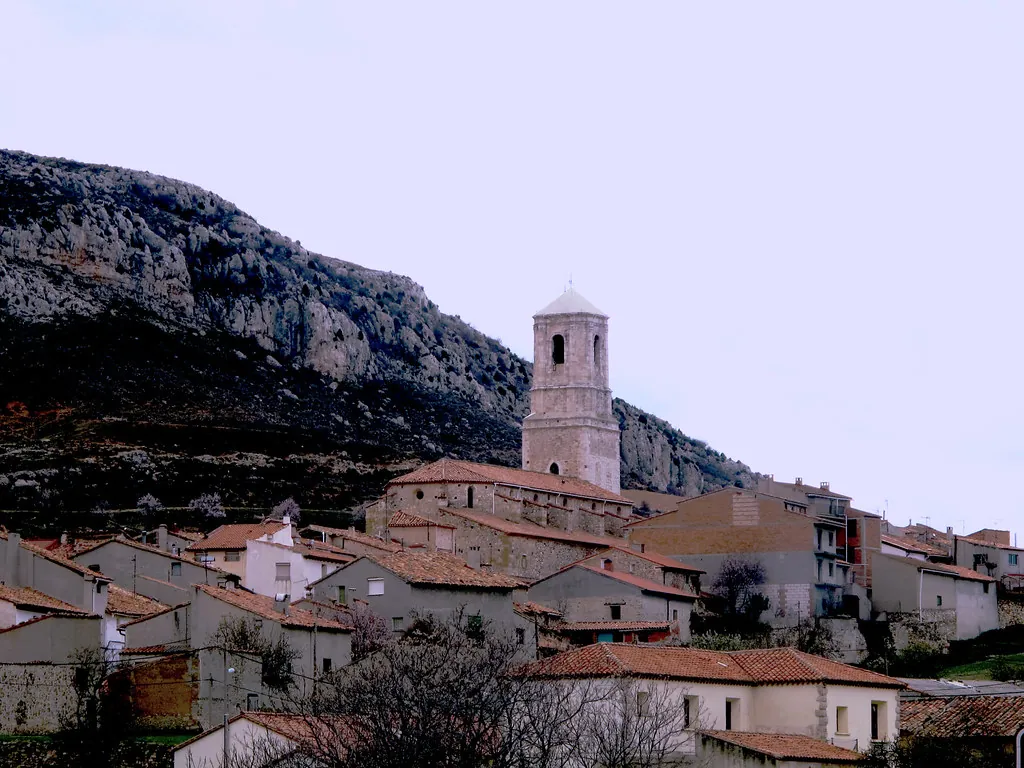
The urban centre is compact and easy to cover on foot. Narrow streets, some with gentle slopes, wind around the main square where the parish church of San Pedro Mártir stands. Its tower is visible from the road as you approach, a clear marker that you have reached the village.
The church is usually dated to the 16th century, though inside it brings together elements from different periods. There are Baroque altarpieces, an old baptismal font, and sections that have been altered over time. This kind of layering is common in many villages, where buildings are adapted as needs change rather than preserved in a single moment.
The houses combine stone and brick with iron balconies. There are no grand façades designed for display, more a sequence of low doorways, old grilles and walls that have endured many winters. Walking without a fixed route, which suits the place, reveals small details: a worn wooden door, a courtyard glimpsed through an arch, a vine climbing up a wall.
Fields and open horizons
Step outside the village and the setting shifts quickly to open countryside. Cereal crops dominate, mainly wheat and barley, turning the land green or gold depending on the season. There are no dramatic peaks or striking landmarks, but the landscape carries the wide, dry character typical of inland Teruel.
Gentle ravines cut through the fields, with occasional patches of carrasca oak and dirt tracks linking plots of land. These routes are used by farmers and locals moving between fields. The mining history of the wider area also lingers in the background, especially in nearby villages and in the recent past of the region.
Paths for unhurried walks
Several rural tracks start directly from Muniesa for those who want to stretch their legs. Do not expect signposts at every turn or routes marked with information panels. The usual approach here is to follow dirt paths that cross fields or dip through shallow valleys.
These are easy walks rather than demanding routes, more about observing the surroundings than tackling steep climbs. In spring and autumn they are especially appealing, often towards the end of the day when the light falls across the fields and the village appears in the distance with its tower rising above the rooftops.
It is the kind of place where a short walk gradually becomes a longer one, simply because the path keeps going.
Food shaped by the land
Cooking in this area follows a straightforward logic tied to the surroundings. Dishes are filling and direct, based on stews, seasonal vegetables and meats such as pork or lamb. When colder weather arrives, pots and slow cooking return to the centre of the table.
The matanza del cerdo, the traditional pig slaughter, has long been an important moment in the rural calendar across many villages in Teruel. In places like Muniesa it is still remembered as a shared day that brought together families and neighbours, combining work with social life.
Local festivals and rhythm of the year
The village becomes livelier in summer, when the patron saint festivals take place and many people who live elsewhere return. There are processions, music, activities in the square, and a noticeable increase in street life that continues late into the evening.
For the rest of the year, the calendar is quieter. Religious celebrations such as Semana Santa, or Holy Week, take place alongside smaller events linked to local traditions. These are not organised with visitors in mind. They belong to the village, and that shapes the atmosphere.
Getting there and choosing the moment
Muniesa is most easily reached by car from Teruel, along regional roads that cross open countryside and pass through small settlements. The journey itself encourages a slower pace.
Summer brings strong heat in the middle of the day, which is typical for this part of Aragón. Spring and autumn tend to be more comfortable for walking. Winter changes the scene noticeably, with cold mornings, frost on the fields and a quiet that feels even more pronounced.
Muniesa is not a destination for ticking off a long list of sights or seeking major monuments. It suits a few hours of slow walking, looking around, and understanding how life still works in parts of inland Teruel. At times, that is enough.