Full Article
about Torre de las Arcas
Hide article Read full article
A village shaped by quiet and light
Early in the day, when the sun still comes in low from the east, Torre de las Arcas appears as a small cluster of low houses set against dry, yellowish land. The air carries different scents depending on the season. In summer it tends to be hay and warm dust, while in winter it shifts to chimney smoke and a damp cold that clings to the walls.
This small municipality in the Cuencas Mineras, now home to fewer than twenty residents, sits in open country between high plains and the first gentle rises of the Sistema Ibérico. There is a sense of space in every direction.
Life here moves slowly. There is no passing traffic and no shops setting the pace of the day. Walking along the main street, the usual sounds are the wind rattling a loose sheet of metal, a distant dog barking or the echo of footsteps against stone walls.
Stone houses and San Vicente Mártir
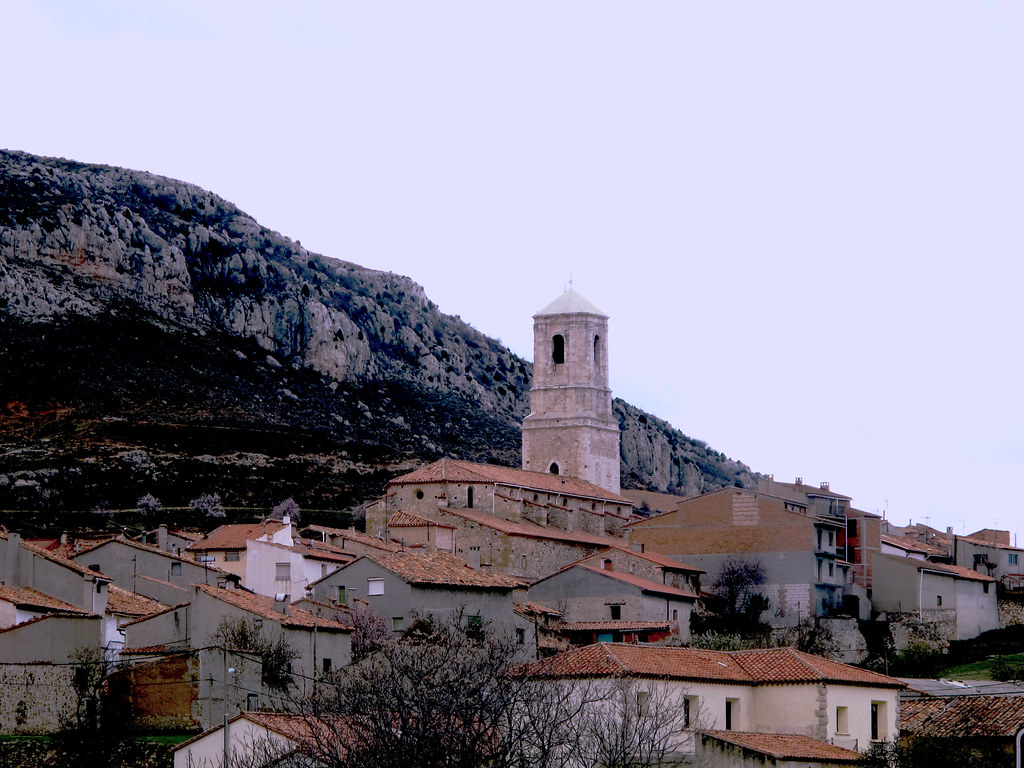
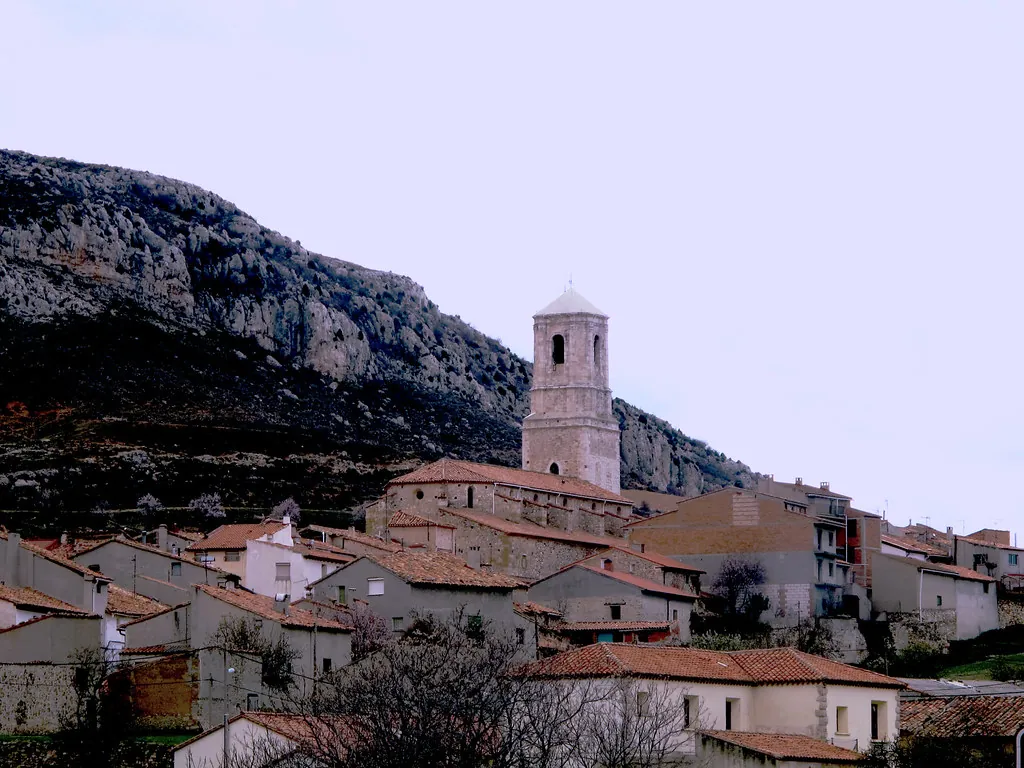
The village itself is compact and can be crossed in a matter of minutes. Stone and adobe houses line short streets that almost always end in open countryside. Some have been restored, others have stood closed for years. In winter, the low midday light picks out cracks in the plaster and the darkened beams worn by time.
The parish church, dedicated to San Vicente Mártir, stands at one of the most visible points in Torre de las Arcas. Its origins are generally placed in the 16th century, although it has been altered over time. The building is simple: thick walls, a modest bell tower and an interior where worn wooden pews and silence dominate.
When the door is open, the shift from the bright exterior to the dim interior is immediate. The space feels still, almost suspended, with very little to distract from its plain structure.
Paths into open country
The landscape around Torre de las Arcas opens out quickly. Scattered holm oaks dot the terrain, and fields change colour with the seasons. Shallow valleys hold slightly denser vegetation. From the village square and from several paths leading outwards, broad slopes stretch into the distance. In spring they turn a soft green; by summer they shift to the dry yellow of harvested cereal fields.
There is little formal signage for walking routes. Instead, there are agricultural tracks and older paths that once connected pens, orchards and small holdings. Some still preserve sections of stone paving or are bordered by dry-stone walls. Good footwear is advisable, as vegetation can reclaim parts of the path and mud can linger for days after rain.
Heading towards the ravines that descend to the river Mijares, the terrain becomes more uneven. These are routes well known to local residents, but for anyone unfamiliar with the area, carrying a map or a basic GPS is sensible.
Wide skies and birds of prey
One of the defining features of this area is the sky. With so few obstacles, it feels expansive and uninterrupted. This makes it easy to spot birds of prey, especially in mid-morning when they begin to ride thermal currents.
It is not unusual to see aguilillas, gavilanes or even an azor circling above the nearby hills. Their presence adds movement to an otherwise still landscape.
For those interested in photographing rural scenery, late afternoon light often works better than midday. As the sun lowers, façades take on a soft golden tone and the surrounding fields reflect a brief, warm glow that fades within minutes.
When the village fills again
For much of the year, Torre de las Arcas remains very quiet. The atmosphere shifts in summer, when families return, either maintaining homes here or coming back to their roots. The patron saint festivities dedicated to San Vicente Mártir are usually held during this time, with simple events centred around the square and its stone fountain.
There are also celebrations linked to the agricultural calendar, such as San Isidro in spring or small pilgrimages to nearby hermitages. These are modest gatherings, shaped more by neighbours and relatives than by visitors.
Practical notes before arriving
Torre de las Arcas is a very small settlement, so it is best to arrive prepared with essentials such as water, some food and enough fuel in the car. Services are not always available, and nearby villages are some distance away.
From the city of Teruel, the journey takes a little over an hour along regional roads that pass through former mining areas. The final kilometres are quiet but can be narrow in places, with gentle bends between abandoned terraces.
Spring and autumn are generally the most comfortable seasons for walking in the surrounding countryside. In summer, the midday sun can be intense, while in winter the wind can make it feel significantly colder than the temperature suggests.
Visitors will not find large monuments here. What remains instead are traces of working land: partially collapsed stone pens, roofs of old tiles, a lime kiln once used for producing lime and paths that still echo older ways of life. It is a landscape that changes very little, even as the years pass.