Full Article
about Rubielos de Mora
Hide article Read full article
At eight in the morning, when the sun just begins to edge over the rooftops, Rubielos de Mora still sounds like a village waking up. A shutter creaks open, a wooden door closes with a dull thud, footsteps echo along Calle Mayor. The air usually drifts down cool from the sierra, even in summer, and for a few minutes the old quarter remains almost silent before the first visitors appear.
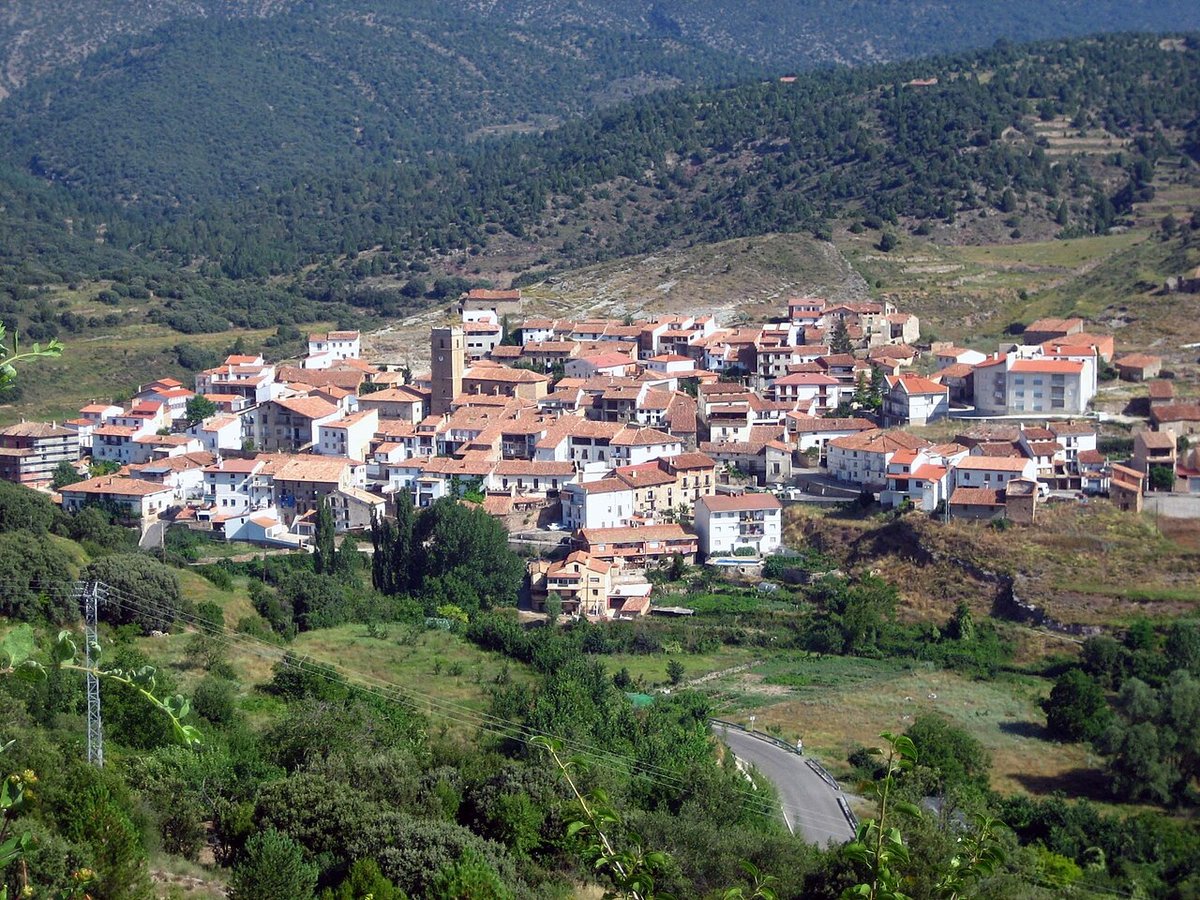
Rubielos de Mora sits in the Gúdar‑Javalambre comarca, on a slope facing a landscape of pine forests and soft ravines. It stands a little over 900 metres above sea level, high enough for the nights to cool down even in July. Stone dominates everything: solid gateways, dark iron balconies, thick walls that hold the temperature inside. The layout of the historic centre still follows its medieval origins, with streets that rise and dip without much apparent logic and sudden turns that slow your pace.
A historic centre still lived in
The old town was declared a Historic-Artistic Site in the late twentieth century and is now part of the network known as Los Pueblos Más Bonitos de España, a group highlighting particularly well-preserved villages. Even so, walking through it feels far from staged. Many houses are clearly still lived in: washing hanging from a balcony, plants watered in the evening, a conversation drifting out of an open window.
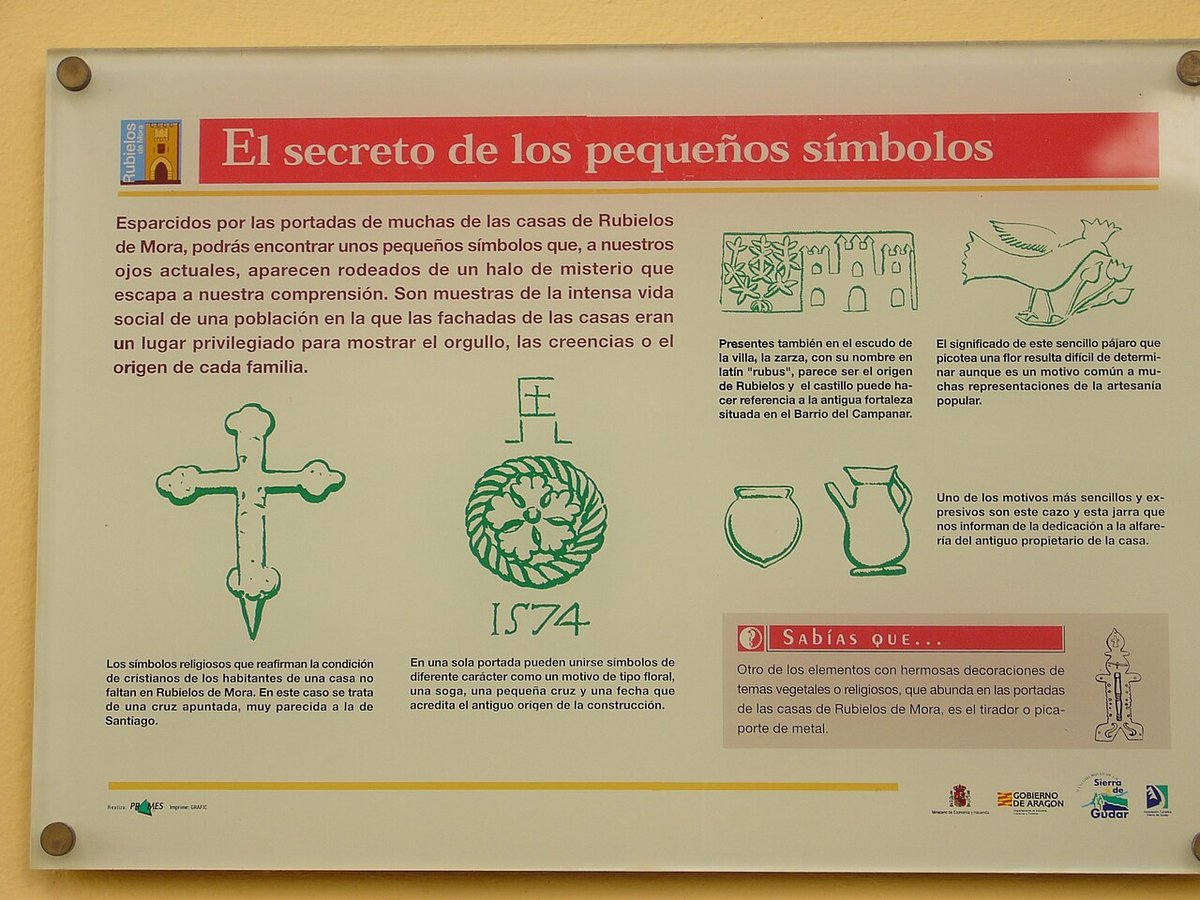
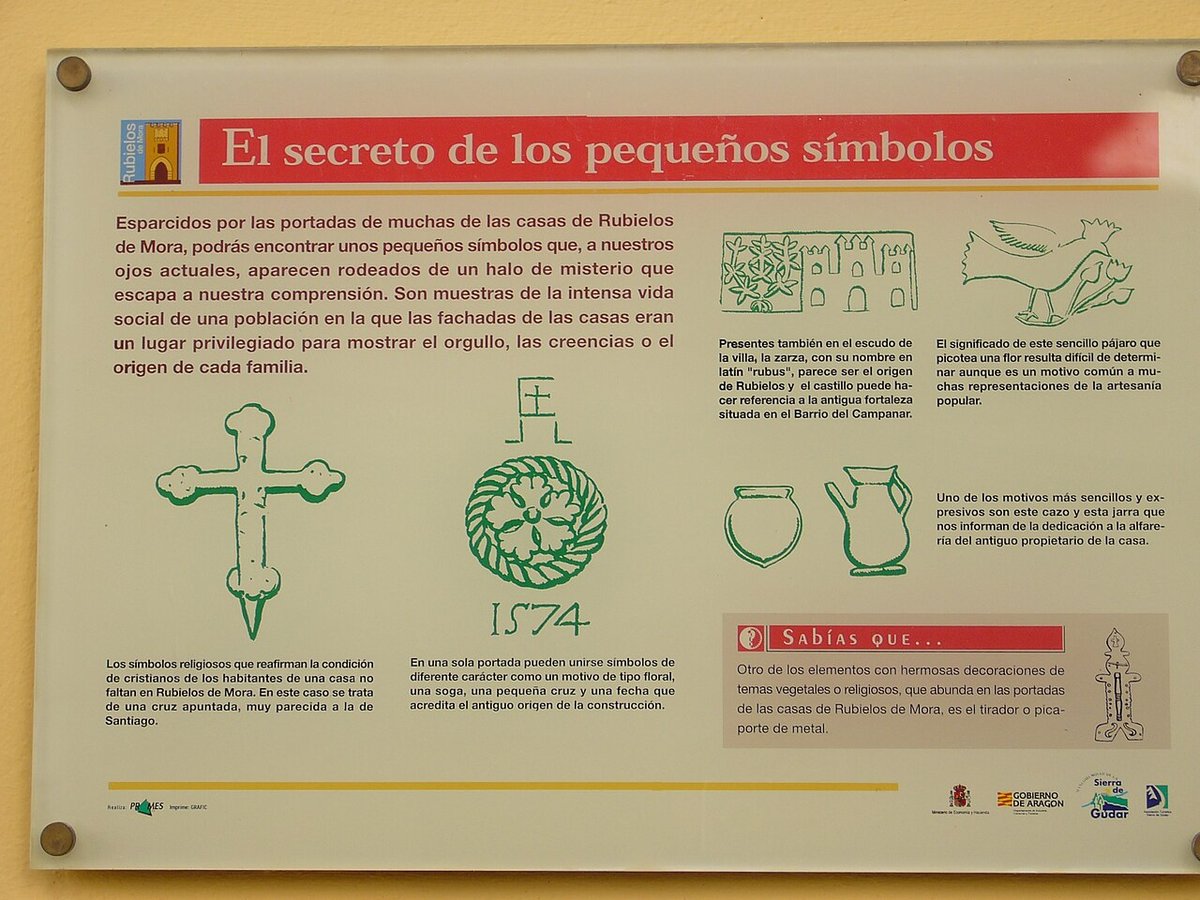
In streets such as San Sebastián or around the plaza Mayor, façades display carved stone coats of arms, tall doorways once designed for carts, and wooden shutters worn by years of winter sun. Not everything has been restored to the same degree, and that contrast matters. Clean, carefully maintained stone sits next to rougher walls, giving the village a sense of continuity rather than polish.
The colegiata and the streets around it
The Colegiata de Santa María la Mayor stands out immediately thanks to its size and its tower, rising above the rooftops. Its Gothic entrance has the pale grey tone that stone takes on after centuries exposed to the wind from the sierra. Inside, a sixteenth-century wooden altarpiece is preserved, its figures still holding traces of their original colour.
It is worth checking in advance whether it is open, as opening times vary depending on the season and the day of the week.
Around the colegiata, the streets narrow and twist quickly. In some corners, small squares or improvised viewpoints appear between the houses, offering glimpses of the valley and the low mountains that surround Rubielos. These openings come unexpectedly, often after a short climb or a turn between closely set walls.
Plaza Mayor and everyday rhythm
The plaza Mayor acts as the natural centre of the village. The town hall, a sixteenth-century building with a porticoed ground floor, casts shade over much of the square during the day. In summer, this is where movement becomes most noticeable: people sitting for a while, children crossing on bicycles, neighbours greeting each other as they pass.
Several steep streets lead away from here towards former entrances in the town walls and towards the convent of the Augustinian nuns, founded in the seventeenth century and still inhabited. The sound of bells often carries clearly across the old town, marking the hours with a steady regularity.
Walls and gateways
Fragments of the medieval wall still remain, along with some of the gateways that once controlled access to the village. They do not form a continuous circuit, but walking along the edge of the historic centre gives a good sense of the scale Rubielos de Mora once had.
Some gateways retain old wooden beams and simple moulded stone arches. These are the sort of details that are easy to miss if you move too quickly, blending into the texture of the streets rather than announcing themselves.
Paths beyond the village
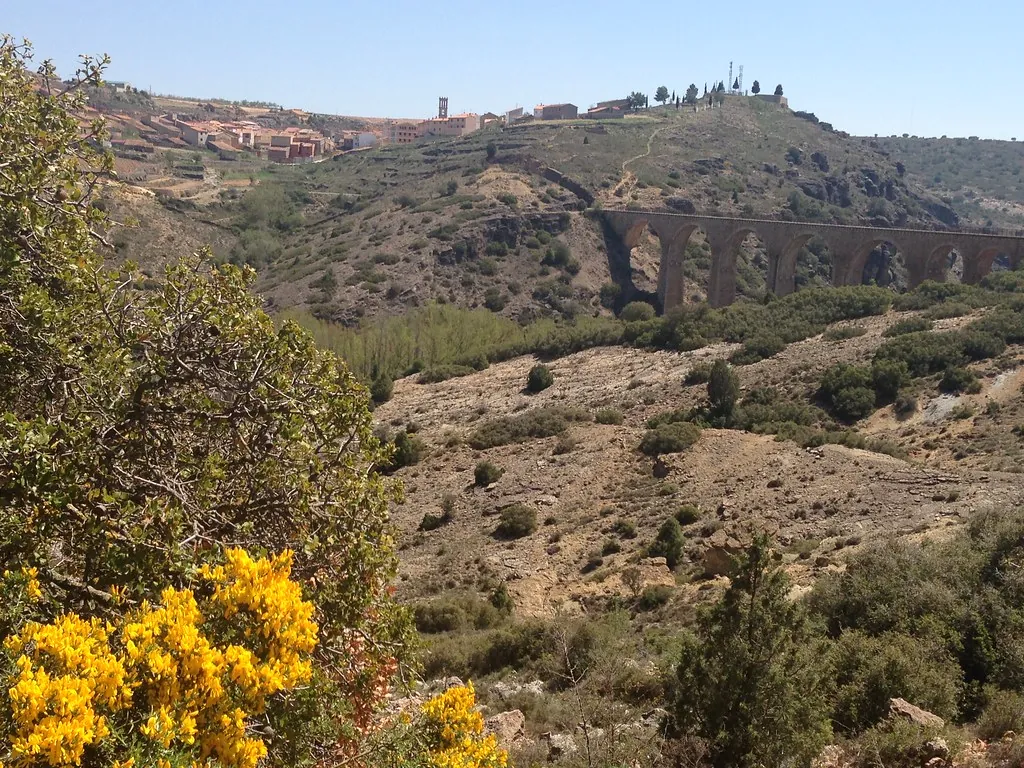
Beyond the built-up area, pine forests and old agricultural terraces appear, many of them now abandoned. Dirt paths begin right from the edge of the village, making it easy to stretch your legs without going far. In autumn, when the ground is covered with pine needles and the air smells of damp earth, these walks feel quite different from the atmosphere inside the streets.
The GR‑8 long-distance footpath passes relatively close by and connects with other villages in the sierra. Anyone planning to follow it should bring a map or check the route in advance.
When to go and what to keep in mind
Rubielos de Mora changes noticeably with the seasons. Summer brings more activity, especially at weekends. For a quieter experience, weekdays and early mornings tend to be the best option.
The historic centre includes plenty of slopes and uneven ground, so comfortable footwear makes a difference, particularly if you want to explore without rushing. It is also advisable to leave the car in parking areas on the outskirts and continue on foot. Inside the walls, the streets are narrow and space is limited.
In the end, Rubielos is best understood at a slow pace, when the light begins to fall on the stone façades and the village settles back into the same rhythm with which it started the day. History here is not signposted at every corner. It appears instead in a worn coat of arms, a large doorway, or a street that turns without warning.