Full Article
about Valdelinares
Hide article Read full article
A village shaped by altitude
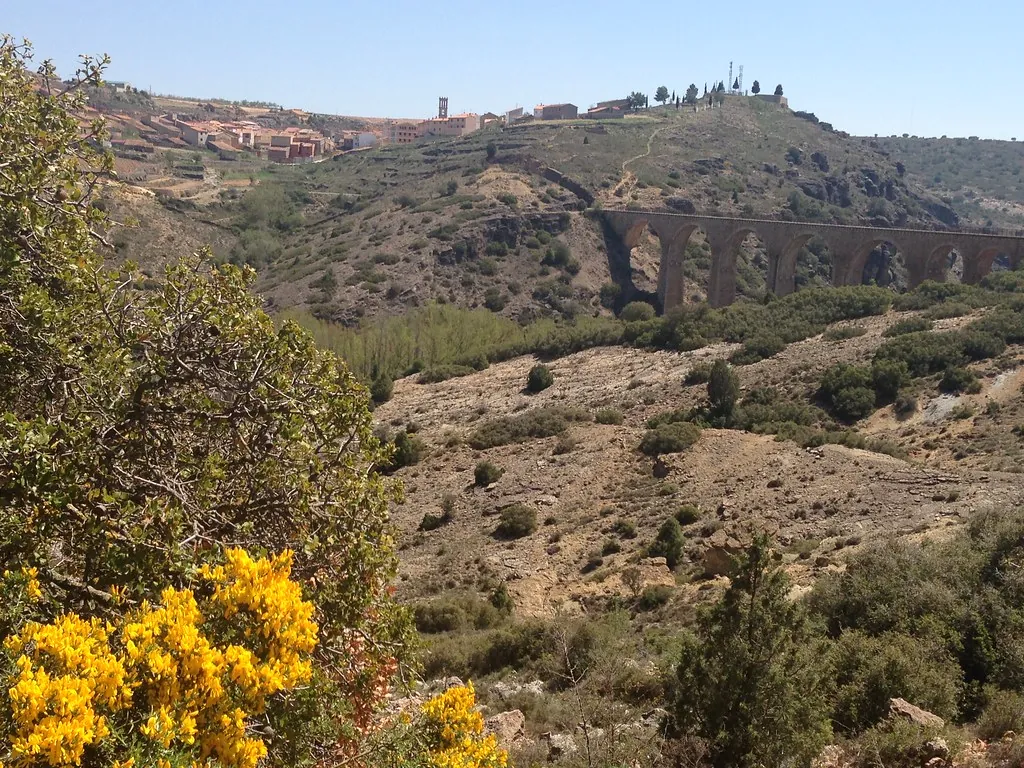
Set at 1,692 metres above sea level, Valdelinares is often described as the highest municipality in Spain. That elevation defines daily life. Winters are long, the air is dry, and there is a clear sense of isolation that runs through the sierra de Gúdar-Javalambre. Other villages in the range share similar conditions, but here it feels particularly evident.
With just over eighty registered residents, Valdelinares functions more like a small mountain settlement than a village with continuous urban activity. The layout follows the slope rather than any formal plan. Houses are built of stone, with steeply pitched roofs designed so that snow does not settle heavily in winter.
At the most visible point stands the parish church, dedicated to San Roque and built in the 18th century. It is a restrained building, in keeping with the scale of the place. Inside, altarpieces and carved figures remain, reflecting the religious life of these mountain communities, where the parish also played a social role.
The high landscape of the sierra de Gúdar
The immediate surroundings are dominated by forests of pino negro, a species well adapted to cold temperatures and altitude. These woods are a defining feature of the sierra de Gúdar-Javalambre. Between the denser stands of pine, there are open clearings, former grazing areas and small meadows that change noticeably in spring.
This is not a uniform forest, nor one that can be crossed easily in any direction. Some stretches are dense, with uneven and stony ground, while others open out and feel gentler underfoot. From certain nearby high points, wide views extend across the range. On very clear days, some claim it is possible to make out the line of the Mediterranean to the east, although conditions do not always allow it.
Walking through the surroundings
Walking is the most direct way to understand this landscape. Paths leave the village and lead into the pine forests, while others climb towards higher ground in the sierra. Some routes pass through the so called pinares de Valdelinares, where the woodland continues for kilometres with few interruptions.
Good footwear is important. The terrain alternates between compact earth and rocky sections, and in shaded areas moisture lingers long after rain or thaw. On routes that gain height, the gradient becomes noticeable, and the weather can shift quickly, something typical at these elevations.
In winter, snow changes the area completely. When conditions allow, snowshoes or cross country skis are used in prepared zones. The duration of snow cover varies from year to year, but in this part of the range it tends to last longer than in other areas of Teruel.
Wildlife is most visible early in the morning or towards dusk. Roe deer can sometimes be seen, along with signs of wild boar, and birds of prey circling above the forest clearings. On clear nights, with very little artificial light nearby, the sky appears especially sharp.
Mountain cooking and local traditions
Food here reflects both the climate and the area’s livestock tradition. Dishes based on lamb are common, as are cured sausages and other preserved meats. In wetter years, wild mushrooms collected in the nearby hills also appear in the kitchen. It is not a complex cuisine, but one shaped by cold conditions and long working days.
The main celebrations take place around San Roque in mid August, when many people who live elsewhere return to the village. In January, San Antón is marked with the blessing of animals, a custom closely linked to the historical importance of livestock in these mountains.
Getting there and practical notes
From Teruel, the usual route follows the A‑23 motorway towards Valencia. Near Barracas, the journey continues along regional roads that climb into the sierra de Gúdar. The final stretch runs along mountain roads, with bends and changes in elevation.
Between late spring and early autumn, access is generally straightforward and paths are free of snow. In winter, conditions can change. Ice patches or snowfall may make the ascent more difficult. At that time of year, it is advisable to check road conditions and be properly equipped for cold weather.