Full Article
about Ibieca
Hide article Read full article
A cereal village in the Hoya de Huesca
Tourism in Ibieca starts from a simple premise. This is a very small village in the Hoya de Huesca, about 15 kilometres from the provincial capital, almost entirely surrounded by cereal fields. The municipality has around a hundred inhabitants and sits on the plain that opens out to the south of the Sierra de Guara. It is a landscape shaped over generations by agriculture, which still sets the rhythm of daily life.
The setting explains most of what there is to see. Wheat and barley dominate the surroundings. A few kitchen gardens and small irrigated plots break up the pattern, but the municipality largely reflects the classic dry farming model of this part of Aragón. It is not a dramatic landscape, yet it is highly representative of the Plana de Huesca, a broad agricultural plain where open horizons matter more than striking features.
The village centre and the church of San Pedro
The built-up area is compact and easy to walk. Traditional houses stand out, constructed with stone, brick and simple rendered façades. They were designed to cope with the climate rather than to impress. Streets are short and tend to lead towards a small central square where the main buildings are grouped together.
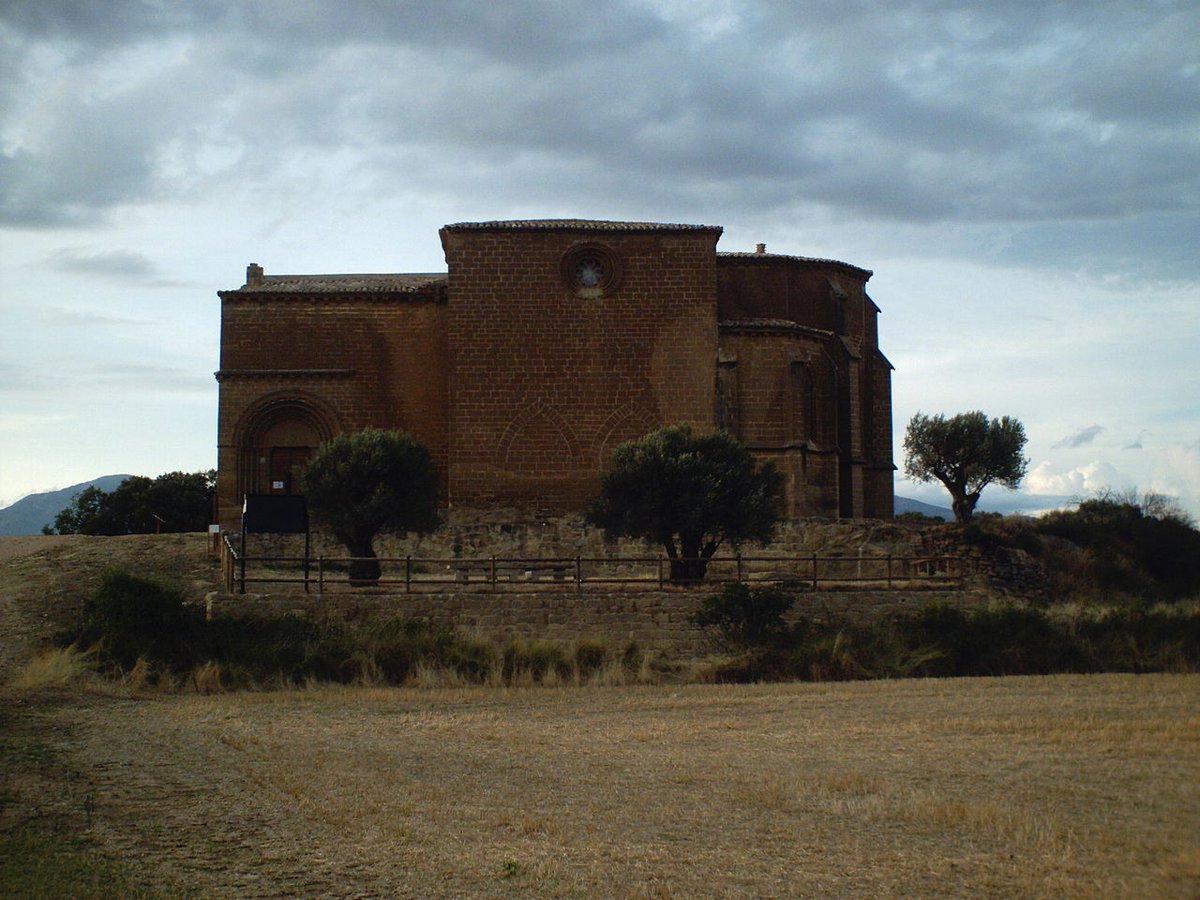
The parish church of San Pedro stands there. Its origins date back to the 16th century, although it has undergone later alterations, which is common in rural churches across the area. The architecture is restrained. The interest lies less in decorative detail and more in its role within the village. For centuries, this space has been the focal point of collective life, from religious celebrations to public announcements.
Open fields and a distant mountain line
Beyond the last houses, agricultural tracks appear almost immediately. These are working routes used by farmers, yet they also allow for straightforward walks across the plain. The terrain is open and the eye is drawn northwards.
On clear days, the outline of the Sierra de Guara can be seen on the horizon. That distant presence places Ibieca within a transition zone. It sits between the pre-Pyrenean mountains and the agricultural lowlands further south, and that balance defines both the scenery and the way the land is used.
Scattered across the municipality, a number of old livestock enclosures and small agricultural buildings remain. Some are no longer in use, others have been altered over time. They still offer a glimpse into how farming was organised before modern mechanisation changed the scale and pace of work in the fields.
Everyday life and the village calendar
With such a small population, daily life unfolds quietly. Kitchen gardens, animal enclosures and small cultivated spaces continue to exist close to the houses. The central square remains the place where people meet and talk, something typical of villages of this size.
The patron saint festivities usually take place in summer. At that time, residents who live elsewhere return, and the village takes on a different rhythm for a few days. The programme combines religious events with activities organised by the locals themselves, reflecting a shared effort to maintain traditions and social ties.
Practical notes for a short visit
Ibieca is around a twenty-minute drive from Huesca. A visit is brief by nature. A walk through the village centre followed by a stroll along the surrounding tracks is enough to get a clear sense of the place.
Services are limited, which is worth bearing in mind. It is common to travel to nearby towns or to the city of Huesca for shops and places to eat. What matters here is not a wide range of facilities, but the chance to observe an agricultural landscape and the structure of a village that remains closely linked to the land.