Full Article
about Loscorrales
Hide article Read full article
A village shaped by the plain
If you come to Loscorrales, the first practical detail is parking. There is very little space for cars within the centre, so the usual approach is to leave the vehicle on a wider street at the edge and continue on foot. The village is small and easy to cover quickly, so walking makes sense. On windy days, which are fairly common across this open stretch of the Hoya de Huesca, being outside can feel less comfortable than expected.
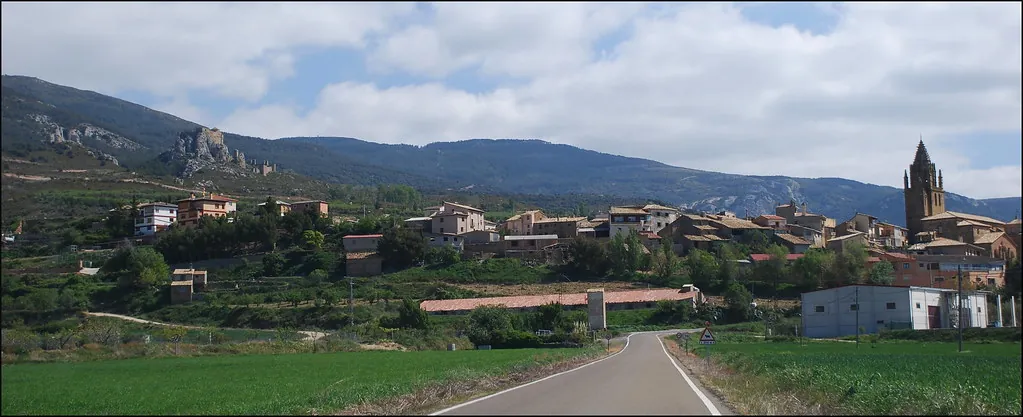
Loscorrales sits at around 620 metres above sea level in the Hoya de Huesca, a broad agricultural area in Aragón. It has roughly 98 residents. Many of its houses are built with stone and adobe, following traditional construction methods. You will notice rounded arch doorways and metal window grilles, typical features of rural architecture in this part of Spain.
At the centre stands the church dedicated to San Miguel Arcángel. It is a simple structure with later additions, and its appearance remains practical rather than decorative. It anchors the village without dominating it.
The streets can be walked in a matter of minutes. They are narrow, with rear courtyards often used as corrals or for storing tools. Some rooftops still show truncated conical chimneys, a form that continues to appear in this region of Aragón. This is not a monumental ensemble. It is an agricultural village that has carried on at its own steady pace.
Beyond the houses, the landscape opens immediately into farmland. The terrain is flat and expansive, characteristic of the Plana de Huesca. The colour of the cereal crops shifts through the year, but the structure of the land stays constant: large plots, agricultural tracks, and long horizons. For anyone drawn to wide skies and rural scenes, there is plenty to take in.
Walking the tracks and watching the sky
There are no organised activities or formal tourist facilities in Loscorrales. What people tend to do is use the village as a starting point for walking along the agricultural tracks that link nearby settlements.
These routes are easy, with hardly any change in elevation. They suit a gentle walk or a relaxed cycle between fields. It is worth bringing water and sun protection, as shade is scarce.
The surrounding area is also open ground where birds of prey and species associated with dry farmland can sometimes be seen. There are no observation points or signposted routes, so it comes down to stopping, looking out across the fields, and waiting.
Food here follows the traditions of Aragón’s rural cooking. Expect dishes such as migas, cordero and vegetable stews. These are meals designed for long working days outdoors rather than presentation.
Dates that still matter
The main festivities revolve around San Miguel Arcángel at the end of September. These usually include religious events and shared meals among neighbours.
In January, San Antón is marked. In many villages across the area, this involves the blessing of animals and small processions connected to livestock traditions.
Agriculture continues to shape the rhythm of the year. Although harvesting is now done with machinery, the farming calendar still carries weight in daily life.
When the landscape changes
From late spring to early autumn, the surroundings are at their most visually appealing. In May and June, the cereal fields are green. By September and October, they shift towards drier tones.
Winter brings more noticeable wind and cold. The plain offers very little shelter, and walking the tracks can feel longer than expected if the weather turns.
How long to stay
The village centre of Loscorrales can be explored in around half an hour. Adding a walk along the nearby tracks extends the visit a little.
It is not a place for a multi-day stay. It works better as a short stop while travelling through the Hoya de Huesca, or as a way to see up close what life looks like in a small village on this agricultural plain.
A simple approach works best: come for a quiet walk and to take in the landscape. If you are looking for monuments or a full programme of activities, you will need to continue elsewhere in the region.