Full Article
about Báguena
Hide article Read full article
A place you almost miss
There are towns you pass a hundred times on the motorway without ever thinking of stopping. Until one day you do. Báguena, in the Jiloca region of Aragon, fits that description. It sits close to the road, while life inside carries on at its own steady rhythm.
Fewer than 300 people live here, and the town centre still looks much as it has for generations. It does not feel staged or preserved for visitors. Instead, it feels lived in. Older houses sit alongside practical renovations, cars are parked wherever there is space, and most people know each other.
That sense of continuity defines Báguena. It is not trying to impress or reinvent itself. It simply continues.
Wandering through the centre
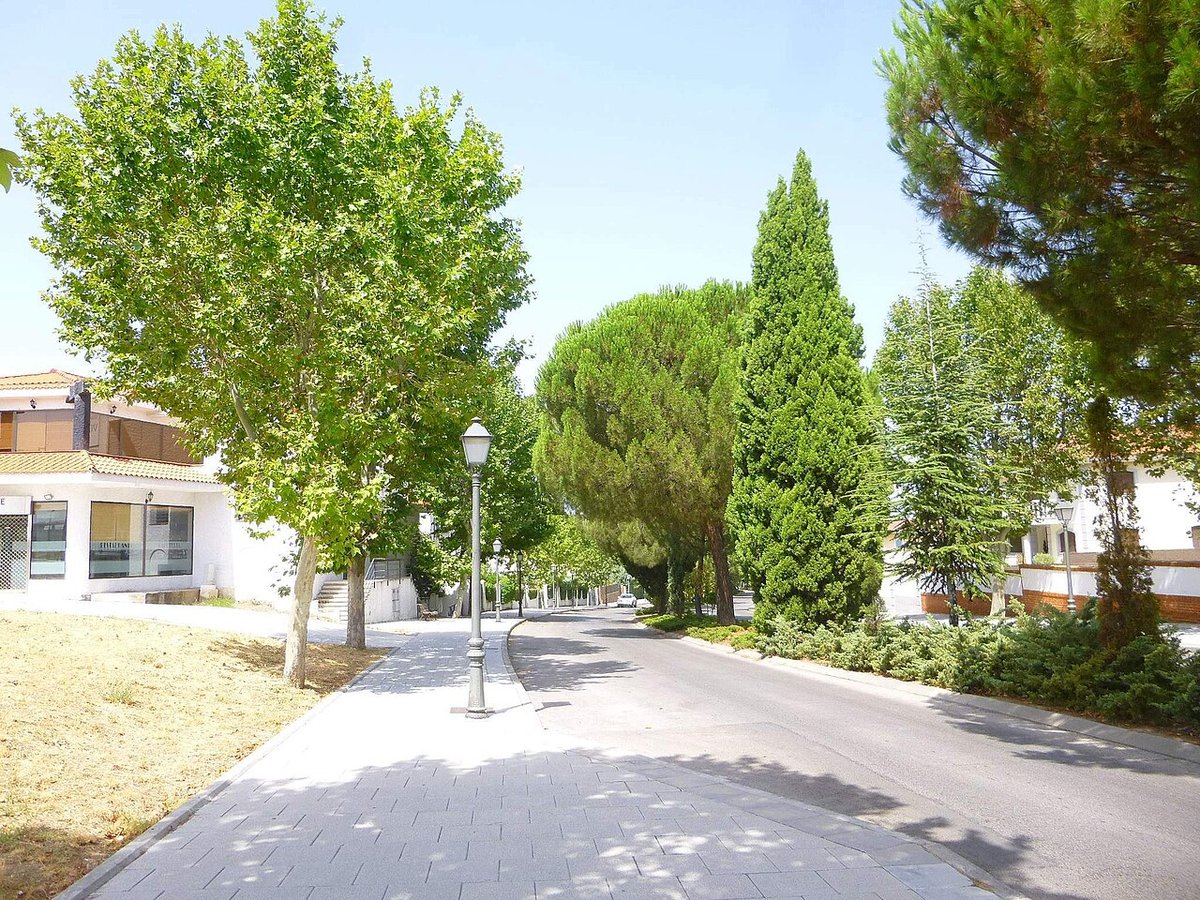
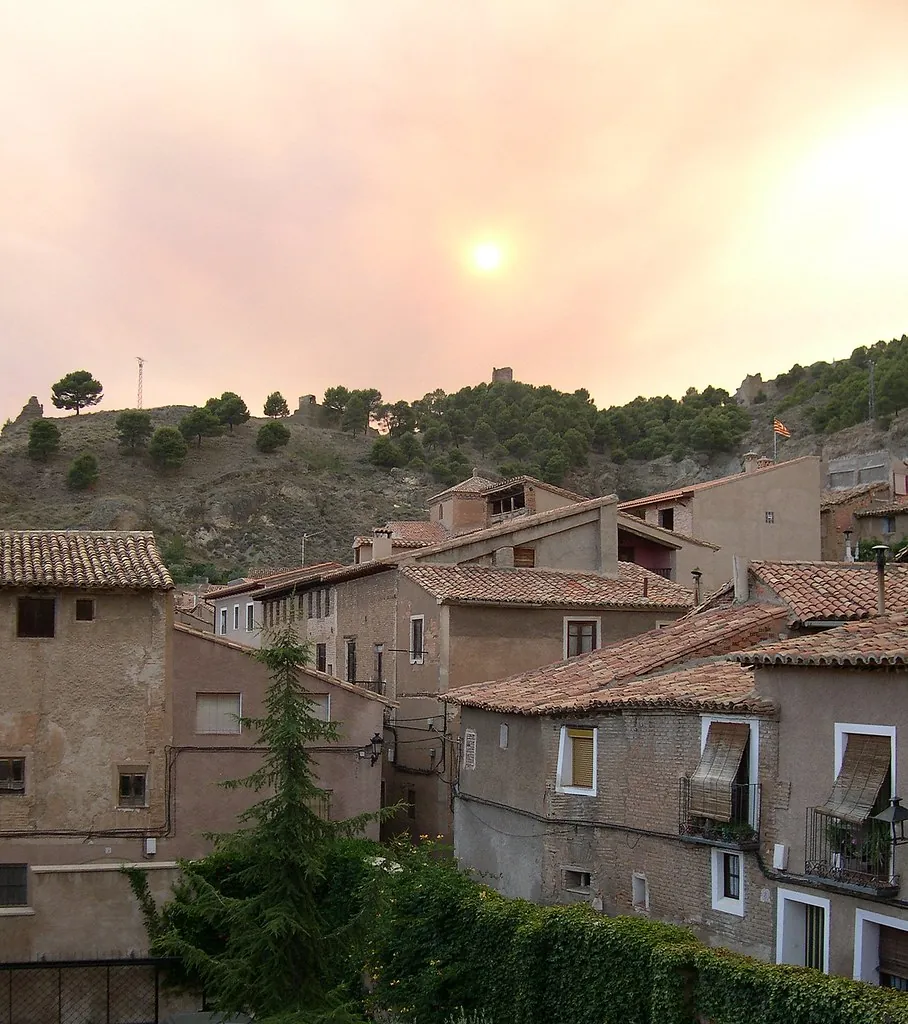
Walking around Báguena is less about following a route and more about drifting. The streets were not designed with tourism in mind. They are not arranged for perfect photos or neat itineraries. They are simply village streets, built with stone and adobe, with façades that show the impact of the harsh winters typical of the Jiloca valley.
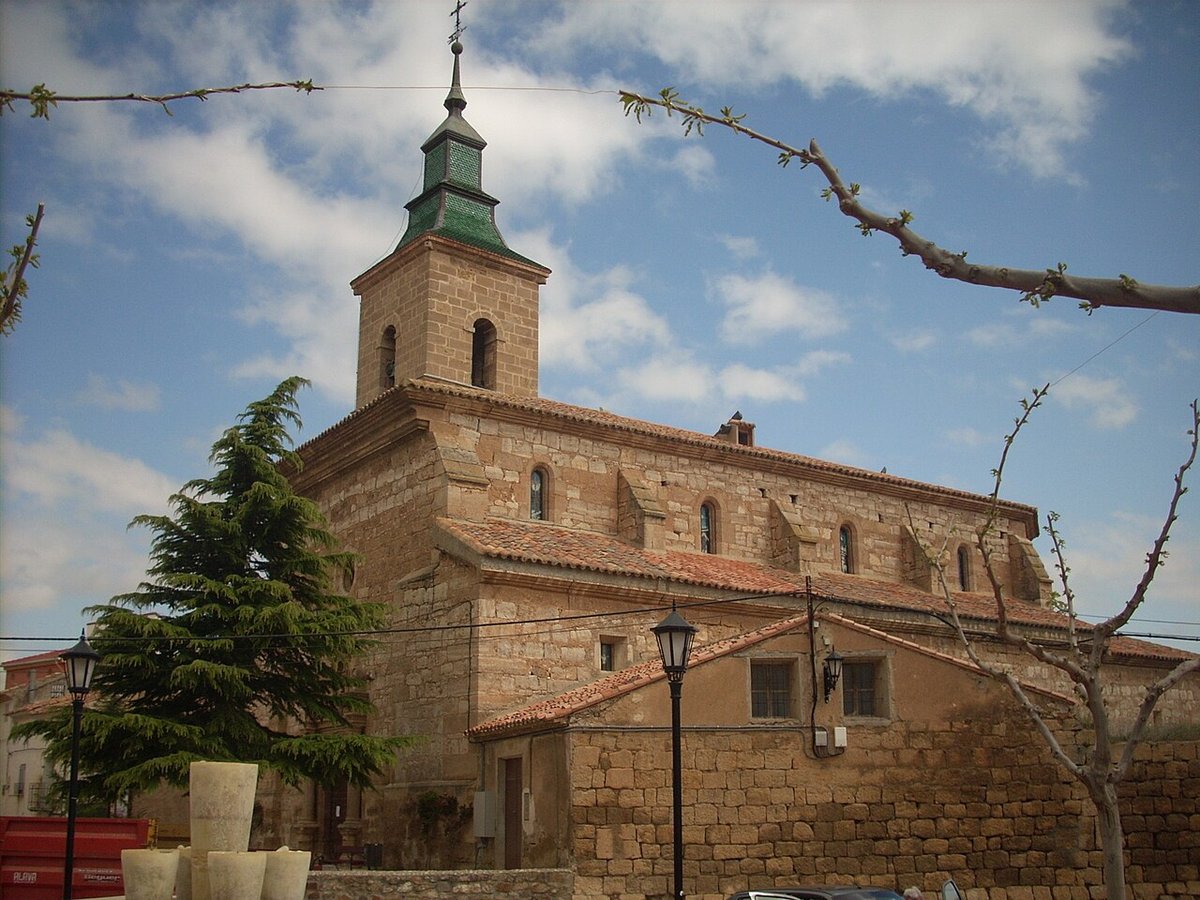
The parish church, dedicated to the Virgen de la Muela, acts as a useful point of reference when moving through the centre. Built in the 16th century, it has a simple tower visible from several parts of the village. It is not a striking monument, but it fulfils a familiar role in places like this: helping you find your bearings when the streets begin to blur together.
Along the main roads, such as Calle Mayor and Calle La Fuente, traces of past commercial life are still visible. Some ground-floor spaces are now closed or have been adapted for other uses, yet large doorways and arches hint at what once operated there.
Towards the edges of the village, the buildings become older. Some feature iron balconies and traditional curved terracotta roof tiles. Not all of them have been restored, and that is part of the overall character. Báguena has not been polished or dressed up. What you see is what remains.
The Jiloca landscape
Step beyond the built-up area and the surroundings quickly return to basics: open countryside. Fields stretch out in parcels, broken up by stone walls, dirt tracks and ravines that remain dry for much of the year.
The landscape changes noticeably with the seasons. Spring brings an unexpected green across the valley, while autumn shifts towards reds and yellows as the fields are worked and cleared. Winter, for anyone who has experienced it here, is known for its cold. It is not a mild version of the season.
There are rural paths that can be followed on foot or by bike without much difficulty. Signage is limited, and you will not find many information panels. It is more common to rely on a map on your phone or to ask a local which track leads where. That way of navigating still feels normal here.
The overall impression is of a landscape shaped by use rather than presentation. It is agricultural, practical and closely tied to the rhythm of the year.
Food that matches the climate
The food in this part of Aragon reflects its inland setting and colder weather. Dishes tend to be filling and direct.
Roast lamb appears frequently, especially when temperatures drop. Migas del pastor, a traditional dish made from fried breadcrumbs, remains a staple in many households. These are the kinds of meals associated with rural life, designed to satisfy after long days outdoors.
When the season allows, nearby vegetable plots supply tomatoes, green beans and potatoes that go straight into local cooking. The approach is simple rather than elaborate, but it delivers exactly what is needed.
For those who head into the countryside, wetter years bring níscalos and other wild mushrooms to areas with carrascas and encinas, types of oak common in the region. As in the rest of Aragon, it is important to check local regulations before collecting them.
And then there is the night sky. Light pollution in the Jiloca valley is low, so on clear nights the sky appears open and sharp. It is the kind of view that reminds you how rarely people in cities look up.
When the village fills again
Báguena changes in summer. Like many small towns, August brings back people who have moved elsewhere for work or study. The population grows, and with it the atmosphere.
The main festivities revolve around the Virgen de la Muela and the hermitage linked to local devotion. There are processions, community events and the sense of reunion that defines summer celebrations across much of rural Aragon.
Easter is also observed, though in a quieter way. Processions and traditional songs take place, but it remains a local occasion rather than a large-scale event. The focus is on continuity and shared custom rather than spectacle.
Getting there and what to expect
Báguena lies close to the A‑23 motorway, which connects Zaragoza with Teruel and Valencia. From the area around Calamocha, regional roads lead directly to the village within a few minutes.
From the city of Teruel, the journey takes a little over an hour depending on the route. From Zaragoza, it is somewhat longer, though still straightforward thanks to the motorway.
This is not a destination built for packed itineraries or constant activity. Báguena works best as a quiet stop, a place to walk for a while, get a sense of the Jiloca valley and then continue on with a slightly different pace.
It is the kind of place that does not try to stand out, yet still says a great deal about how life is lived here.