Full Article
about Peracense
Hide article Read full article
A sudden appearance in the Jiloca landscape
Some villages announce themselves from a distance. Peracense does the opposite. The road through the Jiloca valley feels quiet and open, with low pines and reddish stone on either side, and then the castle appears almost without warning. It looks as though it has grown out of the mountain itself. The impression is immediate: this was a carefully chosen place to build.
Peracense is a very small village, home to only a few dozen residents, set more than 1,200 metres above sea level on the edge of the Jiloca region. Everything revolves around the massive rock formation that supports the castle. There is no attempt to soften or stage the setting. What you find here is red stone, wind, and long stretches of silence.
Life beneath the fortress
The village centre is compact and built on a slope. Houses use the same reddish stone that defines the surrounding terrain, so the whole place almost blends into the landscape. Streets feel as though they have simply adjusted themselves to the rock rather than reshaped it.
The main street passes close to the castle walls and narrows in places. There are no grand monuments or large squares. Instead, there are small corners, old doorways, and façades that still show traces of earlier centuries.
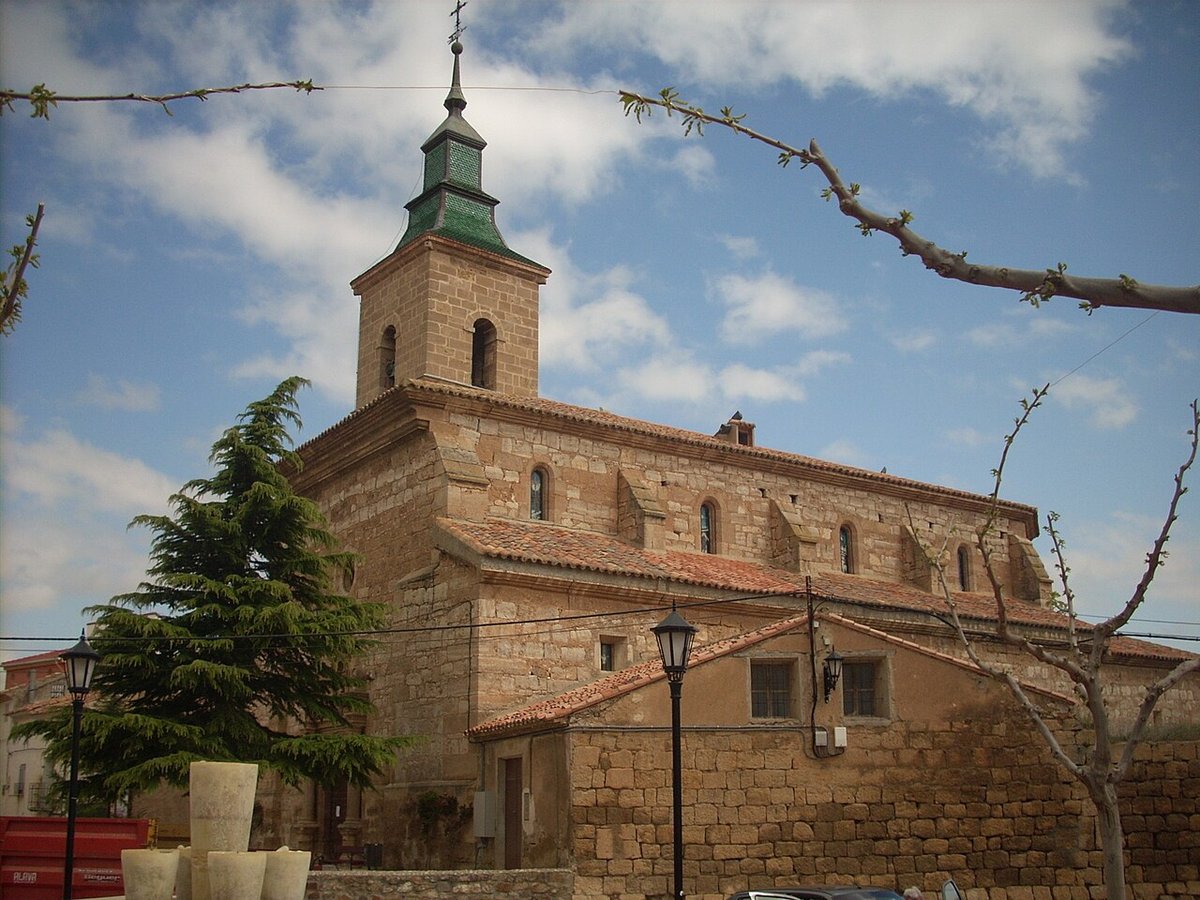
The parish church, dedicated to San Pedro, is modest. It includes some Mudéjar elements, a style typical in Aragón that blends Islamic and Christian influences, though here it clearly takes a secondary role to the castle.
The castle of Peracense
The Castillo de Peracense is the main reason most visitors make the journey. Its defining feature becomes clear as soon as you approach: this is not a fortress placed on top of a rock, but one that is almost the rock itself transformed into a defensive structure.
Builders made full use of the local rodeno stone, shaping walls, towers and enclosed areas around natural formations. From a distance, it is often hard to tell where nature ends and construction begins. That fusion gives the castle its distinctive character.
Its origins are usually placed around the 13th century, at a time when this area marked the frontier between the kingdoms of Aragón and Castilla. Over time, the structure was expanded and reinforced. Walking through it reveals carved cisterns, narrow passageways, and multiple levels that help to picture how a border fortress once functioned.
From the upper sections, the view opens out across southern Teruel. The landscape is sparse, with scattered fields and low vegetation. It feels rugged, and that makes its strategic importance easy to understand.
A slow walk through the village
Peracense does not take long to explore. It is not a place for ticking off sights, but for walking at an unhurried pace and paying attention to the surroundings.
Some houses still preserve old entrances and wrought-iron balconies. There are also small natural viewpoints over the ravine on which the village sits. Wherever you go, the castle tends to reappear in the background, a constant reminder of what defines this place.
On clear days, the light shifts noticeably across the reddish stone as the afternoon progresses. It is the kind of setting where it feels natural to pause for a while and watch how the colour of the landscape slowly changes.
Beyond the village: rodeno terrain
The area around Peracense shares the same rodeno landscape: reddish rock, resinous pine trees, and ground that can feel uneven and dry. Paths and tracks leave the village and lead into this transitional zone towards the Sierra de Albarracín and the Montes Universales.
This is not high mountain terrain, but it still calls for a bit of preparation. The slopes can be more demanding than they first appear, especially in summer. The setting may look manageable at a glance, yet the inclines soon make themselves felt.
Food from inland Teruel
The food typically found in this part of Teruel reflects the climate and geography. Dishes are hearty and designed for colder conditions. Migas, roasted lamb, and traditional cured meats from local pig slaughtering are all part of the culinary landscape.
These are meals that naturally invite bread and a long, relaxed time at the table. In winter, the logic behind this kind of cooking becomes even clearer.
When to go
The castle occasionally hosts cultural activities or historical re-enactments, particularly during busier months. These events do not take place every year or follow a fixed schedule, so it is worth checking in advance.
For those interested in photography, both sunrise and sunset work well here. The reddish rock shifts in tone with the changing light. At night, when the sky is clear, the limited artificial lighting allows for a good view of the stars.
Getting there without fuss
Peracense lies around forty kilometres from the city of Teruel. The route follows quiet regional roads that encourage a slower pace. The journey is straightforward, though it does not involve major highways or fast-moving traffic.
Is it worth stopping?
Peracense is not a place designed for a full day of sightseeing. It works better as a short visit: arrive for the castle, walk through the village, take in the landscape, and spend a little time considering how such a fortress came to stand exactly where it does.
A couple of hours is enough to see it. That simplicity suits the place. There is no excess, no need for embellishment, just the same direct character as the red stone that defines it.