Full Article
about Tornos
Hide article Read full article
A small village in northern Teruel
If you are planning a visit to Tornos, the first practical detail is simple: parking is easy. There is space along the edges of the village or near the entrance, with no traffic to worry about and no complicated layouts. The centre itself is small enough to cover on foot in a short time.
Tornos sits in the north of the province of Teruel, within the Jiloca comarca, a rural district in Aragón. Fewer than two hundred people live here. The usual sounds are church bells, the occasional tractor, and long stretches of quiet in between. There are no large monuments and no historic centre that demands attention. This is an agricultural village, plain in character, surrounded by open countryside.
It works best as a brief stop or as a calm base for exploring the wider area. Anyone arriving with expectations of a grand architectural ensemble will find that nothing much changes from arrival to departure.
The village centre
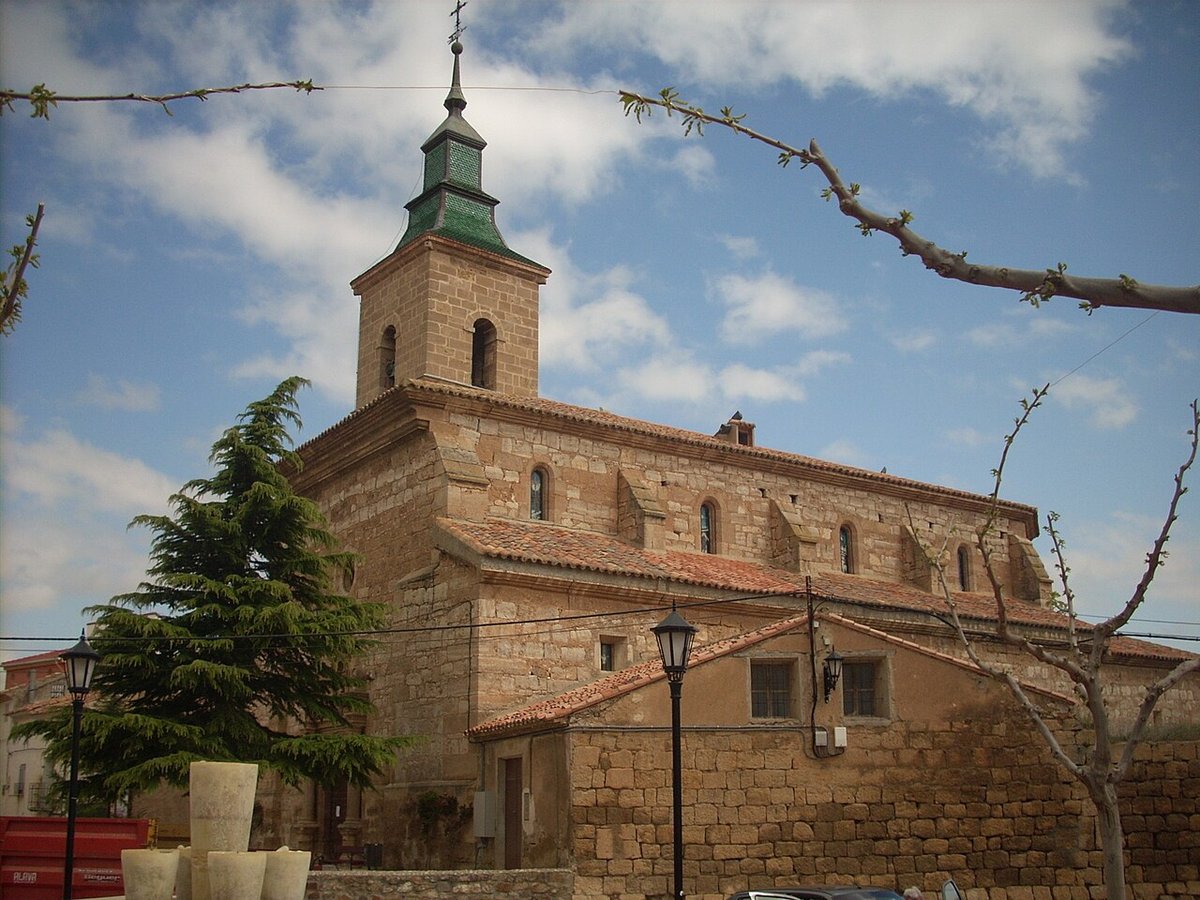
Life in Tornos revolves around the parish church of San Miguel Arcángel. Its tower is visible from a distance, helped by the flat, open terrain around the village. Like many churches in Teruel, the building reflects different periods of construction, with elements added over time rather than a single, unified design.
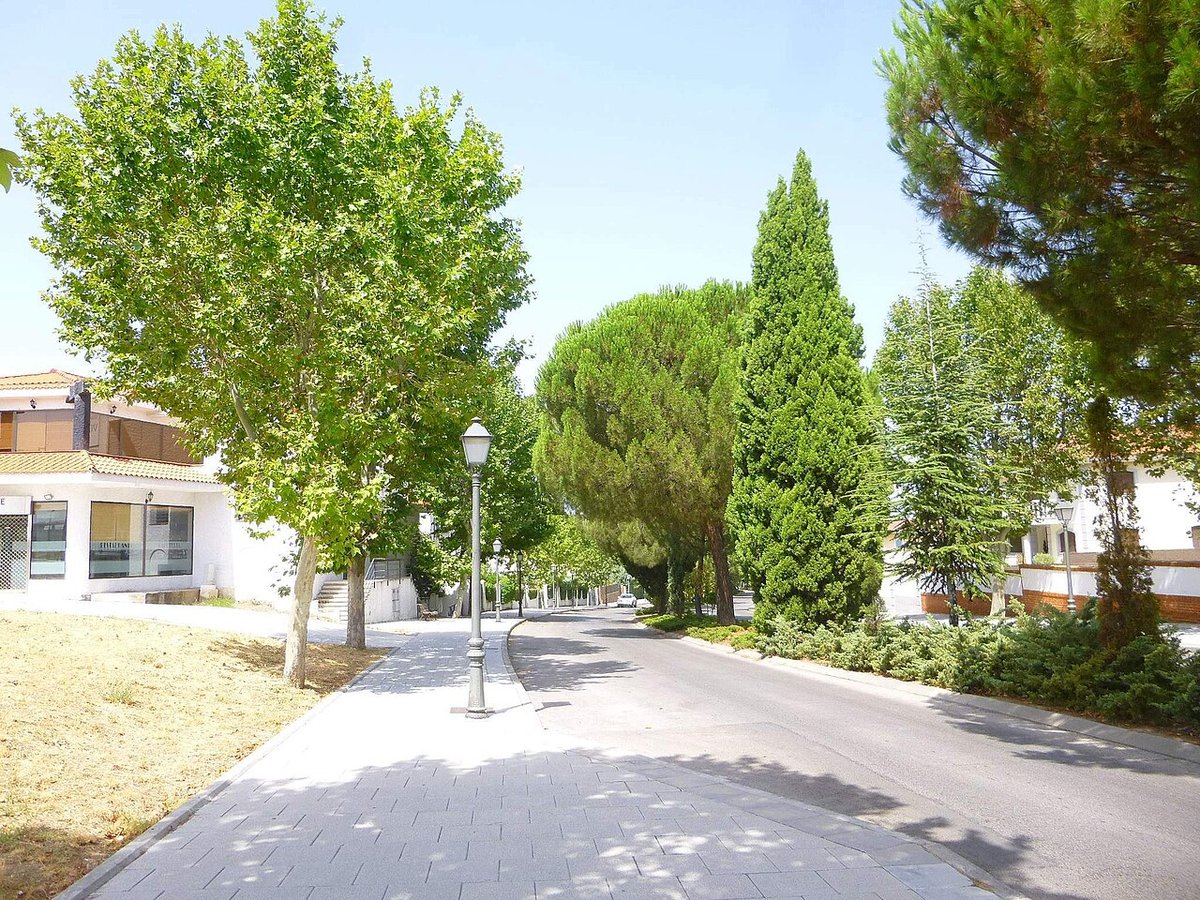
Beyond the church, the rest of the village follows a familiar pattern for this part of the Jiloca valley. Streets are narrow, lined with houses built from stone or adobe, and topped with tiled roofs. Some doorways feature worked stone frames, adding small details rather than grand gestures. Nothing stands out as exceptional, but everything fits naturally with the surrounding landscape.
A slow walk is enough to see the whole place in under an hour. There is no need to plan a route or seek out specific points. Simply moving through the streets gives a complete sense of what Tornos is.
Tracks, fields and the wider landscape
What makes Tornos more interesting lies outside the built area. Agricultural tracks lead out from the village, crossing fields and patches of pine woodland. These are not marked hiking routes like those in a protected natural park. They are local paths used for farming and access, so it is important to have a clear sense of direction before heading too far.
The landscape is open and exposed. From certain points, there are clear views across the Jiloca valley, a broad stretch of farmland that defines this part of Aragón. Looking east, the outline of the Sierra de Cucalón rises in the distance. The light changes noticeably throughout the day, and this has a visible effect on how the land appears, shifting tones and contrast across the fields and hills.
In autumn, mushrooms often appear in the nearby wooded areas. There is a local tradition of foraging for them, though it is something that requires knowledge. This is not a place to experiment without experience.
Local celebrations
The main festivities in Tornos are linked to San Miguel Arcángel, whose feast falls at the end of September. These days include religious events as well as activities organised by the residents. The scale remains modest, in keeping with the size of the village.
During the summer, especially in August, there are sometimes additional events. These tend to coincide with the return of people who have family homes in the village but live elsewhere for most of the year. Even then, the atmosphere stays small and local rather than busy or crowded.
When to come and what to expect
Spring and autumn are generally the most comfortable seasons for walking in the surrounding countryside. Summer brings heat during the day, although temperatures drop noticeably at night. Winter can be harsh, with cold conditions and wind that is more apparent because of the exposed terrain.
Rain affects the dirt tracks quickly. When the ground becomes muddy, walking across the fields can be more difficult than expected. Checking the weather beforehand makes a difference if the plan involves spending time outdoors.
Services in Tornos are limited. Its small size means there is not much in the way of facilities, so it is sensible to arrive prepared with water and something to eat if you intend to stay for several hours.
A simple approach works best here: stop for a while, take a walk, and look out over the Jiloca landscape. For those in search of quiet, it is easy to find. For anything else, it makes sense to continue the journey elsewhere.