Full Article
about Villafranca del Campo
Hide article Read full article
A place where the silence settles in
There are stops where the first thing you notice is the quiet. Not an awkward kind of silence, but one broken only by a door closing somewhere or church bells in the distance. Villafranca del Campo feels like that. It often begins as a quick pause in the Jiloca Valley, then turns into a slower wander through the same streets, without any rush to leave.
Fewer than 300 people live here, and the village is straightforward in the way it presents itself. It does not try to impress. There is no long checklist of monuments or museums. What you find instead is an agricultural village in the traditional sense, with straight streets, solid houses and a pace that has little in common with city life.
That simplicity shapes the visit. It is less about ticking off sights and more about noticing how everything fits together: the buildings, the fields, the quiet routine that continues day after day.
Around San Pedro: the village at its core
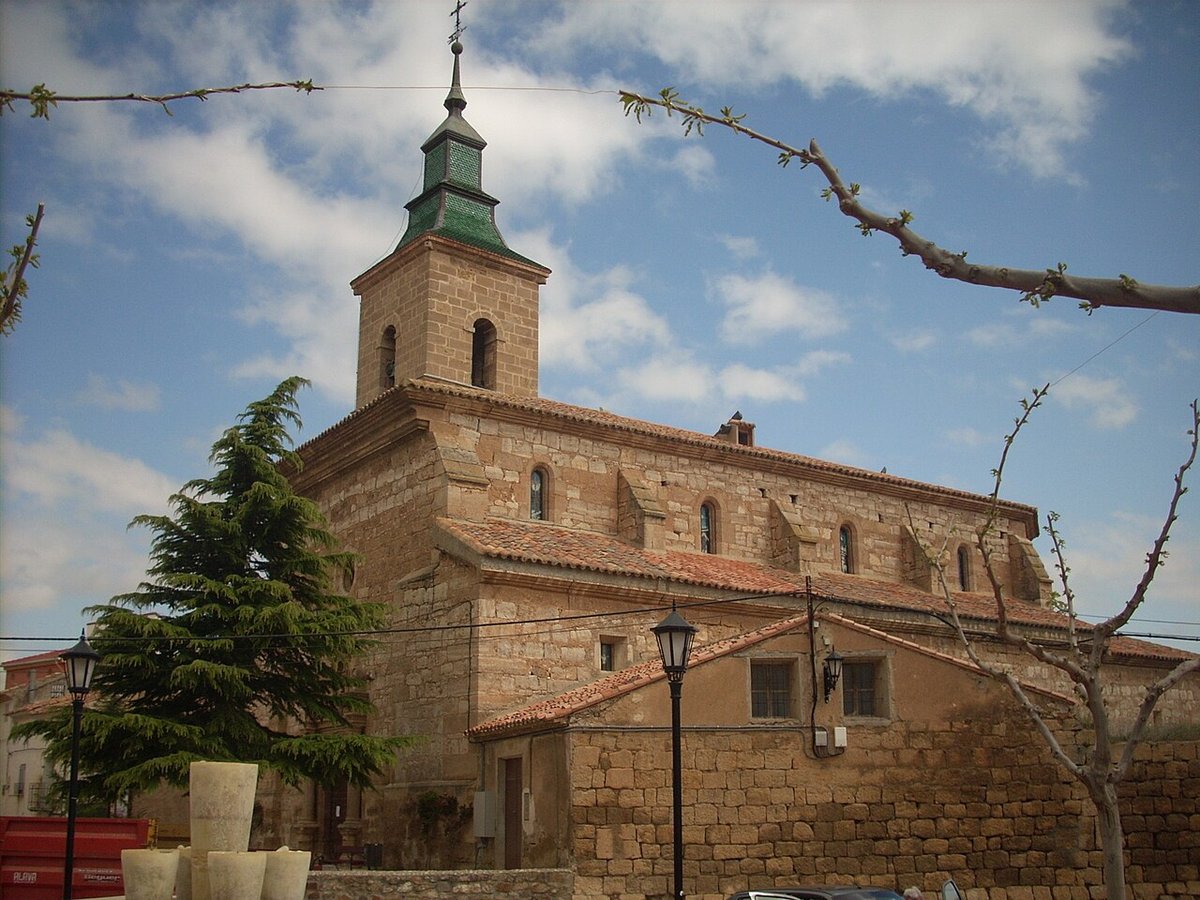
Most of Villafranca del Campo revolves around the parish church of San Pedro Apóstol. It is not the kind of place that demands a long, detailed inspection, but it does what it needs to do. Built in stone, with a solid presence and a tower visible from different points in the village, it naturally becomes a reference point as soon as you arrive.
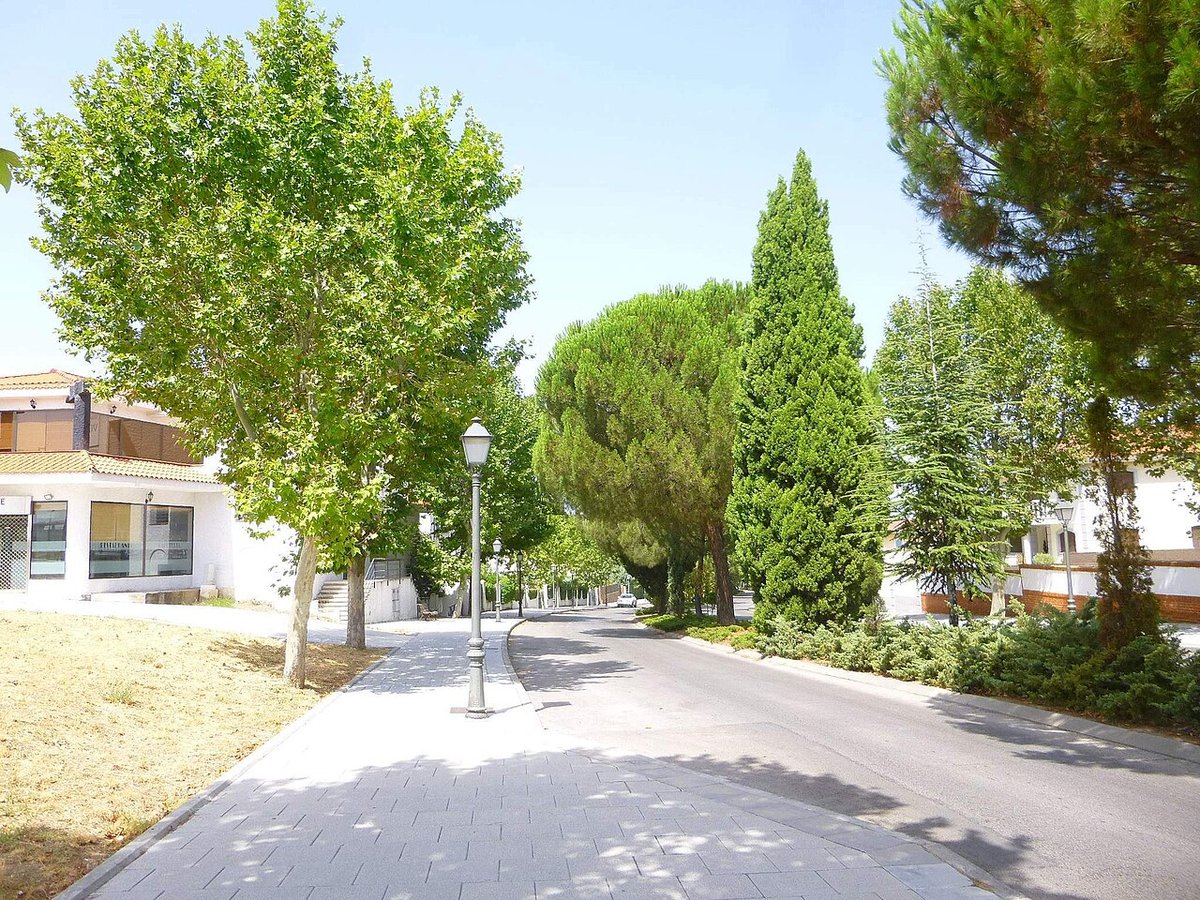
The main streets spread out around it. Walking through them, you see masonry houses alongside walls of adobe that have held up well over time. Large gates open onto courtyards, and there are outbuildings that make it clear what has sustained the village for generations: farming and work tied to the land.
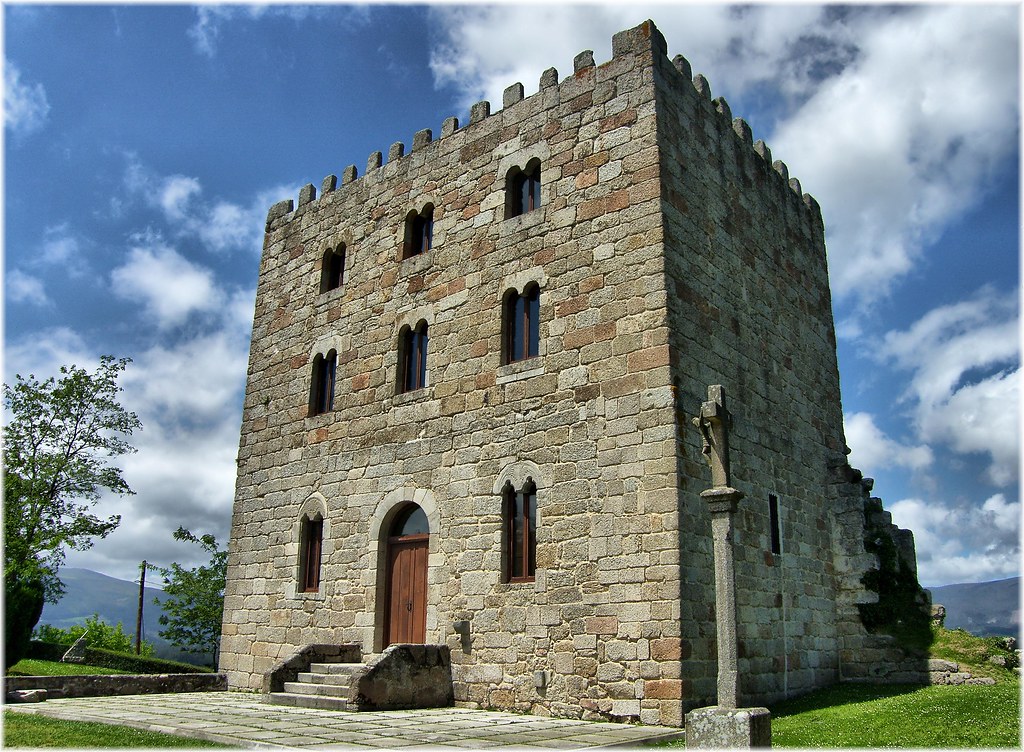
Old granaries still appear here and there, and some houses display coats of arms on their façades. A few are carefully maintained, while others show the slow, steady wear typical of places where buildings are expected to last for decades. Nothing feels staged. The village looks as it is, shaped by use rather than presentation.
The Jiloca landscape, once you give it time
At first glance, the surroundings can seem flat and uneventful. Stay a little longer and the details begin to emerge.
Fields of cereal crops dominate the landscape around Villafranca del Campo. In spring they are green, then turn golden at the start of summer. When the wind moves through them, the surface shifts like water. Clear days are common in this part of Aragón, and the sky often feels wide and open.
Small agricultural tracks leave the village in several directions. They are not marked routes, but they are easy enough to follow for a short walk or a gentle cycle. The terrain does not demand much, although the wind can make itself felt. There are days when heading back requires more effort than expected.
For those who pay attention to smaller details, this is a good place to spot farmland birds. Partridges appear now and then, kestrels hover above the fields, and flocks move quickly between plots of land. It is a quiet kind of observation, in keeping with the setting.
When the village fills out again
For much of the year, Villafranca del Campo remains calm. In summer, the atmosphere shifts. Like many villages in the Jiloca Valley, it has patron saint festivities that bring back people who live elsewhere and return for a few days.
Events are usually organised around San Pedro and other dates in the local calendar. The main streets become busier than usual. Long tables appear, there is music, and shared meals that resemble large family gatherings, the kind that stretch on without much structure.
Outside these periods, the rhythm slows again. Winter here means lit fireplaces, little movement in the streets and a depth of quiet that is rarely found in urban settings. The contrast between seasons is part of what defines the place.
Fitting Villafranca into a Jiloca route
Villafranca del Campo lies close to Calamocha and is easily reached by road from the main motorway that crosses the comarca, a regional district. Many travellers pass through the area on their way to Teruel or Zaragoza, which makes it a natural stop along the route.
It suits a short visit. An hour is enough to walk through the centre and get a sense of the place, perhaps stretching to two if you feel like following one of the tracks out into the surrounding fields. A simple loop through the streets, a slower second pass, then back on the road towards other villages in the Jiloca.
There is no packed schedule waiting here. That is part of the point. For anyone interested in how agricultural villages in this part of Aragón really are, without decoration or effort to attract attention, Villafranca del Campo offers a clear, compact glimpse. Everything it has to say is contained within short distances, and it reveals itself best when you allow a bit of time for the quiet to settle.