Full Article
about Canal de Berdún
Hide article Read full article
A valley shaped by passage
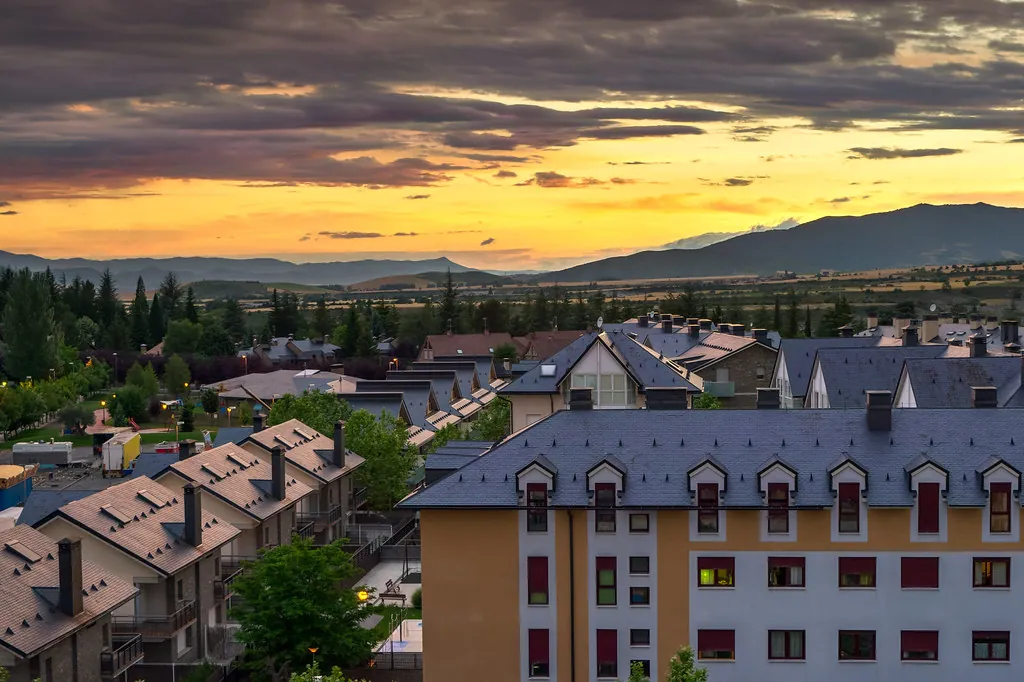
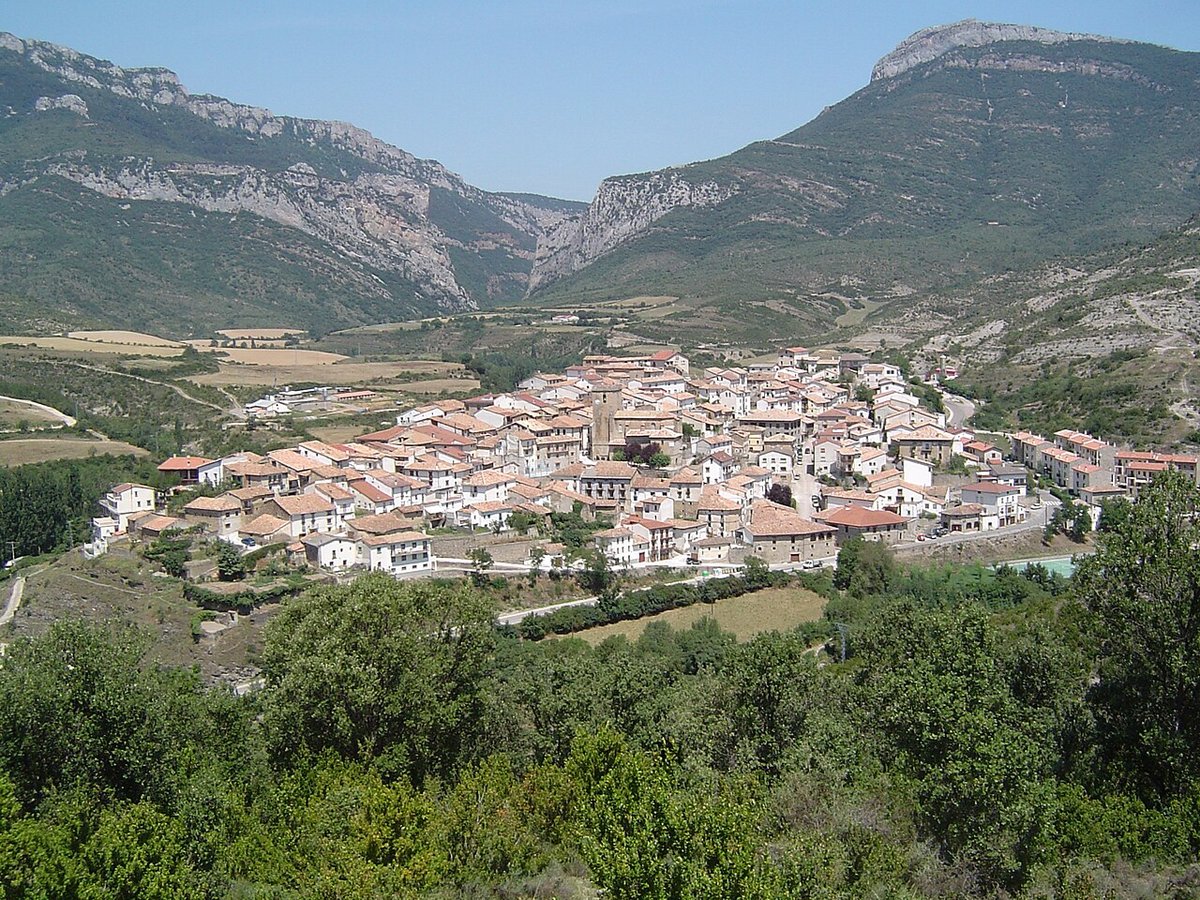
Canal de Berdún lies across a broad stretch of the Aragón valley, in the comarca of La Jacetania in northern Aragon. The name itself points to its geography: a natural corridor between mountain ranges. For centuries, this strip of land linked the Pyrenees with the more open country to the south, so movement through the valley has always been part of its identity.
Close by runs the Camino Aragonés of Santiago, one of the routes pilgrims take across northern Spain. It crosses this section of the valley before continuing towards Puente la Reina, tying Canal de Berdún into a much wider network of historic routes.
The village today is small, with just over three hundred inhabitants. Its economy has long depended on agriculture and livestock farming. Medieval documents connect it to the wider area of Berdún, which in the Middle Ages held some importance as a fortified settlement and a point of control over the valley. Nearby villages, including Canal de Berdún, formed part of that same rural system, with fields, grazing land and scattered settlements supporting everyday life.
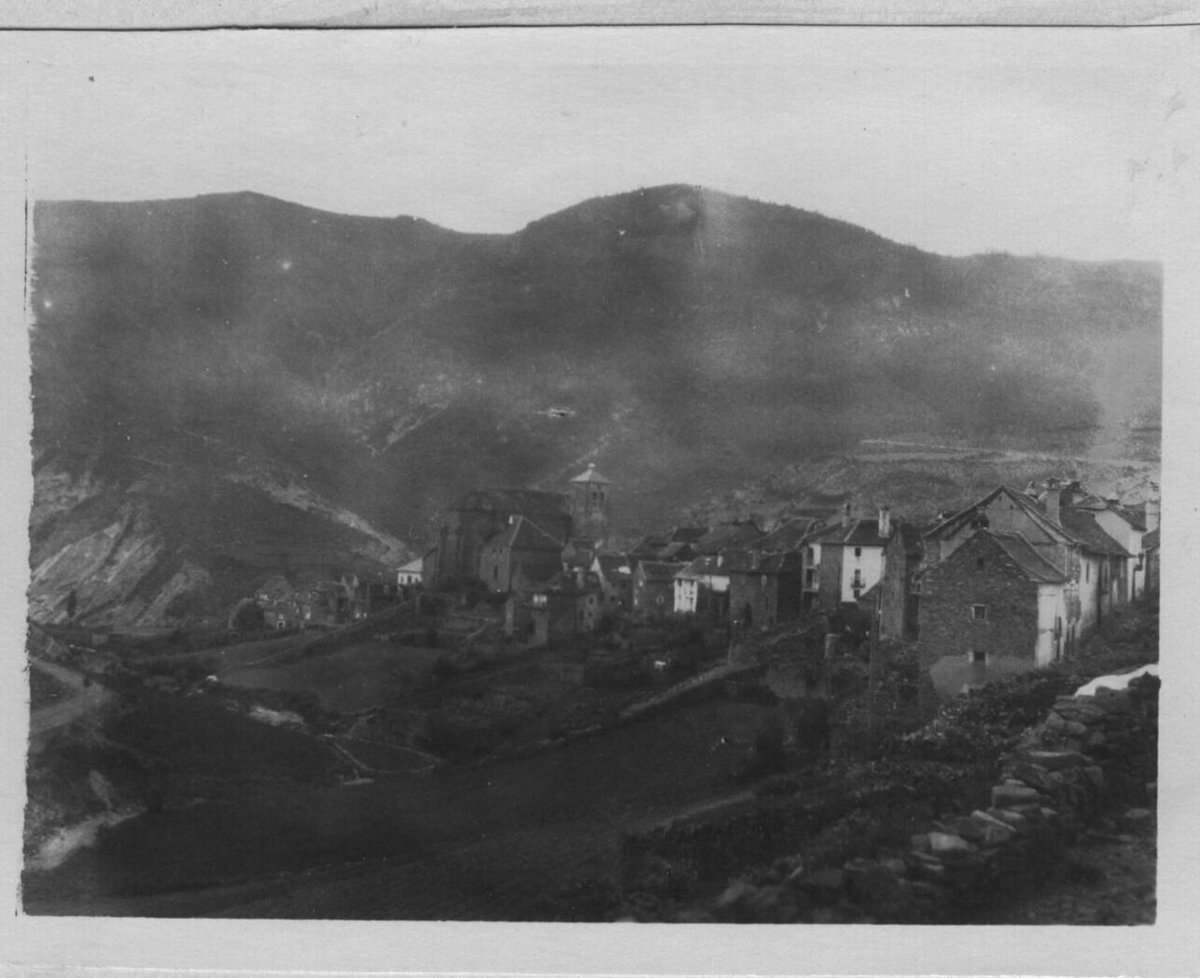
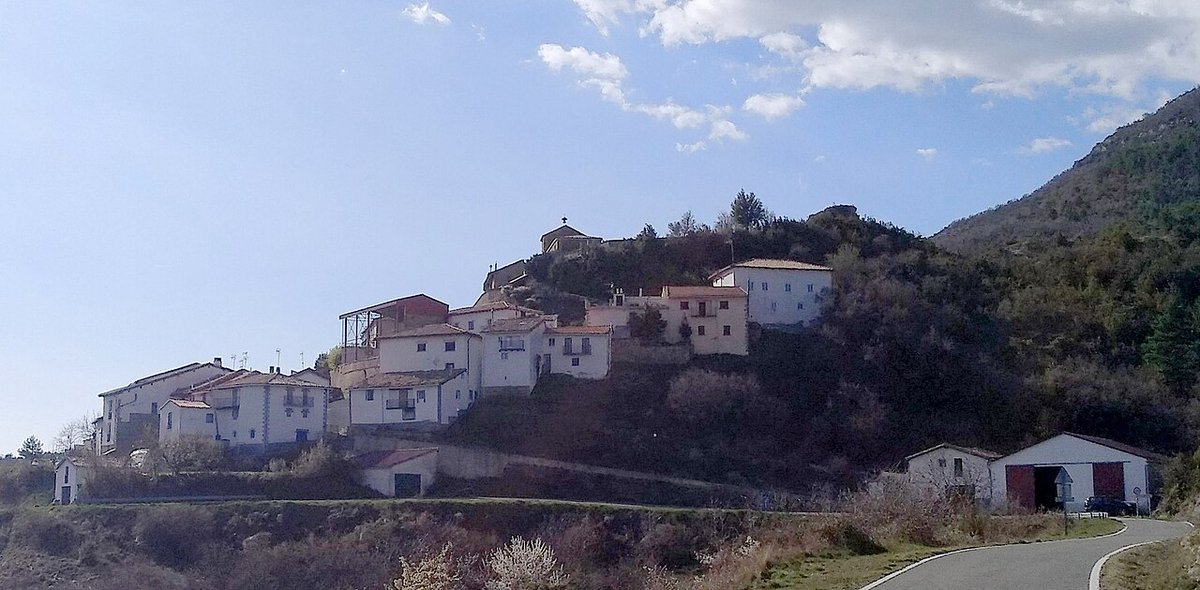
The village centre stands slightly raised above the surrounding farmland. This is no coincidence. Flooding has been a regular feature of the Aragón valley, and many settlements were built on small elevations to avoid the worst of it. Houses cluster along short, quiet streets, built from local stone and topped with tiled roofs. Corrals, vegetable plots and sheds still appear throughout the village, many of them in active use.
Stone, streets and a parish church
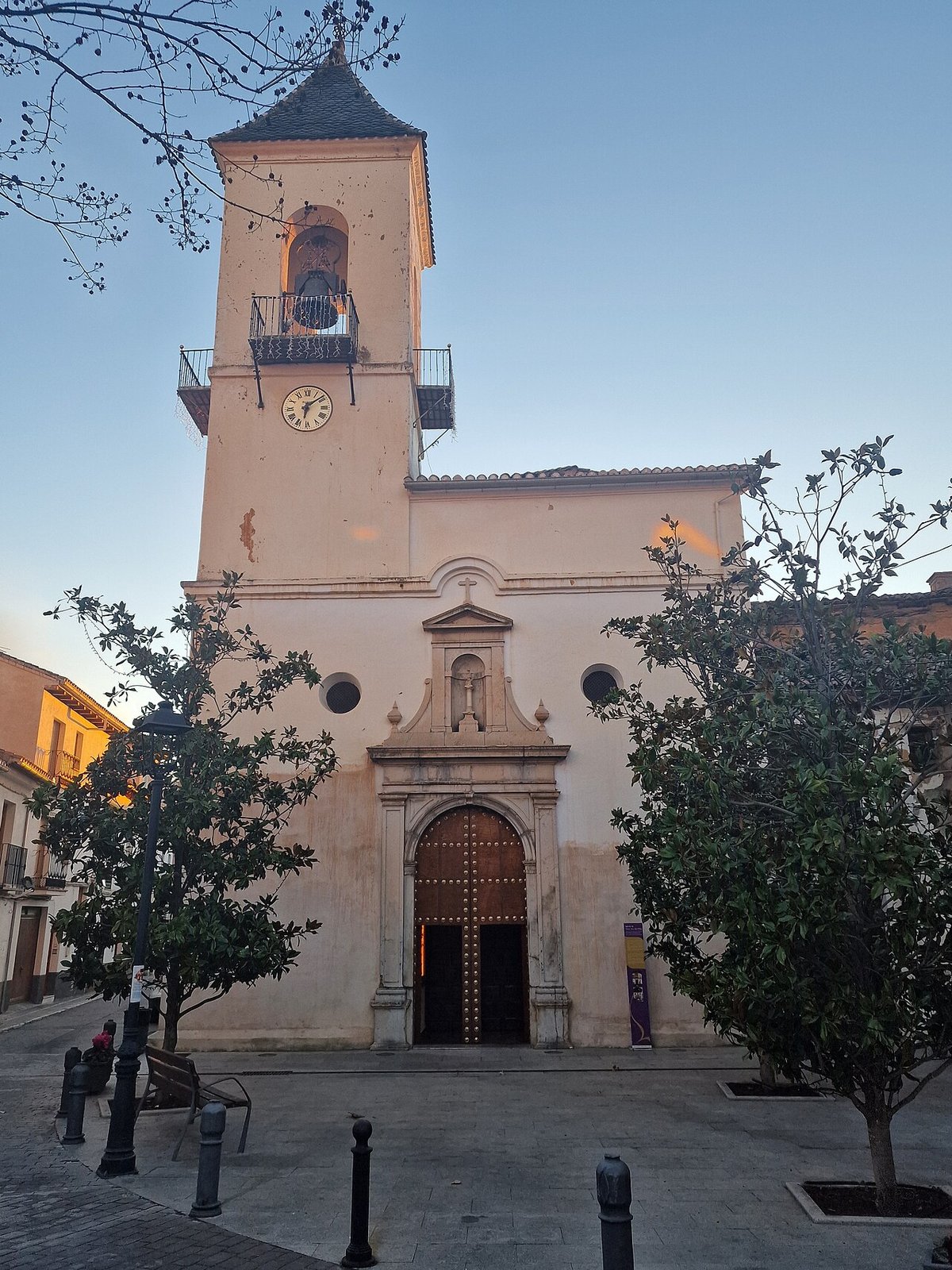
The parish church occupies the centre of Canal de Berdún. Its origins appear to be medieval, although much of what stands today reflects later alterations, a common story in rural Pyrenean churches. The structure is simple, with stone walls and a tower that acts as a visual reference from the surrounding fields.
Inside, elements from different periods remain, the result of gradual repairs and extensions over the centuries. This layered construction reflects how rural communities adapted their buildings over time, responding to changing needs and available resources rather than following a single design.
The houses in the village retain the typical features of traditional architecture in La Jacetania. Thick masonry walls provide insulation, while sloping roofs are designed to cope with winter snow. Doorways often feature carefully cut stone voussoirs, and some lintels display engraved dates or symbols. These marks usually relate to later family renovations rather than the original construction of the house.
Beyond the built-up area, traces of older agricultural practices are still visible. Terraced plots, dry stone walls and small animal enclosures shape the landscape around the village. They reflect a form of mountain farming where every usable piece of land was organised and maintained.
Walking the open landscape
Paths leading out of Canal de Berdún cross a notably open landscape. The Canal de Berdún itself, the wide depression that forms this part of the valley, allows for long walks through cultivated fields, gentle rises and patches of woodland that climb towards the nearby sierras.
Many of these routes are old. Before modern roads, they functioned as the main lines of communication and daily work between villages. Some still connect with other settlements along the Aragón valley, while others climb towards higher ground covered in scrub or pine forest.
Clear orientation is important before setting out. Signposting is not always continuous, and certain paths merge into agricultural tracks. A map or a recorded route helps make sense of the network.
Wildlife appears regularly, especially early in the day. Roe deer and wild boar move along the strips of vegetation at the edges of fields, and birds of prey use the valley’s air currents to travel across the open terrain.
Everyday activities and seasonal rhythms
Canal de Berdún functions as a quiet base for exploring the surrounding area. The valley allows for walking or cycling along farm tracks and paths that link neighbouring villages across the canal.
The setting also appeals to those interested in traditional agricultural landscapes. Seasonal changes are clearly visible here. Spring brings green fields, summer marks the harvest, and later months turn the land drier in tone.
Local food reflects what has long been raised and produced in the area. Lamb and beef feature prominently, alongside home-made cured meats and seasonal products. In autumn, when conditions are favourable, mushrooms appear in nearby woodland. The rivers of the valley have also supported a tradition of fishing, particularly for trout.
Winter alters how the area is used. Snow can cover higher paths, limiting movement to main tracks and areas close to the village. There are no dedicated facilities for snow sports, and the mountains continue to be used in the same practical way as during the rest of the year.
Traditions and summer gatherings
Local festivities take place mainly in summer, when many families return temporarily to the village. At that time, the population grows and the central square becomes more active.
Celebrations follow a familiar pattern found across many Pyrenean villages. Religious events sit alongside music and shared meals. These occasions are less about attracting visitors and more about reconnecting neighbours and former residents who come back for the season.
Throughout the year, traditions continue on a smaller scale, tied to the rhythms of rural life rather than a fixed calendar of large events. Canal de Berdún remains closely linked to its landscape, its history and the patterns that have shaped the Aragón valley for generations.