Full Article
about Mianos
Hide article Read full article
A village that appears without warning
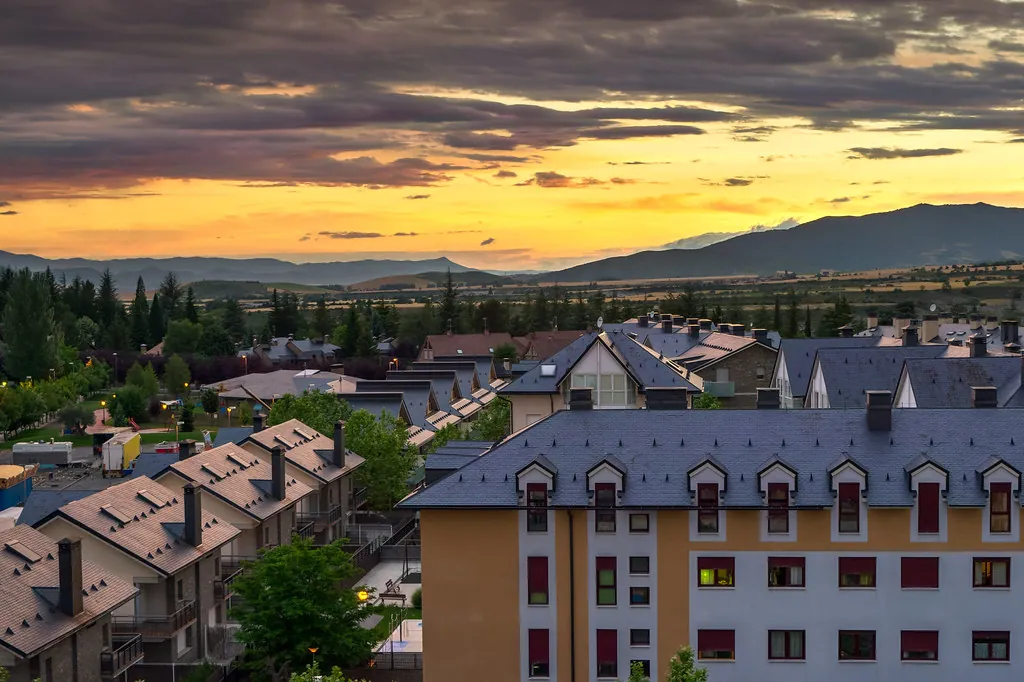
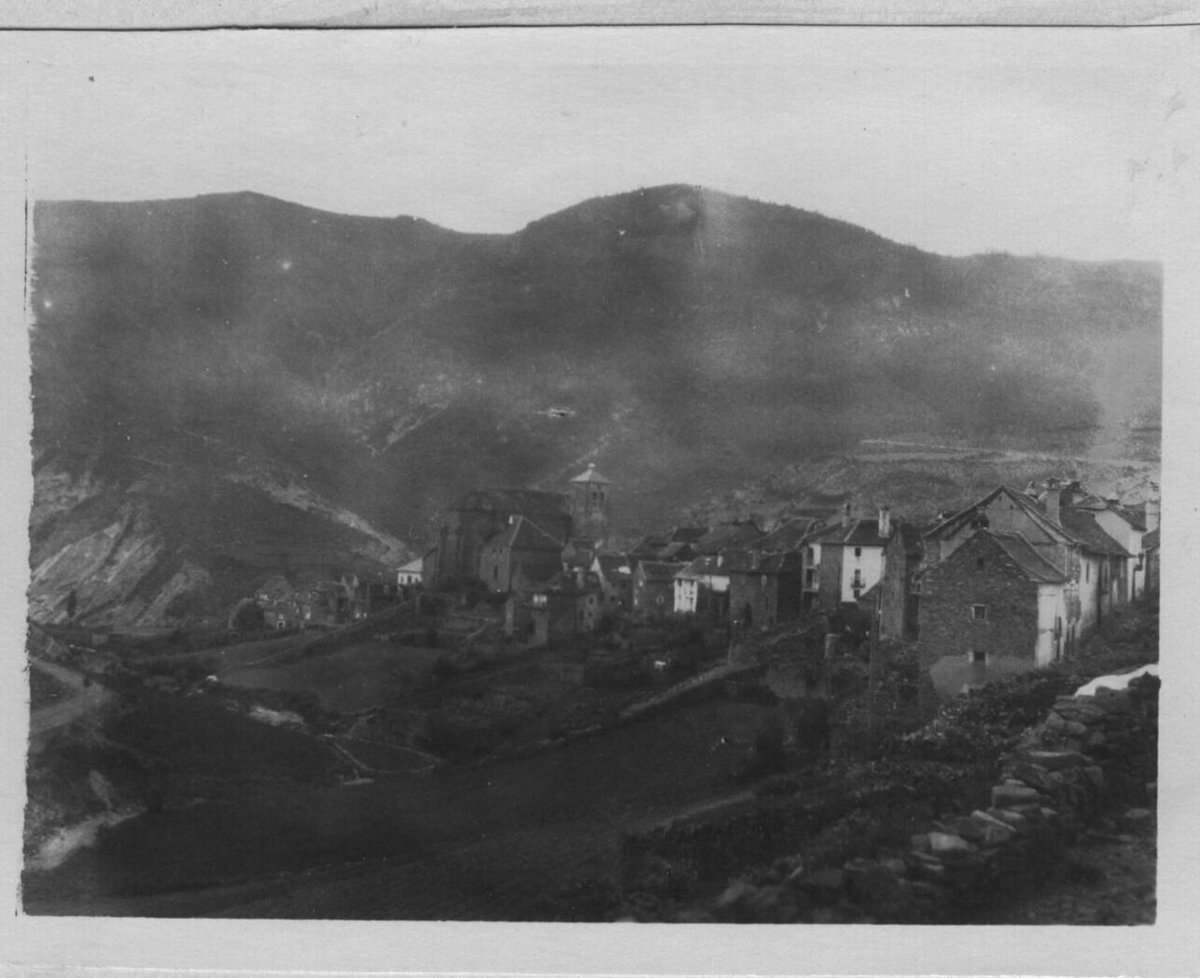
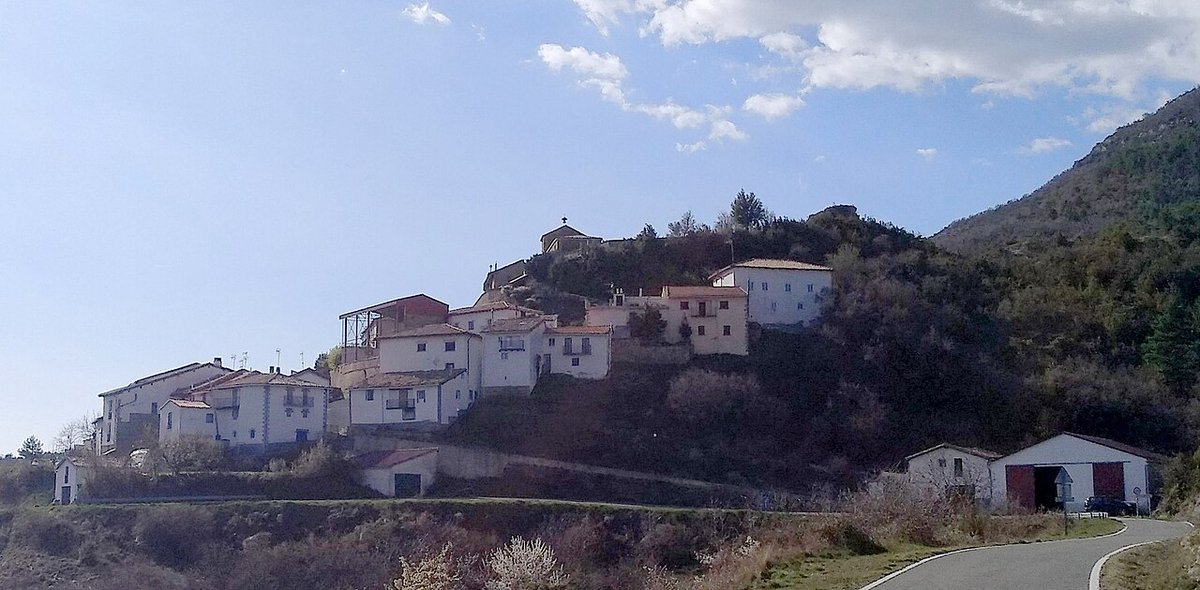
Early in the morning, as the sun begins to fall across the fields of the Jacetania, Mianos comes into view almost without announcement: a small group of stone houses lined along a low rise, with the Yesa reservoir stretching out in the distance as a pale blue strip. The silence is not absolute, but it comes close. Wind moves through dry grass, a dog barks from a yard, and now and then a distant tractor breaks the stillness.
Tourism in Mianos does not follow the patterns seen in other Pyrenean villages. There are no signs, no shops, no steady flow of people arriving and leaving. What stands here is a very small settlement, just a few dozen residents, where houses gather around a short main street and a handful of side lanes that can be walked in minutes. Even so, it is worth slowing down. The old stonework and uneven façades reveal more the longer you look.
From the small area at the entrance where visitors usually leave their car, everything is easily explored on foot. In summer, some houses reopen and there is a little more movement. For the rest of the year, the feeling is of a very quiet place where time is measured less by the calendar than by the agricultural seasons.
Stone, wood and small details
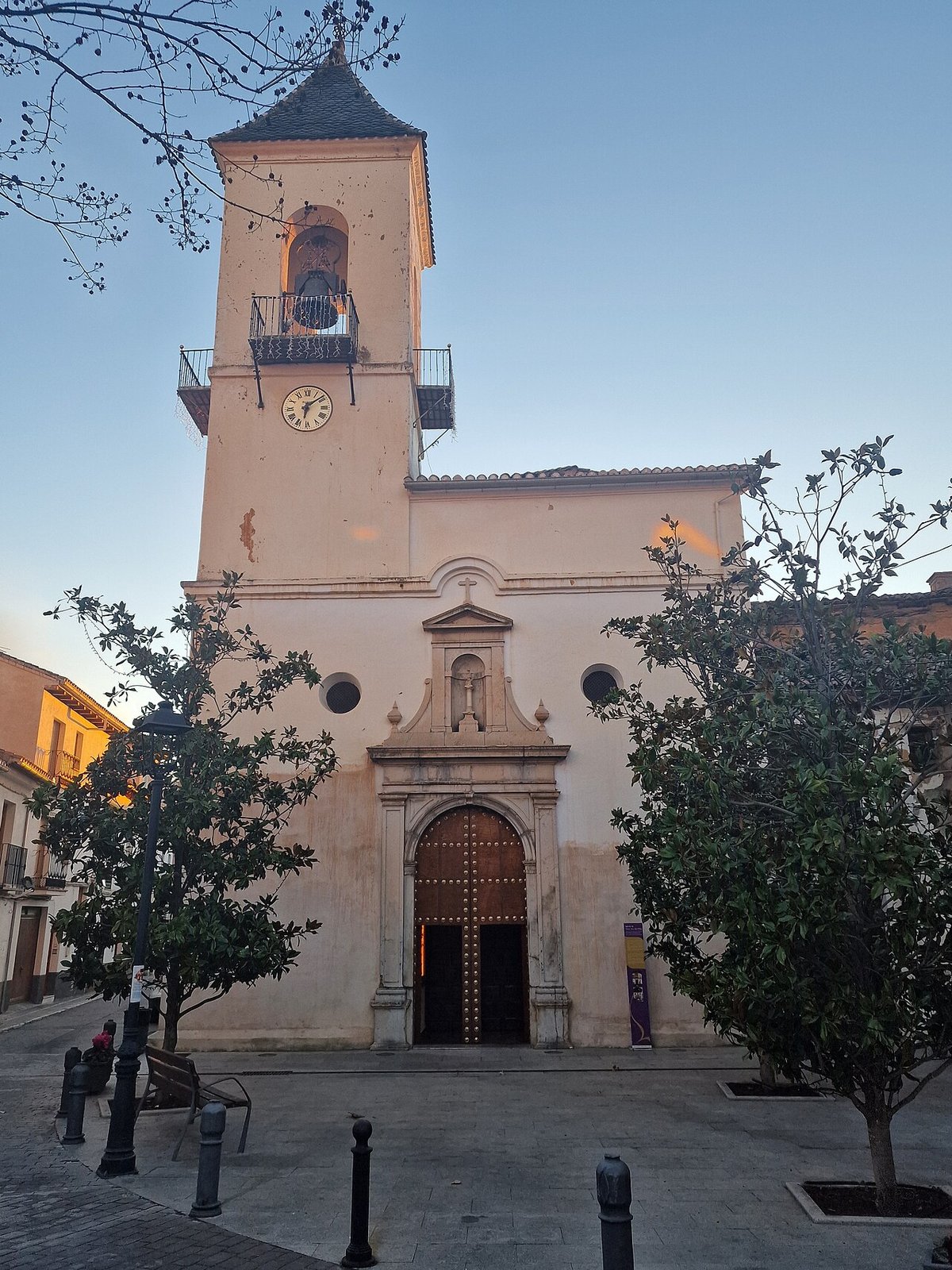
The church rises slightly above the rooftops and works as a simple reference point when moving through the village. It is a sober stone building, integrated into the whole, in line with many settlements in this part of Aragón.
The houses show a practical rural architecture that defines the area: thick walls, doorways formed with clearly cut voussoirs, simple iron balconies, and wooden eaves darkened by sun and winter weather. A slow walk brings out smaller details that might otherwise go unnoticed. A stone basin beside a doorway, old metal fittings on a gate, a bench set against a wall that looks as if it has been there for decades.
There are no monuments designed to draw attention. Interest lies instead in how the whole has been preserved. Narrow streets, some with uneven paving, run between houses with attached corrals. Low walls mark out small plots of land or former stables.
Beyond the built area, the agricultural landscape opens up. Fields divided by raised edges, plots that change colour with the seasons, and in the distance the outline of the pre-Pyrenean ranges. On clear days, especially in winter, the higher Pyrenees appear more sharply defined on the horizon.
Tracks through open land
Just outside the village centre, agricultural tracks begin. These are used by residents to reach their fields. They are not signposted as walking routes, yet they can be followed without difficulty if approached with care and respect, closing any gates along the way.
Most of these tracks are wide, with compacted earth underfoot. In some stretches, grass grows between the wheel marks. From here the scale of the surroundings becomes clearer: open fields, a few scattered rural buildings known locally as bordas, and glimpses of the reservoir’s water appearing between low hills.
In summer, it is wise to carry water and protect against the sun. Shade is scarce, and wind often moves strongly across the more exposed areas. A map or orientation app can be useful for those who choose to walk further from the village.
At certain times of year, birds are easy to spot moving across the fields or resting along the edges of the plots. This is not a place set up for birdwatching in any formal sense, but anyone who walks quietly will notice these small movements across the landscape.
There are no bars or shops in Mianos. Anyone planning to spend time here is best off bringing food from Jaca or from other villages in the comarca. It is common to see visitors sitting on a low wall or on the grass beside a track, having something simple to eat before continuing their walk.
Traditions that continue quietly
Festivities usually take place in summer, when family members who live elsewhere return to the village. During those days, the atmosphere shifts. More cars appear, voices fill the streets, and the church once again gathers people inside.
Some rural customs that shaped life here for decades still persist. The matanza del cerdo, the traditional pig slaughter carried out in colder months, continues in some households, although it no longer has the collective character it once did.
These are modest occasions, more family-centred than public, and they follow a rhythm very different from the large-scale festivities found in bigger towns.
Reaching Mianos and choosing your moment
Mianos is located in the comarca of the Jacetania, not far from Jaca, although the final stretch is along secondary roads and local tracks. There is usually no public transport reaching the village, so arriving by car is the usual option.
Access is straightforward, but the last kilometres are best taken slowly. The roads are quiet, with gentle bends and very little traffic.
Morning and late afternoon tend to be the best times to visit. Light falls more softly across the fields, and the wind often eases slightly, allowing the landscape to settle into a calmer rhythm.