Full Article
about Alcampell
Hide article Read full article
A village you don’t plan for
Some places come with a checklist. Others appear simply because they sit along the way. Alcampell, in the comarca of La Litera, often falls into that second group. It lies around 20 kilometres from Lleida and has a population of roughly 650 people. There are no headline monuments or streets arranged for quick photos. What you find instead is a place that carries on at its own pace, largely unaffected by whatever is happening elsewhere.
Daily life remains closely tied to the land. Walking along Avenida de la Constitución or Calle Mayor, it is common to see neighbours chatting without hurry, or children learning to ride a bike where traffic rarely interrupts. Storks often build nests on rooftops, a familiar sight across parts of rural Spain. Beyond the houses stretch olive groves and cereal fields, which explain far more about the local economy than any signboard could.
San Miguel and the older houses
The most prominent building is the parish church of San Miguel Arcángel. It dates back to the late 16th century and has been altered over time, something typical in villages across this part of Aragón. Its square bell tower rises above the surrounding streets and works as a natural reference point when moving around the village.
Nearby, a number of older houses still show how Alcampell once functioned. Stone mixed with brick on the façades, large doorways and heavy iron fittings all point to a time when carts, animals and tools passed through regularly. Some properties have been renovated, though others retain their original structure, designed for an agricultural way of life that is less common today.
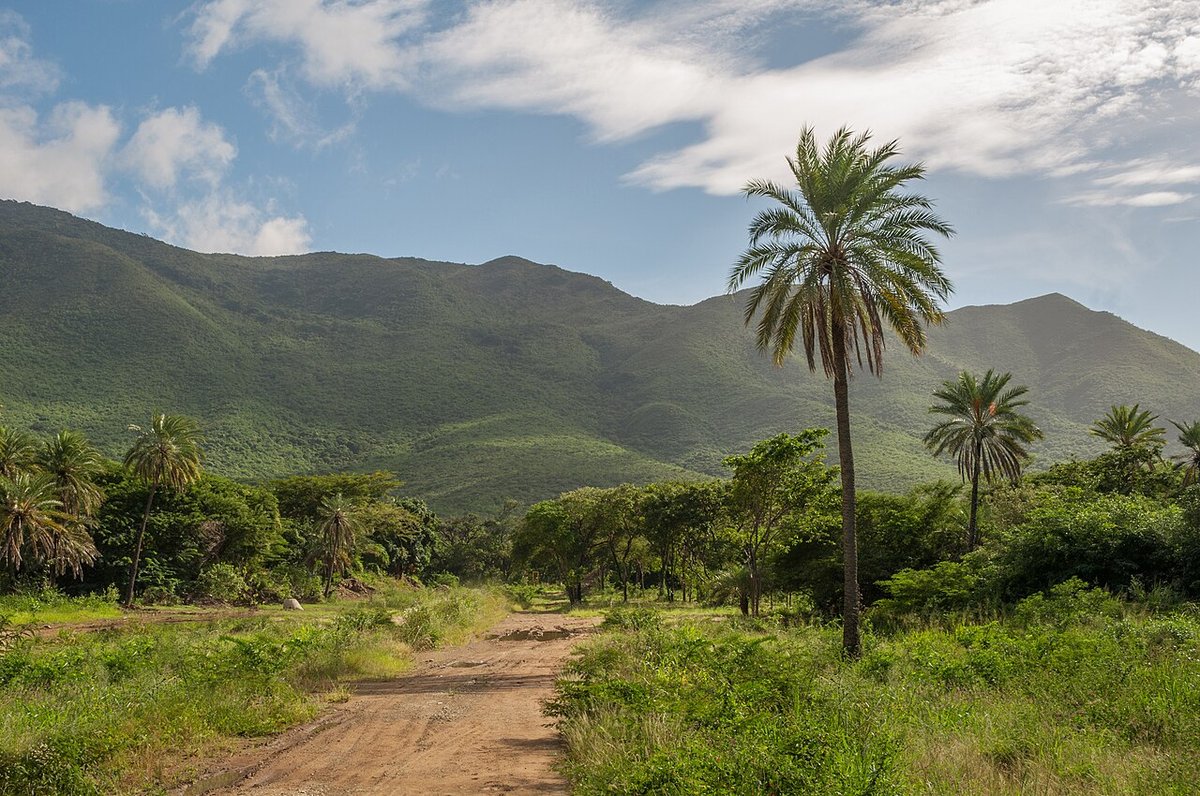
Step beyond the built-up area and the countryside appears almost immediately. The terrain is gently undulating rather than dramatic, dominated by cereal crops and olive trees. The seasons bring visible shifts. Spring introduces almond blossom and greener fields, while summer returns the landscape to drier tones. Autumn brings activity linked to the olive harvest, which continues to play an important role in the local economy.
Paths through fields and small hermitages
A straightforward way to explore the surroundings is by following the agricultural tracks that connect Alcampell with nearby places such as Tamarite de Litera and El Sabinal. These are not mountain routes or technical trails. They are wide paths, easy underfoot, and usually suited to unhurried walks rather than demanding excursions.
Along these routes stand small hermitages like Santa Ana and Santa Quiteria. Historically, these modest buildings served as gathering points for local pilgrimages and celebrations. You may also come across old animal enclosures or an occasional abandoned masada, the rural shelters once used by farmers and shepherds over many decades.
The appeal of these walks lies less in reaching a specific viewpoint and more in observing the landscape as it is. Tractors parked beside freshly worked fields, isolated holm oaks, low pines and wide stretches of open sky form the backdrop. It is a setting where the details are simple but consistent, shaped by agricultural routines rather than tourism.
What time here looks like
It is worth being clear: Alcampell is not a place to fill an entire weekend with scheduled activities. That is part of its character rather than a limitation. It works best as a quiet stop, somewhere to walk through the streets and get a sense of how life unfolds in this part of La Litera.
A stroll around the nearby orchards and olive groves already provides context. Olives remain central, and during the harvest season groups can be seen working in the fields. Local cooperatives have produced olive oil for years, although they are not typically set up for organised visits aimed at travellers.
Food reflects the same rural background. Dishes such as migas, lamb stews and other substantial meals are rooted in the demands of fieldwork. Conversations with residents often turn towards the latest olive harvest or how rainfall has affected the year. These are everyday concerns, and they shape the rhythm of the village more than any external trend.
For those interested in photography, quieter moments offer the most. Early morning or late afternoon light changes the look of the olive trees, the low houses and the stork nests perched on rooftops. There are no large landmarks competing for attention, which leaves space for smaller details and softer contrasts.
Festivities that stay local
The main festivities take place in August in honour of San Miguel. They centre on religious events, music and gatherings among neighbours. Rather than being designed as a spectacle for visitors, these days function as a meeting point for people with ties to the village, including those who live elsewhere for much of the year.
Other traditions follow the agricultural calendar. The olive harvest, for example, still carries a shared, family-based dimension in many cases. During Semana Santa, or Holy Week, processions take place in a restrained style, similar to those seen in many small towns across Aragón.
Alcampell does not try to compete with better-known destinations or present itself as something it is not. It continues to operate as a working village. For anyone curious about rural life in this part of Huesca, spending some time here makes more sense than ticking off a list of sights. The interest lies in observing how things function day to day, in a place where change arrives slowly and routine still sets the pace.