Full Article
about Arén
Hide article Read full article
A Village in the Corridor
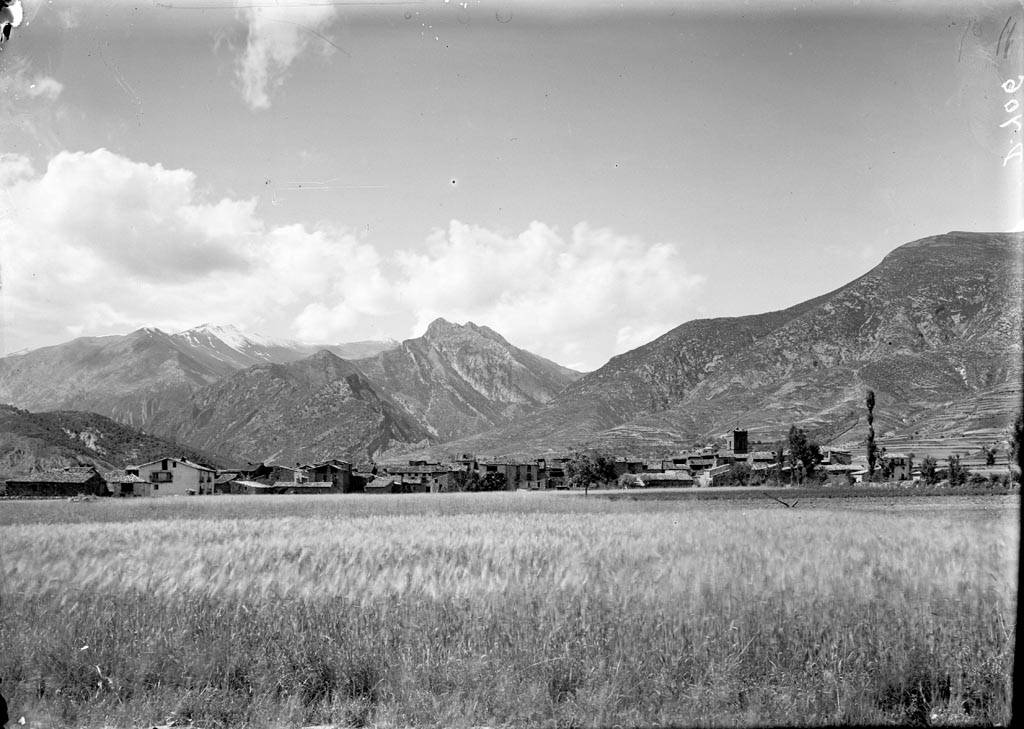
Arén occupies a specific kind of place: the geographical pass. It sits at the southeastern end of Ribagorza, where the N-230 road funnels traffic between the plains of Lleida and the Pyrenean valleys. This has been a transit route for centuries, for livestock, goods, and people. The village, home to some three hundred residents, was built into that current of movement. It is less a secluded mountain hamlet and more a settlement of the corridor, where life has long been shaped by what passes through.
The layout confirms it. Arén is not perched on a peak for defense, but settled on accessible ground where the valley opens. The surrounding land shows the work of generations—terraced plots, small fields, and wooded slopes that speak of a mixed economy of farming and grazing. The landscape feels used and understood, not merely scenic.
The Fabric of the Place
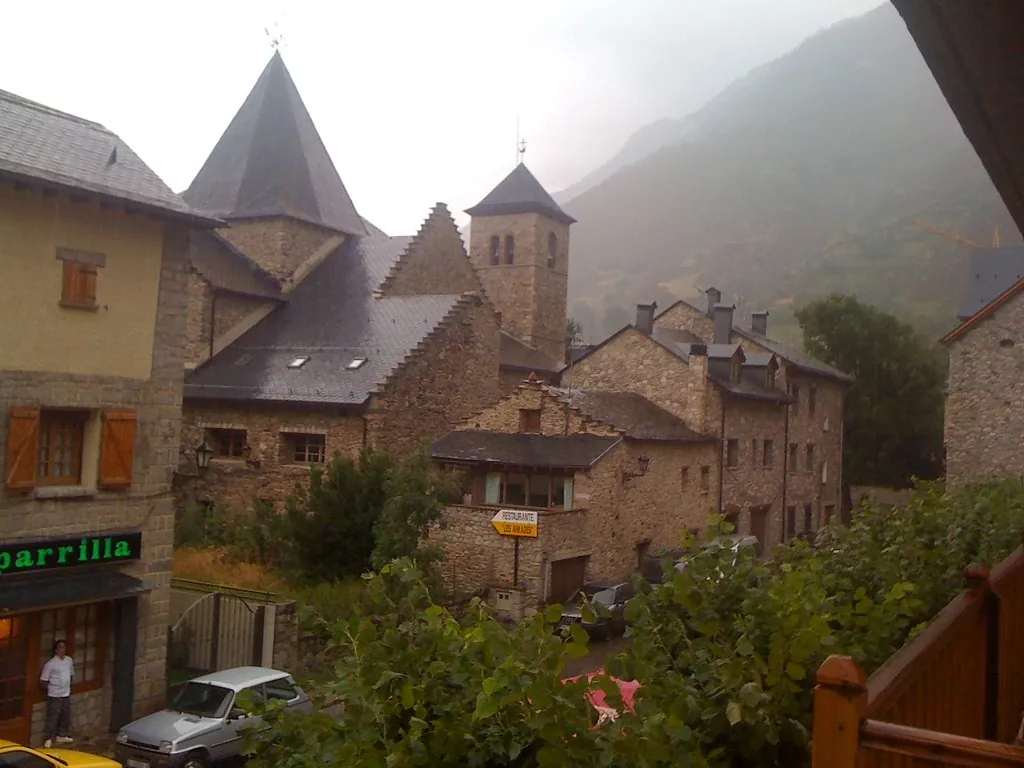
The architectural interest in Arén is collective, not monumental. The old centre is built from local sandstone, giving the entire village a consistent, weathered tone of ochre and grey. Roofs are of traditional tile. There are no palaces or great churches; the value is in the ensemble.
The parish church of San Martín sits in a raised position. Its origins are Romanesque, visible in parts of the masonry, but the building is the result of successive modifications. The bell tower, added later, is what you see first when approaching by road. It’s a marker, not a masterpiece.
Walk the compact network of streets and you’ll see the details: doorways with rounded arches, lintels carved with dates—1692, 1784—and faded coats of arms. These are quiet, personal records in stone, left by the families who built here. They aren’t signposted; you find them by looking.
Paths into the Transitional Landscape
The terrain around Arén is one of transition. From the valley floor, holm oak and pine woods climb the slopes, cut by seasonal ravines. The paths that leave the village are mostly old rural tracks, used by shepherds and farmers. They are not major GR hiking routes, but connections to the immediate landscape.
A walk of two or three hours can take you up to viewpoints overlooking the N-230 corridor and the first pre-Pyrenean sierras. The condition of these paths can vary; after heavy rain or during forestry work, some may be less clear. In spring, the fields are green and the sound of water runs in the gullies; by autumn, the woods turn colour and the air is clear.
This is Mediterranean mountain woodland. If you walk quietly in the early morning, you might see griffon vultures circling on thermals, or hear wild boar rustling in the undergrowth. The ecology here is tougher and drier than in the high Pyrenees just to the north.
Rhythm and Return
The annual rhythm in Arén follows the rural calendar of Alto Aragón. The main festivity is for San Martín, in November, but it’s in summer when the village feels most active. People who now live elsewhere return then, and the population temporarily swells.
Some events are tied to the end of harvests or other communal work. They typically involve a shared meal in the plaza—often ternasco (roast lamb) or a substantial stew—followed by music. The cuisine is straightforward and seasonal, relying on what the local land produces: lamb, garden vegetables, and wild mushrooms in their time.
A Practical Note on Visiting
Arén is reached directly from the N-230. From Huesca, you take the A-22 to Binéfar and then head northeast on the N-230; the final approach winds through increasingly rolling terrain.
Spring and autumn are perhaps the most revealing seasons to see the area, when the light is sharp and the landscape is either blooming or layered with colour. Summer days can be hot, though evenings are cooler than on the plains. If you plan to walk, start early.
This is not a village of spectacular sights. Its character is accumulated, born from its role as a place of passage and subsistence. You come to read a landscape and a way of life that has persisted, quietly, in a corridor between valleys.