Full Article
about Beranuy
Hide article Read full article
A village shaped by its terrain
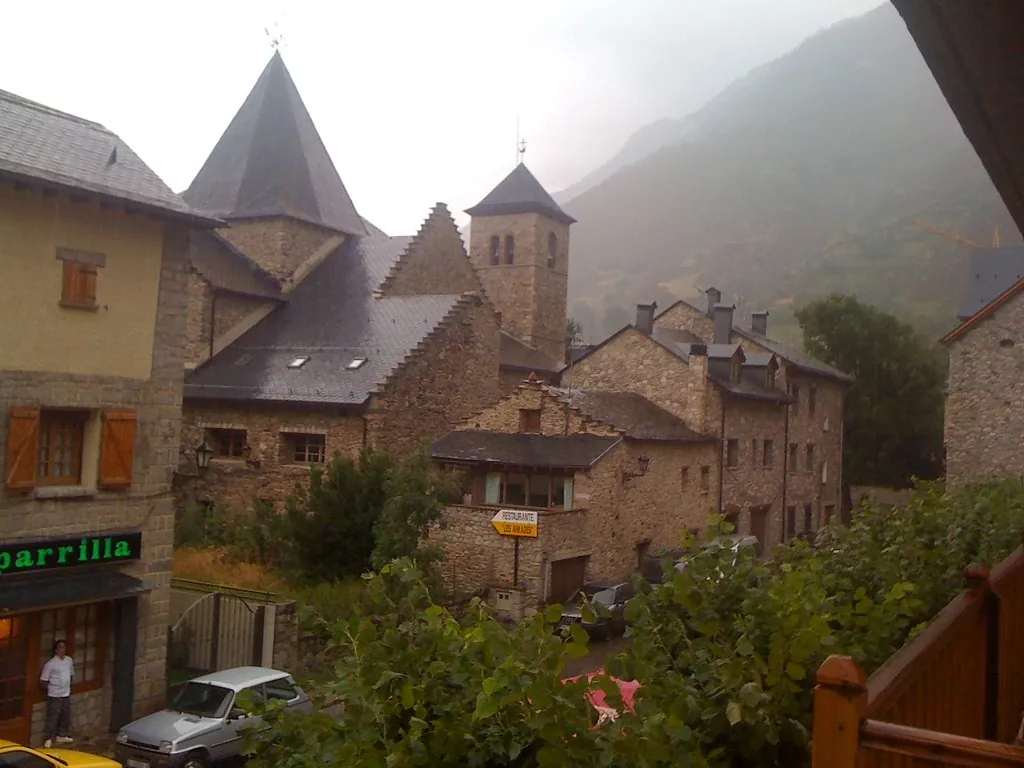
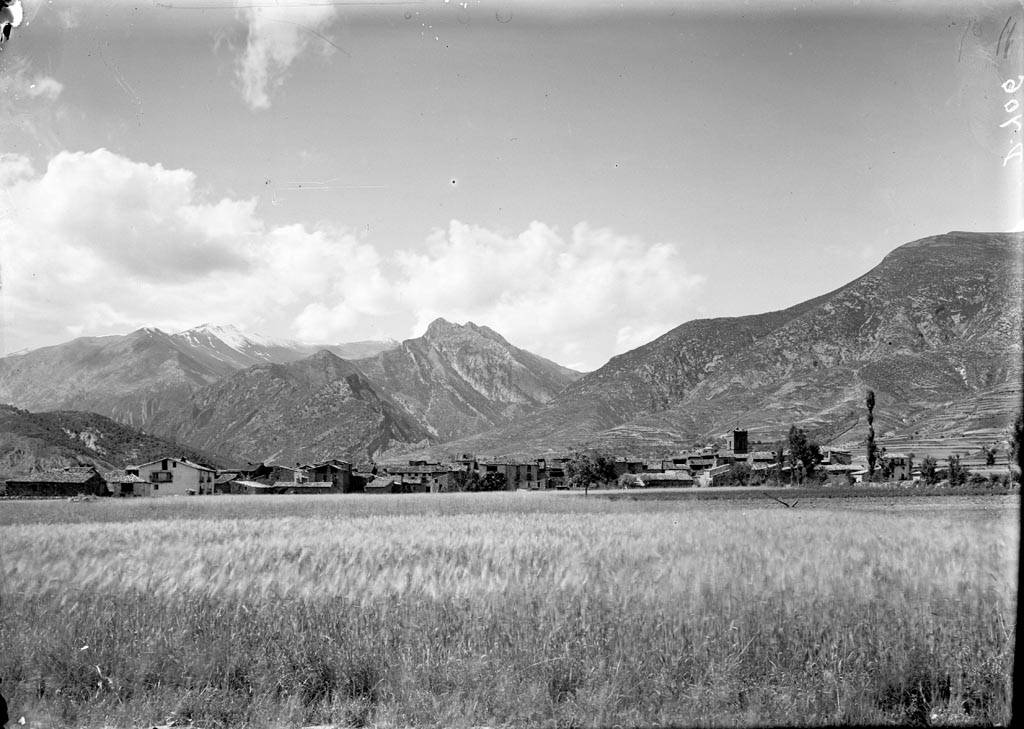
Beranuy, in the western part of La Ribagorza, sits at around 900 metres. Its population, fewer than seventy people, is scattered across several small settlements. This dispersion isn’t random; it’s the result of a geography of hills and ravines that for centuries dictated where people could build and farm. The layout you see is the old one: houses clinging to slopes, terraced plots stepping down towards the valley floor, and paths connecting it all. What you hear now is mostly the wind or water running through the gullies.
Building with the mountain
The architecture here follows a strict, practical logic. Thick stone walls for insulation, steeply pitched roofs for snow, streets that follow the incline. Ornament was never the point. The parish church of San Andrés reflects this. It’s a restrained, solid building, typical of the area, where its role as a community marker in a dispersed territory was more important than grandeur.
Around the village, the old agricultural terraces are still visible, though many are now softened by scrub and young trees. They tell you what was possible here: small plots for cereals and potatoes on land too steep to farm otherwise. Higher up, the woodland takes over—oak, beech, and pine, depending on the slope. From certain clearings, the views open up across neighbouring valleys toward the higher Pyrenean peaks.
Walking the old routes
The paths around Beranuy were not made for leisure. They are former working tracks for moving livestock, reaching fields, or walking to the next village. They remain the best way to see the area.
Signposting is intermittent, as is common here, so carrying a map is advisable. The paths themselves, however, are often clear—defined by stone walls, the lie of the land, and generations of use. Don’t let the short distances on a map deceive you; the changes in elevation are constant and define the pace. A two-hour walk here can feel more substantial than a flat four-hour walk elsewhere.
In spring and autumn, birds of prey are a common sight, using the thermal currents along the cliffs. They circle over open meadows or follow the line of the ravines.
Seasonal rhythms
Life in Beranuy shifts with the seasons. Winter is quiet, defined by the small community that stays year-round. Summer changes the tone. The patron saint festivities, usually held in July or August, act as an annual reunion. Families return to ancestral homes, and for a few days, the streets fill with shared meals and evening gatherings. It’s a local affair, focused on continuity rather than putting on a show for outsiders.
A note on timing
From May through October, conditions are generally more reliable for walking. Late spring brings green meadows; early autumn a slow turn in the forest colours. Winter can bring snow at this altitude, and when it does, it transforms the landscape completely. If you visit then, be prepared for potentially slippery roads and rapid weather changes.
Before setting off
You can walk through the main settlement of Beranuy in twenty minutes. Its value is as a quiet point of departure. There are no major monuments or extensive services. What’s here is a landscape shaped by centuries of adaptation. Walking its paths is the direct way to understand that relationship—between the terrain and the people who have lived with it.