Full Article
about Campo
Hide article Read full article
Campo in the Valley of the Ésera
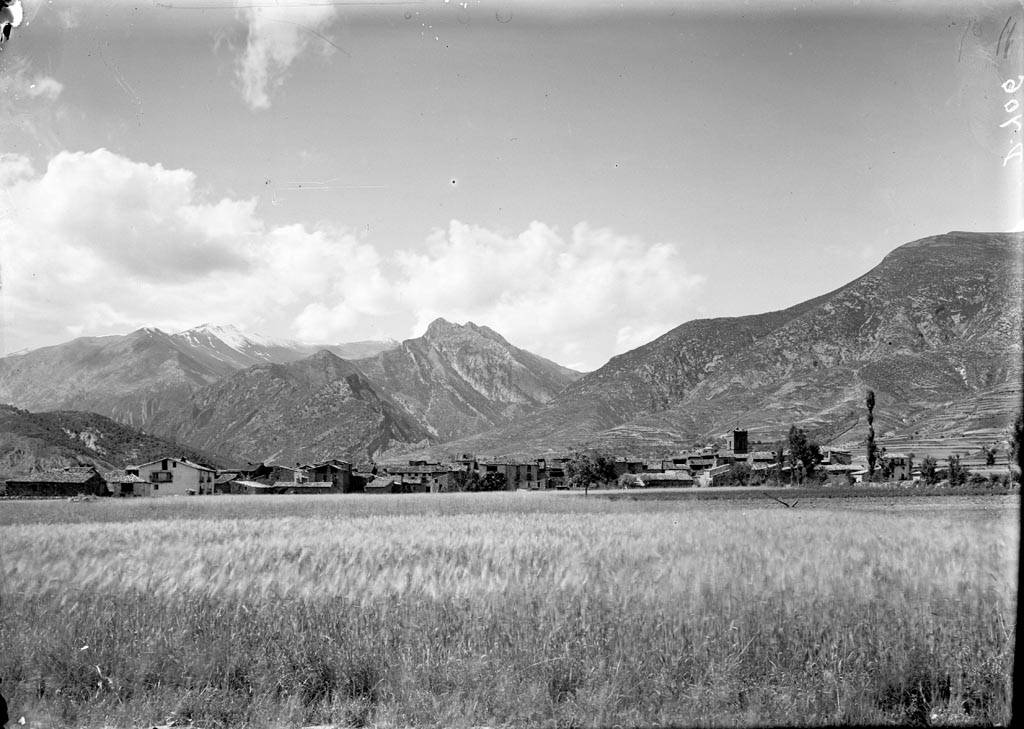
Campo sits where the Ésera river valley begins to widen. For centuries, this position made it a natural point of transit between the high Pyrenean valleys to the north and the lower Somontano lands to the south. The geography dictated its function long before the roads arrived.
Today, around five hundred people live here. The rhythm is that of a mid-mountain village, tied to the river and the surrounding slopes. The Ésera is the central axis; it carved the space the village occupies.
A Practical Architecture
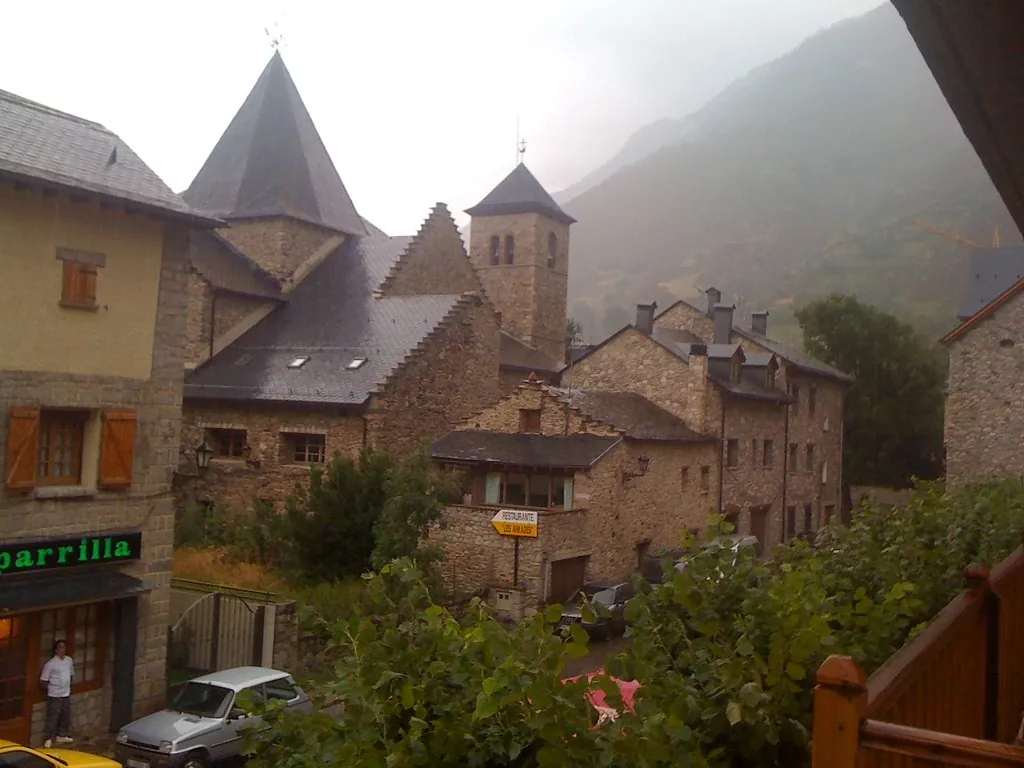
The old quarter is compact, built with the dark local slate and schist. The architecture is functional: steep roofs to shed snow, solid walls against the valley’s wind. It was built with what was at hand, for need rather than show.
The parish church, its core dating from the 16th century, occupies a central position. Its significance is more social than artistic; for generations, it was the community’s meeting point. The most telling details are in the houses: carved lintels, family shields on some doorways, and layouts that turn inward toward sheltered courtyards.
A Transitional Landscape
The terrain here is neither the high Pyrenees nor the open plains. The Ésera marks the valley floor, flanked by meadows, remnants of old cultivation terraces, and patches of woodland. From higher points, the view looks north toward more rugged mountains. The same slate you see in the hillside cuttings is in the walls of the houses. The landscape feels in-between, which is precisely its character.
Walking from the Village
Several footpaths start in Campo. They follow old livestock or communication routes along the river or up the slopes. The easier walks stay on the valley floor. Those that climb provide a clearer understanding of the village’s placement within the valley.
Their value isn’t in dramatic landmarks, but in how they connect you to the structure of the land. Gradients can be steady and distances misleading; it’s wise to check local conditions before setting out.
Seasonal Rhythm
The village’s pace shifts with the seasons. Summer, particularly August, brings a noticeable activity as former residents return. Local festivals blend religious observance with community-led gatherings; they are participatory, not spectacles.
In autumn, some households still observe the tradition of the matanza. Historically, this was a crucial domestic event, less a celebration than a necessary collective labor. It speaks to a time when work, food preservation, and community cooperation were inseparable in these mountain valleys.
A Visit to Campo
Spring and early summer bring strong water flow in the river and green to the meadows. Autumn offers a different palette with the change of leaf. The village centre can be seen thoroughly in a short time. To understand Campo, however, you need to leave it—to walk one of the paths that link it to its neighbors and see how it fits into the fold of the Ésera valley.