Full Article
about Foradada del Toscar
Hide article Read full article
A hillside village in the light
By mid-morning, once the sun has cleared the slopes, the light filters through oaks and beeches. The ground still holds a trace of damp, and walking slowly brings out the dry crunch of leaves, with the occasional distant cowbell. Foradada del Toscar appears in that kind of silence, a small cluster of stone houses set along a hillside in the valley.
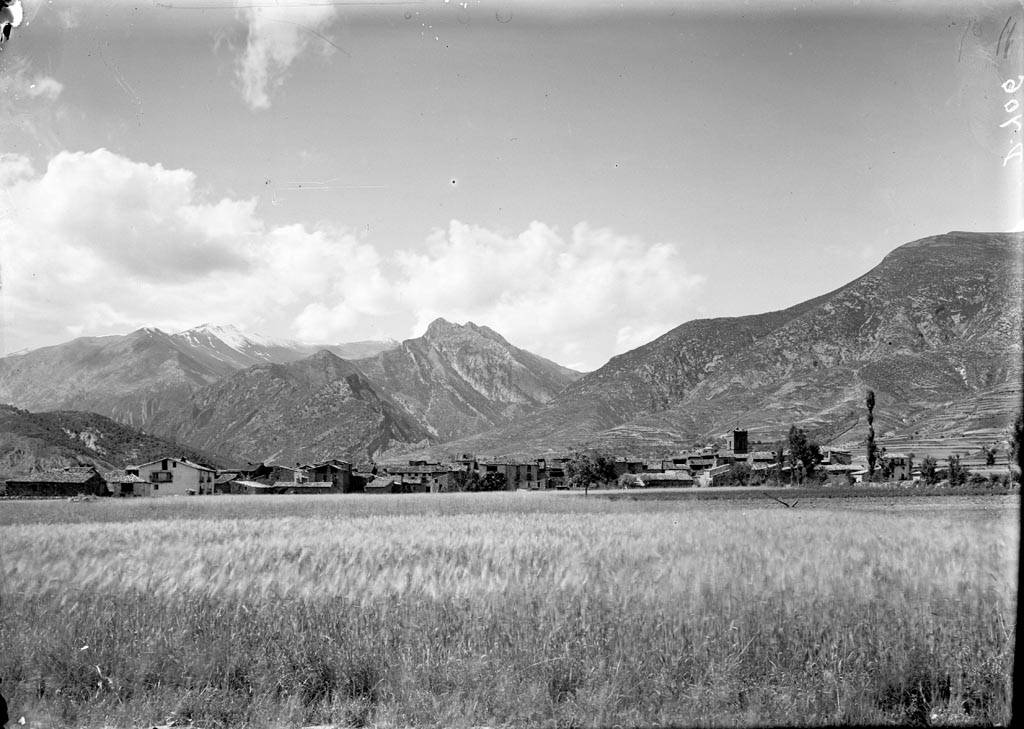
This municipality in Ribagorza, in the north of Aragón, has just over a hundred residents. It sits in a transition zone. The Pyrenees are still present, yet the landscape begins to open into broader valleys. Around it lie limestone ravines, grazing meadows and mountains that, not far away, rise beyond two thousand metres. Daily life here carries more weight than any idea of tourism.
Limestone and a compact centre
The name Foradada del Toscar is often linked to the limestone formations found in the nearby ravines. These are pale rock faces, sometimes pierced or eroded, standing out against the dark green of the forest. On cloudy days the whole scene takes on a muted grey tone. When the sun comes out, the stone turns almost white.
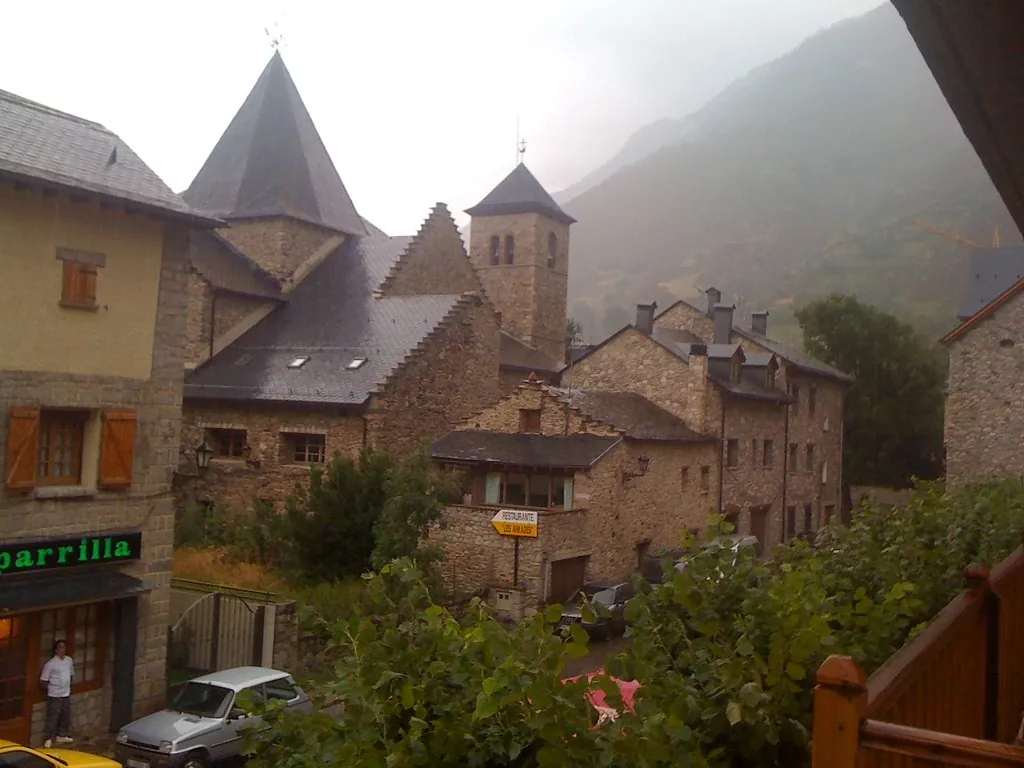
The village itself is small. Narrow streets run between stone houses with dark roofs. A few wooden balconies hold plants in summer or lines of washing. It does not take long to walk through.
The parish church, dedicated to San Miguel, retains elements of Romanesque origin, though the building has changed over time. From around the church there are open views across the Toscar valley, with meadows, scattered patches of woodland and higher slopes closing the horizon.
Walking beyond the village
What draws attention in Foradada del Toscar lies beyond its streets. Old paths leave directly from the village, some used for generations by shepherds heading up to higher grazing areas.
Not all of these routes are clearly marked. Some begin as dirt tracks that gradually narrow. Others are simple paths traced by livestock. Anyone keen to walk here should carry a map or a reliable track, especially when planning to be out for several hours.
The limestone ravines surrounding the municipality create a landscape that becomes quite vertical in places. There are rock faces, narrow passages between walls and areas where the forest closes in. In winter, animal tracks are easy to spot in snow or mud along the paths. Roe deer and wild boar are common, though rarely seen.
By mid to late afternoon, when the sun warms the slopes, birds of prey can often be seen using the air currents above the valley.
Water sources and simple pauses
Along some of the paths there are springs of very cold water, channelled in a basic way. They are usually accompanied by a small bench or a stone table. These are the kinds of stopping places long used by local people, somewhere to drink or eat something quickly while working in the hills.
There are no large recreational areas or facilities designed for crowds. Most of the time, the only sounds are running water and wind moving through the trees.
Seasons and practical notes
Spring and early summer tend to be the most comfortable times for walking. The hills are green and temperatures allow for long days outdoors without excessive heat. In autumn, the landscape shifts again as deciduous forests turn to ochre tones.
Winter brings a harsher atmosphere. Frost is frequent and snowfall can make some paths difficult. Ice is often found in shaded areas.
Proper walking footwear is advisable, even for short outings. Some stretches of path have loose stone, and slopes can appear suddenly.
August and the return of activity
For much of the year, Foradada del Toscar remains very quiet. Many houses stay closed, and daily life follows the rhythm of a small mountain village.
In August, the atmosphere changes. Families who have homes here return, and local festivities take place, traditionally linked to San Miguel. The streets become busier than usual. Long tables for shared meals appear, and music is common in the evenings.
Once summer ends, the pace slows again. Silence returns to the streets, and the valley regains its sense of space and light movement.
Reaching Foradada del Toscar
From Huesca, the usual route is to drive towards Barbastro, then continue to Graus before heading into the local roads of Ribagorza. The final kilometres include bends and changes in gradient.
It is wise not to arrive unprepared or assume that nearby villages will have many services open throughout the year. Bringing what is needed and taking the journey steadily suits the place better.
In the end, Foradada del Toscar offers something very simple: quiet, paths that climb into the hills, and a valley that shifts with the light as the day goes on. Arriving early, while the morning is still settling, gives a clear sense of how the place holds itself.