Full Article
about Lascuarre
Hide article Read full article
A Village That Sets Its Own Pace
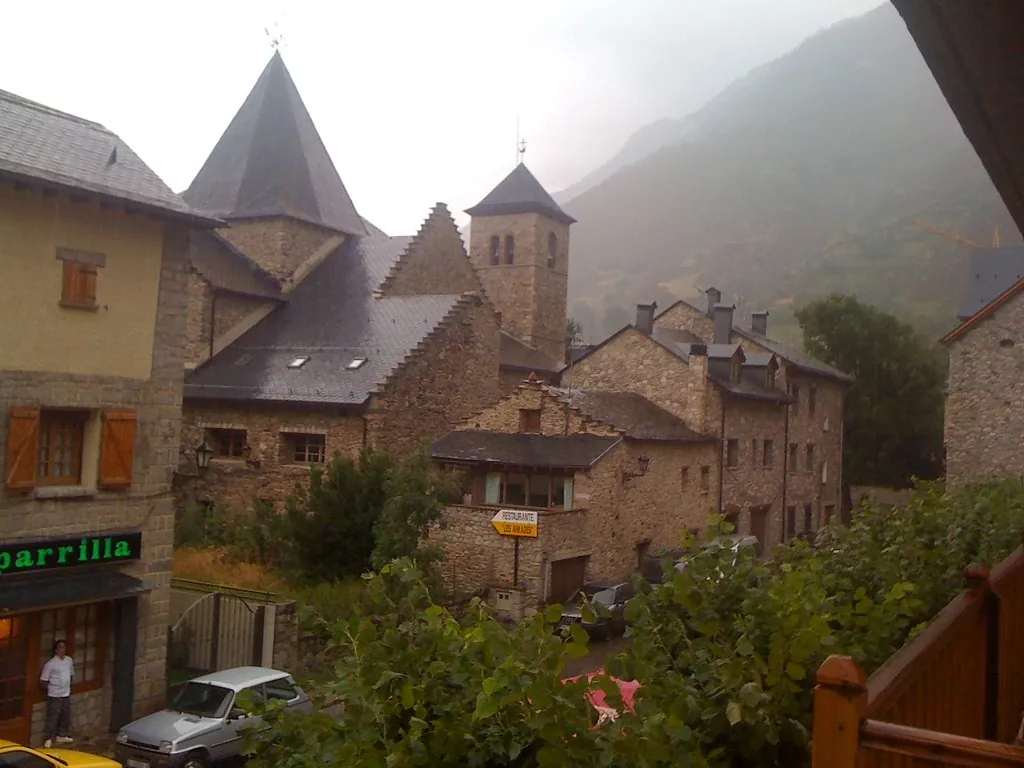
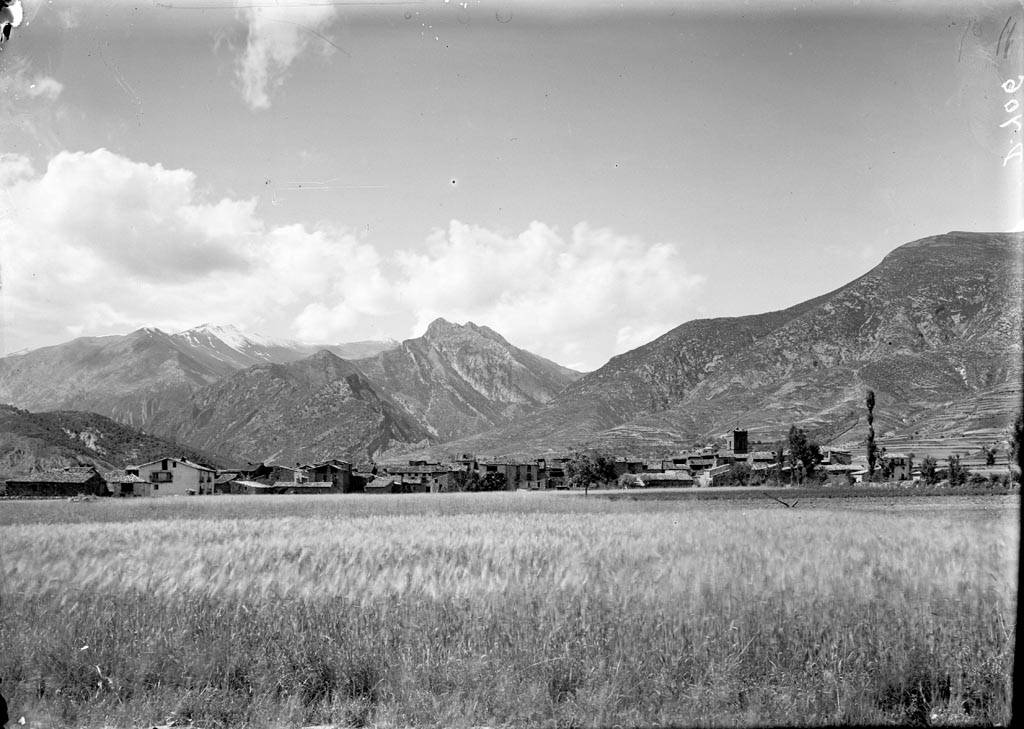
The cobbled street begins almost without warning, just after a gentle bend through open fields where the wind moves the cereal crops in long waves. That first step onto the incline sets the tone straight away. Tourism in Lascuarre is about slowing down, walking between old stone walls while footsteps echo softly against thick masonry and wooden doorways darkened by many winters.
This small settlement, with around 139 inhabitants, sits a little over 600 metres above sea level in the Ribagorza area of Aragón. Its layout still reflects how people built here to cope with cold winds and dry summers. Many house façades carry carved coats of arms or lintels marked with dates worn down over time. At the centre stands the church of San Andrés, in place for centuries. Its broad walls, built from pale local stone, enclose a simple nave where the temperature drops as soon as the door closes.
Fields, Terraces and Open Views
The higher edges of the village still show old agricultural terraces. Some remain in use, others are now covered with low grass. From these points the surrounding landscape becomes clear: wide cereal fields, scattered holm oaks and small farm structures dotted along the tracks.
The terrain is not rugged. It rolls gently into long hills where the eye can travel far, following dry-stone lines that once marked field boundaries. There is a sense of continuity in these features, as if the land still remembers how it was worked.
Nearby, patches of holm oak woodland mix with lower Mediterranean vegetation. The paths crossing these low hills remain narrow and slightly uneven, designed more for animals or small tractors than for marked walking routes. Even so, they are manageable with time and attention to the ground. A map or a planned route is useful, as signage is minimal and several paths look very similar at junctions.
Walking Through a Working Landscape
These walks reveal details that explain rural life more clearly than any information panel. Dry-stone walls still standing firm, half-collapsed enclosures that retain their original shape, and small vegetable plots shielded from the wind by low walls all appear along the way.
In spring, the air often carries the scent of damp earth and herbs growing between stones. The holm oaks cast dense shade, welcome as the sun strengthens. When the wind drops, the soundscape shifts. Birds become more noticeable, especially in the open ravines. Birds of prey circle overhead, using thermal currents, while smaller birds move through the dry branches in the wooded areas. There are no large concentrations of wildlife, but the natural sounds remain clear and present.
Inside the Village Streets
Within the village itself, wandering without a fixed route makes sense. The narrow streets slow movement, and at that pace small details begin to stand out. Wrought iron grilles, small windows protected by wooden shutters, and interior courtyards where agricultural tools are still kept all speak of daily life shaped by the seasons.
The architecture follows practical logic. Thick walls retain warmth, small openings protect against cold, and sloping roofs allow rain to run off quickly during storms. Everything has a purpose tied to the climate and the rhythms of rural work.
The church of San Andrés remains a focal point, both physically and socially. Around it, the compact layout of the village reinforces a sense of connection between buildings, streets and shared spaces.
Celebrations and Seasonal Changes
Local celebrations revolve around San Andrés, the village’s patron saint. During these days, religious events and community gatherings bring together residents who live here year-round and those who return from elsewhere. These are not large-scale festivities aimed at attracting crowds. They function more as moments of reunion, maintaining ties between people, the church and the central square.
The seasons change the atmosphere noticeably. In winter, afternoons fade quickly and the cold settles into shaded streets, where moisture lingers on the stone. In summer, the pattern reverses. Early in the morning, clean light filters between the houses, and swallows cross the square with the brief sound of fast-moving wings.
Getting There and Getting Around
From Huesca, the usual route heads east along the A‑22, continuing towards the Benabarre area via the national road. From there, quieter regional roads branch off, crossing fields and small villages before reaching Lascuarre. The final stretch already signals the rural character of the destination.
Services within the village are very limited. It is best to arrive with whatever is needed, especially if planning to spend several hours walking in the surrounding area.
Cars are typically left at the entrances to the village, where there are a few open spaces near the first houses. From that point, continuing on foot is the natural choice. The streets are narrow, and the place reveals itself more clearly at walking pace, listening to how the wind shifts as it moves through corners of stone that have stood here far longer than any visitor.