Full Article
about Seira
Hide article Read full article
A village that keeps its own pace
Some places look as if they were designed for a photograph. Seira does not. In Ribagorza, in the Aragonese Pyrenees, this is the kind of village where life carries on at its own speed, without much concern for who happens to pass through.
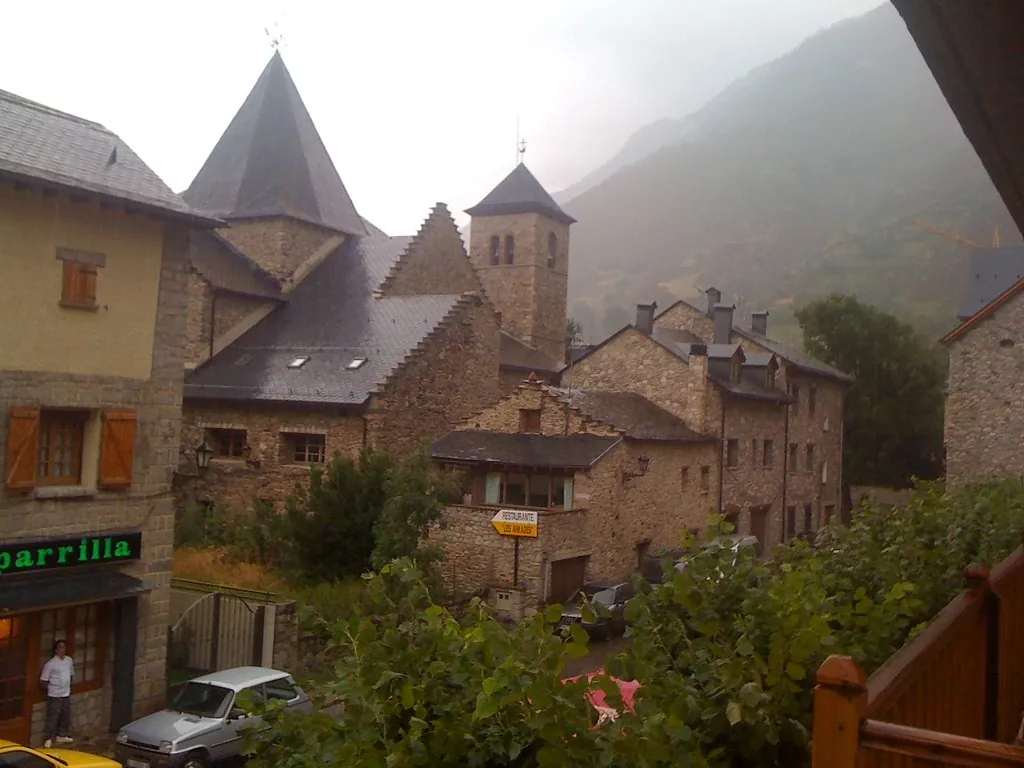
Tourism in Seira revolves around that idea. It is a small mountain settlement where monuments are not the focus. The landscape and everyday life take centre stage. With around 149 residents, the atmosphere is calm. Stone houses, dark roofs, short streets. At times you hear a rooster. Or a dog barking from a yard.
There are no grand set pieces, yet everything fits together. The whole place feels built to endure many winters.
Walking is the way to understand it
You arrive at the square and the church of San Pedro comes into view straight away. It is not a striking building. More reserved than impressive, the kind that suits the climate and the long history of the valley.
The bell tower works as a reference point. From many streets, it rises above the rooftops.
The streets slope up and down. Some are narrow, others open slightly between older houses. Many façades still show exposed stone. Doorways often keep older details: solid arches, dark wood, worn ironwork.
It becomes clear quite quickly when a village has changed very little. Not out of nostalgia, simply because there was never much urgency to modernise everything.
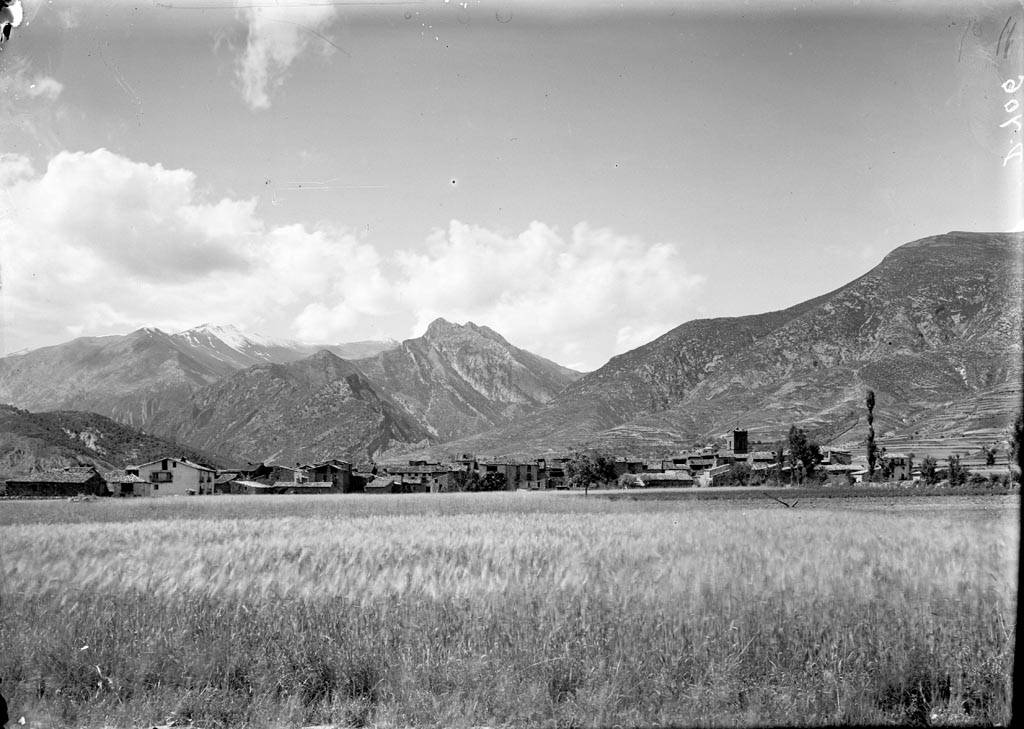
Beyond the last houses, the setting takes over. Hillsides covered in forest stretch out around Seira. Beech, oak and fir dominate the slopes. In spring the green is vivid. In autumn, the colours shift almost week by week.
From some of the higher meadows, the Pyrenees come into view. Gain a bit of elevation and the valley opens up more fully.
Into the hills, as locals do
Seira is not about ticking off landmarks. It is about moving through the landscape.
Paths begin right from the village. Some are marked, others are simply local tracks, old livestock routes or forest paths that have been used for generations.
One of the better-known walks in the area passes through beech woods. In autumn, the ground is covered with dry leaves. They crackle underfoot, that familiar forest sound when colder weather starts to settle in.
There are also routes that climb more steeply. Certain tracks gain height quickly. From above, the Ésera valley becomes easier to read, its shape and scale more apparent.
Winter changes things. Snow, ice and long stretches of shade cover many slopes. When the weather turns, it is worth being properly prepared.
Close to the village, a river runs by. In warmer months, people head down to its banks. Some fish for trout, with the required permit. Others simply sit and listen to the water for a while.
Sometimes that simple plan works better than any long excursion.
Food shaped by the mountains
The cooking here follows a clear mountain logic. Dishes are filling and built to get through cold seasons.
Grilled meats are common, along with slow-cooked stews and mushrooms when they are in season. Trout appears regularly across the area, reflecting the nearby rivers. There are also cured meats and small-scale cheeses.
Nothing elaborate or particularly modern. It is the kind of food that makes sense after several hours outdoors.
Celebrations without fuss
The main festivities tend to revolve around San Pedro, at the end of June. There is also more activity in August.
The structure follows what is typical in many Pyrenean villages. Religious events, gatherings in the square and music that stretches into the night. Locals mix with people who return in summer and visitors from nearby villages.
There is no large production behind it. The appeal lies in the close, familiar atmosphere. Conversations happen easily, and before long everyone seems to know everyone else.
In winter, the pace slows significantly. Some years bring snow, and the quiet becomes more noticeable. Life turns inward: family gatherings, time by the fire, not much else.
The road into the valley
From Huesca, the usual route is to drive to Barbastro via the A-22, then continue towards Graus. After that, the road heads into more mountainous terrain on the way to Ribagorza.
The final stretch includes a series of bends. Nothing unusual for the area, but it rewards a steady approach.
Arrival is straightforward in feeling, if not in geography. A small village closely tied to its valley. No grand gestures, just a place that makes more sense after a walk along its paths.