Full Article
about Sesue
Hide article Read full article
A small village that still feels real
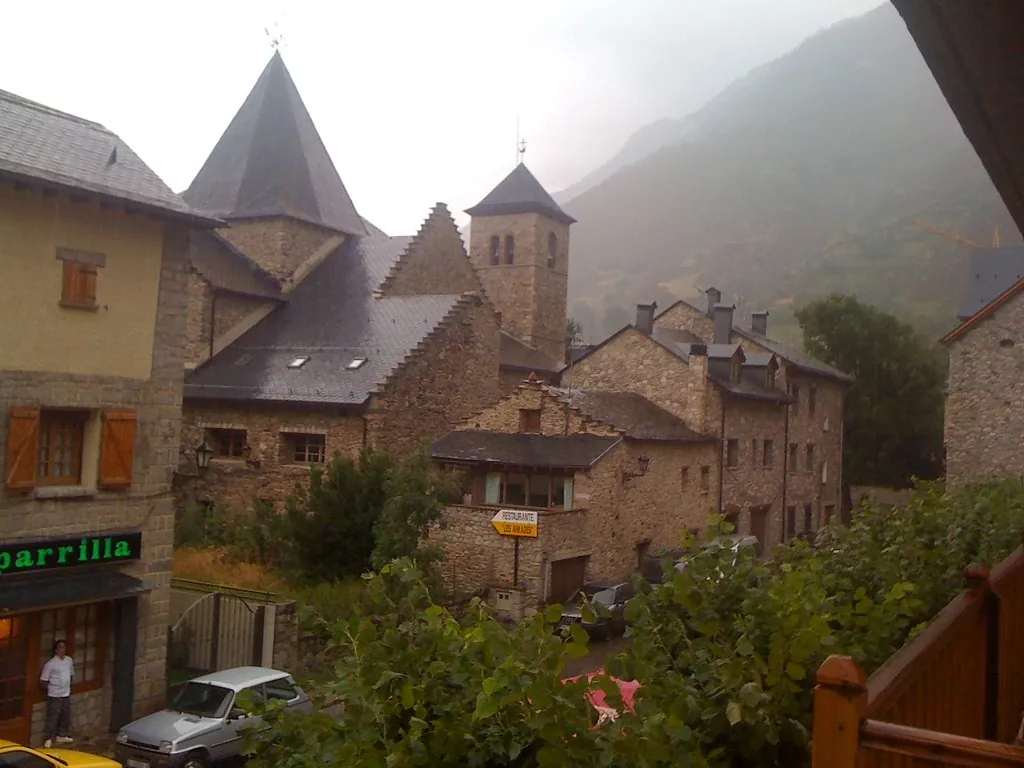
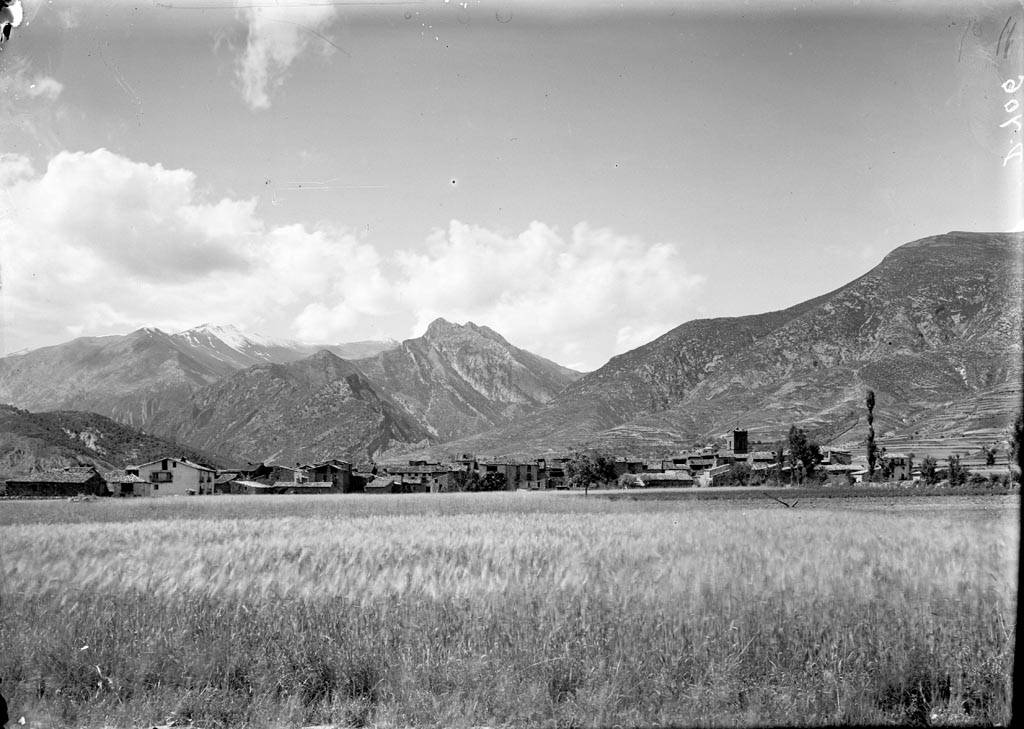
Sesué sits in the Benasque Valley in the Pyrenees of Aragon, just over a thousand metres above sea level and a short turn off the main valley road. It is not the kind of place that demands attention from a distance. You tend to find it when you decide to leave the usual route for a while.
At first glance, it might match the familiar idea many people have of Pyrenean villages: a handful of attractive houses, a church, a few parked cars. Yet a brief stop is enough to show that Sesué works differently. It is small, with barely around a hundred residents, but it does not feel staged or curated. Life carries on much as it always has, with meadows, livestock, cars left where space allows and neighbours who all know each other.
The village does not try to present itself. That is part of what sets it apart.
Stone, roofs and everyday life
The centre is compact and easy to walk through. Narrow streets run between solid stone houses, their dark roofs often carrying a heavy load of snow in winter. There are no major monuments or façades designed to attract attention. The church tower rises above the rooftops and acts as a simple reference point as you move around.
Buildings here show a mix of older structures and more recent adaptations. This is common across this part of the Pyrenees, where many houses have been updated over time without completely losing their original form.
Beyond the houses, the landscape opens out into meadows that shape daily life. In summer they turn green and active, with tractors moving about, livestock grazing and people at work. The setting is not decorative. It is functional and tied to the rhythm of the village.
Walking without a plan
Sesué can be covered quickly. Half an hour is enough to pass through most of its streets. The point is not to tick off sights but to walk slowly and notice what is there: stone walls, small vegetable plots, the occasional barn set slightly apart.
Several paths lead out of the village towards the surrounding meadows. These are simple routes, the kind used by locals to move between fields or head gently up towards the hillside. They are not technical or especially long. They suit an unhurried walk rather than a planned excursion.
From various points, views open towards the mountains of the Benasque Valley. There is no need to search for a designated viewpoint. A short distance beyond the last houses is enough for the landscape to unfold on its own.
The wider valley
Sesué works best as a quiet base rather than a destination that fills an entire day. It lies very close to Benasque, Cerler and other villages in the valley, so it often appeals to those looking for somewhere calmer than the main centres.
The surrounding area offers plenty of space for walking along rural tracks and paths. There are nearby forests and wide stretches of pasture. Early in the day, it is not unusual to spot large birds gliding above the valley or a roe deer moving along the edge of the woodland. Wildlife appears when it chooses, and there is no guarantee, but the setting allows for those moments.
The connection to the rest of the valley is straightforward, and that proximity shapes how Sesué is experienced. It complements busier places rather than competing with them.
A steady, local rhythm
There is no packed calendar of events or a strong tourist focus. The year follows a rhythm similar to other small villages in the Ribagorza area. Summer brings more movement, local festivals take place at their usual times, and quieter months follow.
This pace is part of the village’s character. It does not try to draw attention or reinvent itself for visitors. What you find is what is already there.
Reaching Sesué
The usual way to get to Sesué is by following the road through the Benasque Valley and taking the turn towards the village. It sits very close to the main axis of the valley, so reaching it does not require a long detour.
A simple approach works best. Stop if you are already exploring the area, park, walk around for half an hour or so and then head out along one of the nearby paths. Sesué is not a place that fills a full day, but it leaves a clear impression of what the valley feels like beyond its busier spots. In today’s Pyrenees, that kind of experience is becoming less common.