Full Article
about Tolva
Hide article Read full article
At eight in the morning, the air in Tolva still holds the coolness of fields that have spent the night in silence. Light slips slowly between stone walls and casts short shadows along narrow streets. In this corner of Ribagorza, earthy tones dominate for most of the year: ochres, greys and a brief, vivid green that arrives in spring. Tourism in Tolva comes with a built-in pause. Time here seems to move at the same pace as the farmland that surrounds the village.
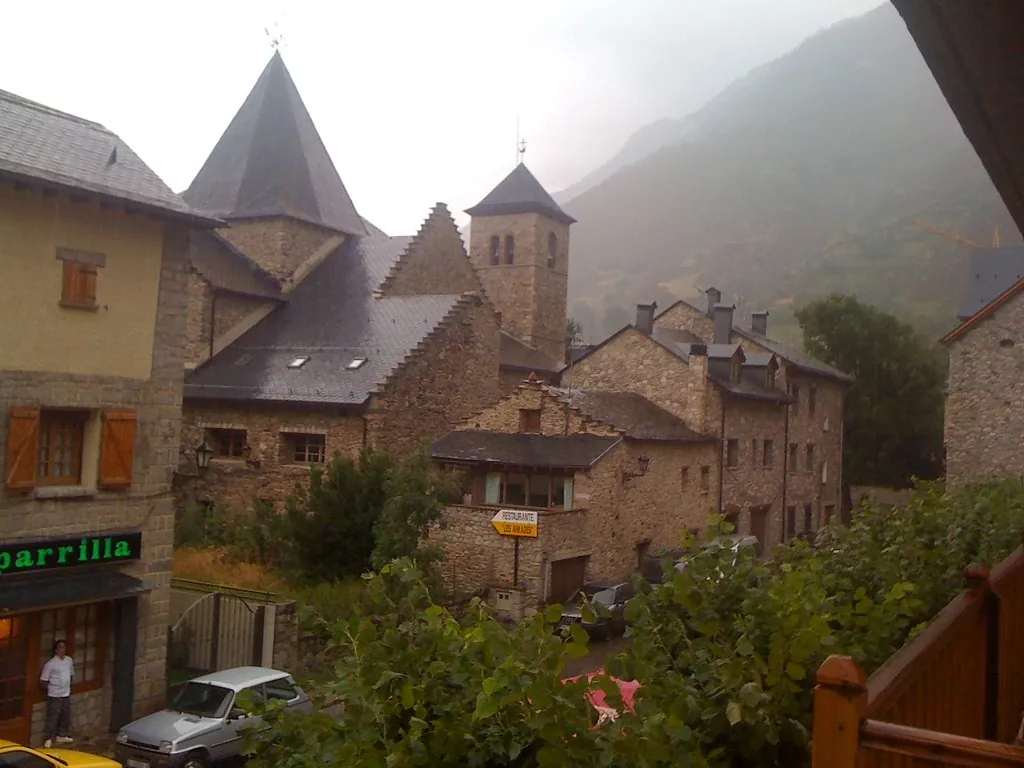
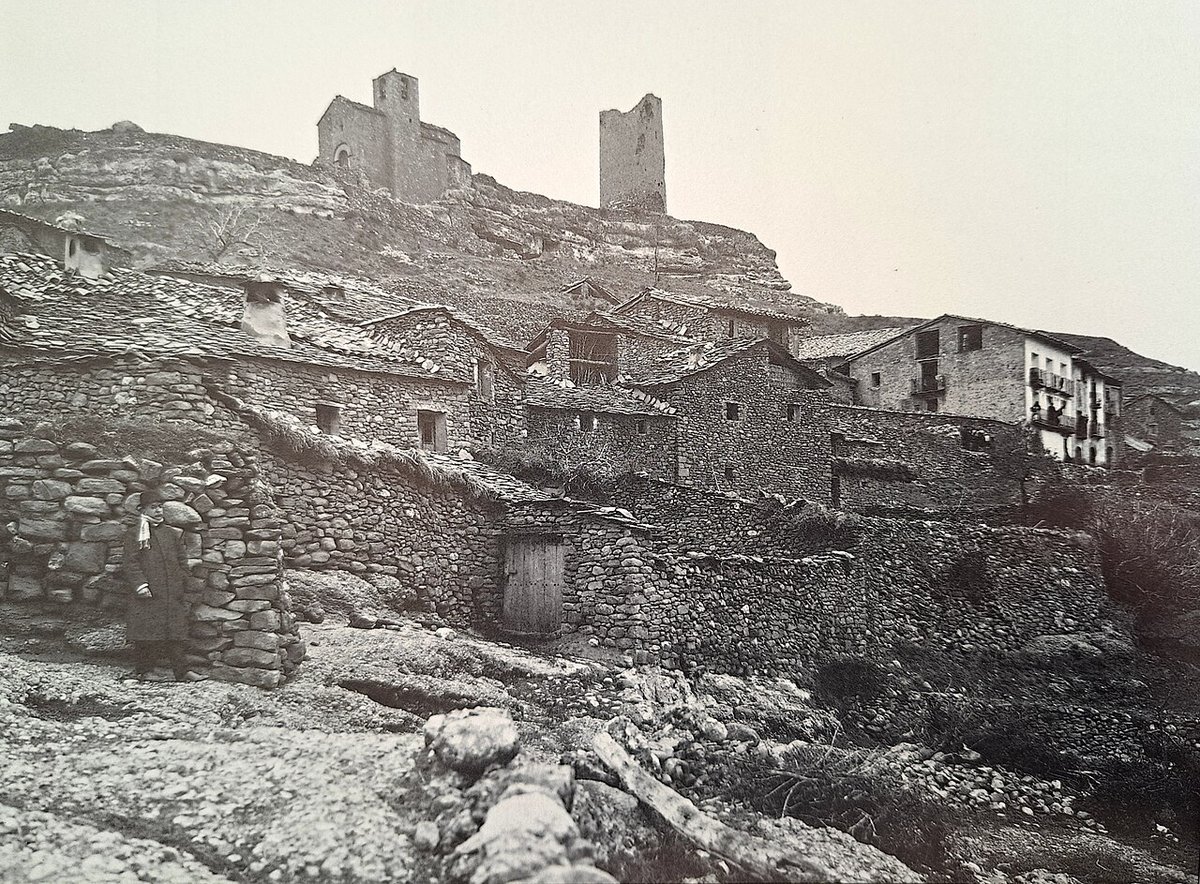
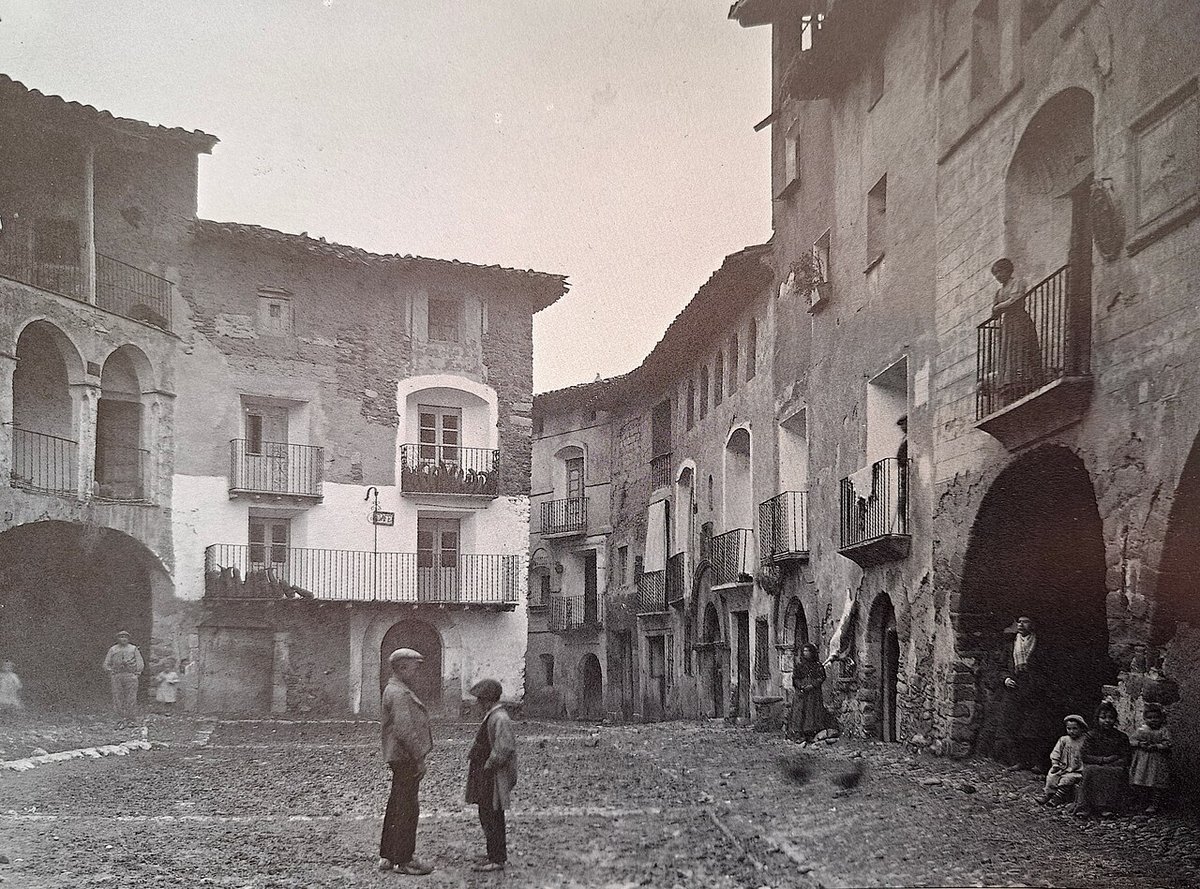
Tolva has around 130 inhabitants and sits at roughly 700 metres above sea level, among gentle hills and cereal fields that turn golden in summer and rustle in the wind. The old centre is small and slightly irregular. Houses built from sandstone show dark wooden doors studded with old nails, along with windows protected by wrought iron grilles. There are no large squares or avenues. Instead, streets climb and dip without much logic, with traces of old corrals and barns folded into the façades.
San Miguel at the heart of the village
The church of San Miguel Arcángel occupies the most visible point in the village. Its façade is solid, shaped by the kind of successive alterations often seen in rural churches that have evolved over centuries. Inside, a few older elements remain, including a stone baptismal font and a simple vaulted ceiling, both hinting at a medieval origin.
The bells tend to mark two clear moments in the day: early morning and dusk. When they ring, the sound carries out across the surrounding fields. For a few seconds, everything seems to pause.
Open fields and a distant horizon
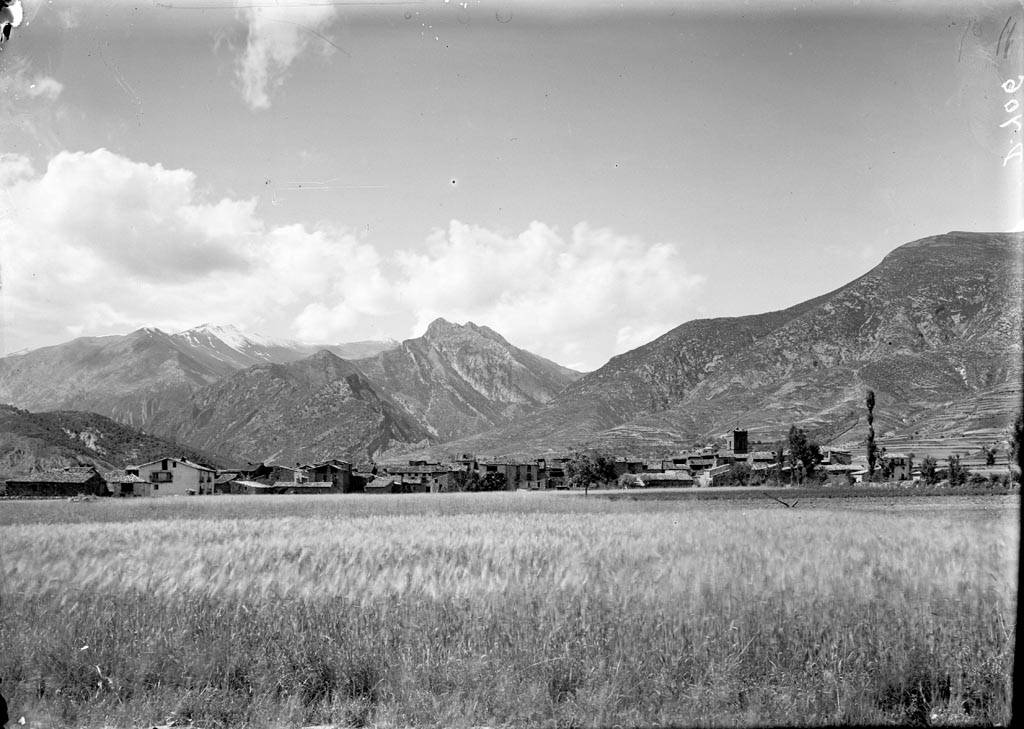
Step beyond the built-up area and the landscape opens quickly into farmland. Here, Ribagorza appears as soft hills and wide plots where cereal crops shift colour with the seasons. In spring the green is almost bright; in summer, dry yellows take over; autumn brings more muted tones of turned earth.
On clear days, when the air is clean, the distant outline of the Pyrenees can be seen from certain points in the village. It does not happen every day. Sometimes haze or low cloud hides them completely.
Short walks around Tolva
Several rural paths lead out from Tolva towards small ravines and scattered pine groves. These are not long routes. Many can be walked in one or two hours at an unhurried pace. Signage is not always present, so carrying a map or a walking app is advisable.
In return, there is quiet. Just the brush of wind through cereal crops or the quick movement of a blackbird darting between shrubs.
In winter, when the fields are more open, it becomes relatively easy to spot birds of prey gliding above the land. Kestrels are common, as well as the occasional sparrowhawk. With patience, owls can sometimes be seen perched still on bare branches.
Details for those who slow down
Tolva does not have marked viewpoints or designated photo spots. What it offers instead appears gradually to anyone willing to walk without rushing. Rusted ironwork on old doors, dry stone walls that once enclosed livestock, and the clean lines of cultivated fields forming geometric patterns towards sunset.
The best light usually comes at the end of the day, when façades take on a soft orange tone and shadows stretch along the streets.
In summer, it is best to avoid the middle hours of the day. The sun falls directly overhead and there is very little shade beyond the village centre.
Home cooking and recipes still in circulation
The food still prepared around Tolva is simple and tied closely to the land. Local lamb appears in traditional stews, and migas, a dish made from fried breadcrumbs, remains common, especially when the weather cools. There are also cheeses produced in small domestic batches and different versions of morcilla, a type of blood sausage, which some residents continue to make in the traditional way.
These products are not always easy to find for someone just passing through. They often circulate within the village itself or among people who already know each other.
Reaching Tolva
From Huesca, the usual route is to take the A‑22 towards Lleida as far as the area around Binéfar, then continue along secondary roads that pass through several villages in Ribagorza. The journey typically takes a little over an hour.
The final stretch follows narrow roads with gentle bends. It is best to drive without rushing, especially on a first visit to this part of the region.
Tolva rarely appears on the most repeated travel itineraries in Aragon. Yet a short walk through its streets is enough to understand the place: worn stone, quiet between houses and an agricultural horizon stretching in every direction. The interest here does not lie in ticking off sights, but in stopping for a while and simply looking around.