Full Article
about Valle de Lierp
Hide article Read full article
Early in the morning, before the sun has cleared the ridge, the air in Valle de Lierp carries the smell of damp grass and old firewood. A door opens somewhere, a chicken crosses the street without urgency. Everything else is still. That is the pace of tourism in Valle de Lierp: slow walks through a very small village, with barely fifty residents, where life continues much as it did decades ago.
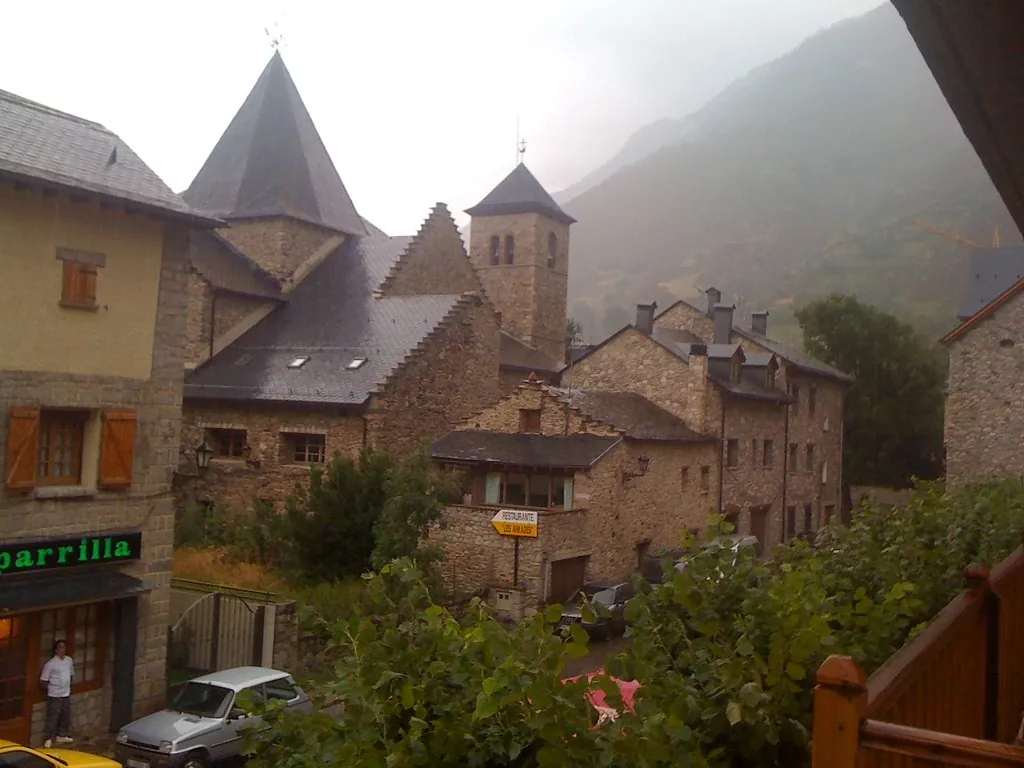
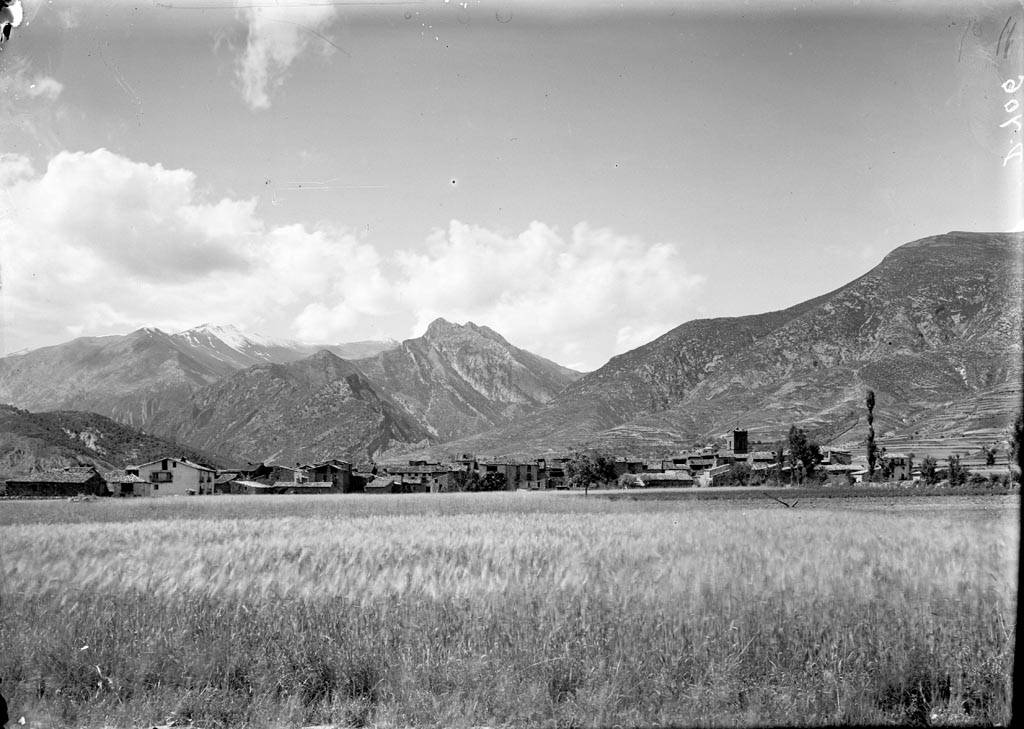
The village lies in the Ribagorza area of Aragón, in mid-mountain terrain at around a thousand metres above sea level. Houses cluster without any obvious plan, built from dark stone and timber beams that have weathered many winters. The walls are thick, not for appearance but out of necessity. Cold settles in firmly here when the harsher months arrive.
The streets are short. You can cross the centre in ten minutes without noticing. It is worth taking longer, paying attention to the details: worn wooden doorways, small threshing areas beside the houses, tall chimneys designed to carry smoke away when the wind comes down from the hills.
San Vicente at the centre
The parish church of San Vicente is easy to recognise thanks to its square bell tower. It does not dominate the village in any dramatic way. It simply stands there, as churches often do in many parts of Ribagorza.
The structure is restrained, with pale stone and little decoration. From the paths that circle the village, the tower becomes a point of reference. Returning from a walk in the hills, it appears between the rooftops and signals that the village is only a few minutes away.
In mid-afternoon, a bell sometimes rings out on its own. The sound travels across the slopes and takes a few moments to fade.
Walking the surrounding hills
Dirt tracks begin as soon as you leave the last houses behind. Some follow old routes that once linked small settlements in the area. There is little signage and few modern panels. The paths follow the shape of the land, skirting terraces, crossing meadows, and slipping into woodland.
Oak and beech trees cover many of the hillsides. In autumn, the ground fills with leaves and the scent shifts, drier and more earthy. In spring, the meadows are scattered with small flowers, and the grass grows quickly after rain.
With some luck, roe deer can be spotted at dawn or in the evening. Birds of prey are often heard circling above the ridges. The quiet of the valley gives weight to every sound.
Coll de la Creu and open views
One of the nearby high points is Coll de la Creu. The path climbs gradually through scrub and patches of woodland. It is not a long ascent, though in summer it is wise to carry water, as some stretches offer very little shade.
At the top, the landscape opens out. Several narrow valleys come into view, along with a chain of mountains that shifts in appearance as the light changes through the day. On clear days, looking north, higher Pyrenean peaks can be made out in the distance. In winter, they often remain snow-covered for weeks.
In the rocky areas, it is not unusual to see wild goats moving across slopes that seem too steep to hold them.
Winter quiet and local life
When snow falls, Valle de Lierp becomes even quieter. Paths disappear under a white layer, and the village seems to pause for a few days. Residents sometimes walk nearby routes with snowshoes or simply follow the open tracks.
Smoke from chimneys lingers above the rooftops when the air is still. At night, darkness is almost complete.
There are also a few local celebrations during the year. In summer, patron saint festivities and family gatherings take place. Many people with roots in the village return for a few days. The population increases, though the atmosphere remains close and familiar, more like a gathering in a village square than a staged event.
Getting there and when to go
Reaching Valle de Lierp requires a steady approach by road. From Huesca, the journey is over one hundred kilometres, and the final stretches run along local roads with plenty of bends. In winter, it is sensible to check conditions, as snow or ice can make driving more difficult on certain days.
Spring and autumn are usually the most comfortable times for walking in the area. Summer brings a little more activity to the village. For a quieter visit, weekdays and early hours keep the slower rhythm intact.
Valle de Lierp does not change its character with the seasons. It remains a small, somewhat isolated place where the most interesting details are close to the ground: the sound of wind in the oaks, the crunch of gravel underfoot, and the slow light settling between rooftops at the end of the day.