Full Article
about Barbués
Hide article Read full article
Where the wind arrives first
The wind gets there before anything else. It crosses the cereal fields and slips into Barbués, lifting a fine dust that hangs briefly in the air before settling again along the street. At that time of day, very little interrupts the stillness. A door closes somewhere, a car passes slowly on its way to the vegetable plots, and beyond that, the steady hum of open countryside.
Barbués lies about 60 kilometres from Huesca, set in the wide, flat landscape of Los Monegros. It is a small settlement, with fewer than a hundred residents. Houses gather without much formality around the church and a handful of streets where the sun falls directly for much of the day. Life here still follows agriculture closely. The seasons show themselves more clearly in the changing colours of the fields than on a calendar.
Stone, light and the centre of the village
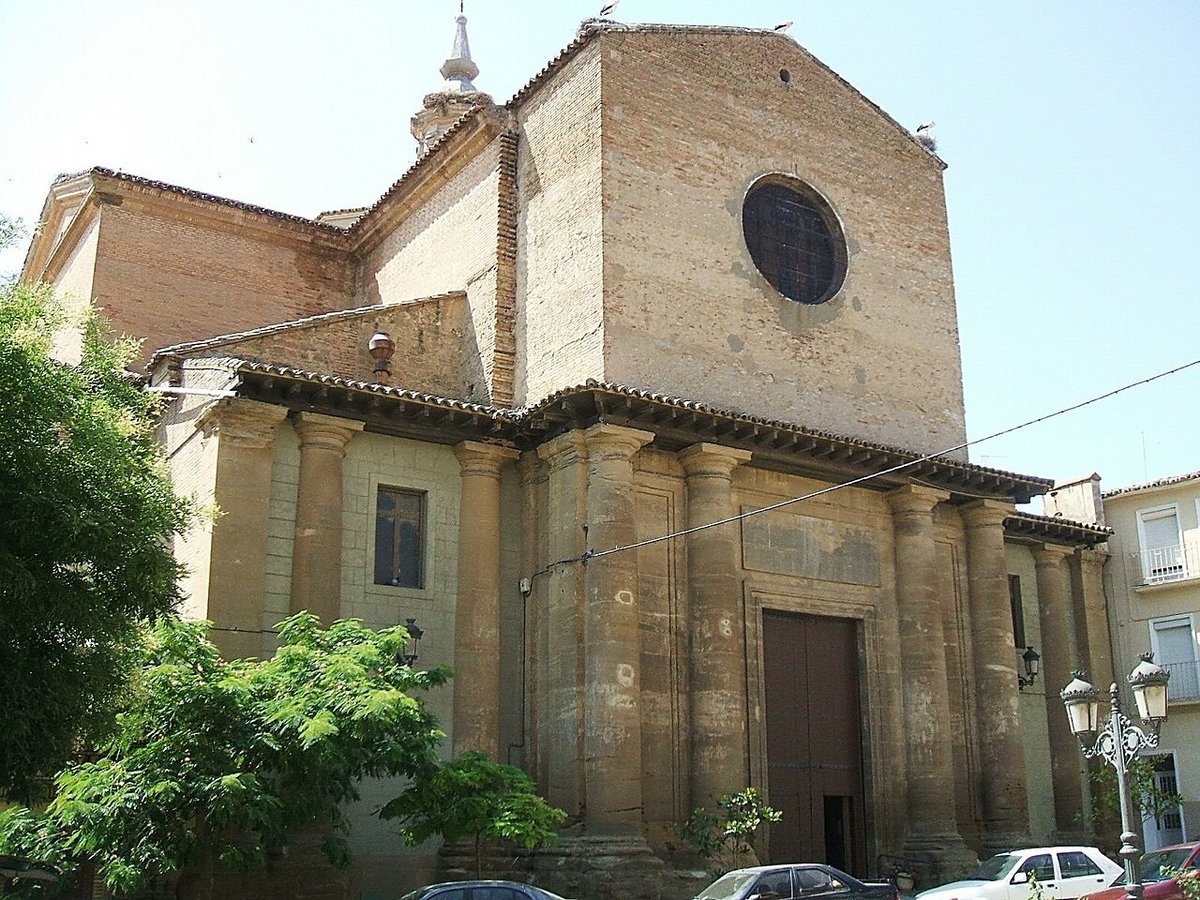
The parish church, dedicated to the Asunción, stands at the centre of Barbués. It is not a building that dominates from afar. Instead, it appears suddenly as you move through the streets, emerging between the houses. Built in pale stone, with thick walls and a restrained façade, it feels solid and grounded. At certain hours, the light turns warm and golden against the surface, picking out the irregular texture of the stone.
Around it are several older houses, some with arched doorways formed by semicircular stone portals. A few still keep their heavy wooden doors, darkened with age. Behind them lie interior courtyards that can only just be glimpsed from the street. The village centre is small enough to explore at an unhurried pace. Half an hour is enough to wander without direction, pause at a corner, and listen as the wind threads its way between the façades again.
Walking out into the drylands
Step beyond the edge of the village and the landscape opens immediately. There are no obstacles, no sudden changes in terrain. Wide agricultural tracks, made for tractors and trailers, stretch out between plots of cereal. There are no signposted walking routes. Each path leads to another, and all of them eventually dissolve into the same flat horizon.
The appearance of the land shifts noticeably with the seasons. In spring, the fields turn green and the air carries the scent of damp earth after rain. By summer, yellow dominates as the grain ripens, and the ground dries quickly under the heat. It is better to walk early in the morning or wait until evening. At midday the sun is intense, and shade is scarce.
With a bit of patience, small details begin to stand out, things that go unnoticed from the road. There are scattered clusters of pine trees, low shrubs adapted to dry conditions, and birds moving quietly between the crops. The landscape may seem uniform at first glance, but it reveals itself slowly.
Night sky over open ground
After dark, Barbués settles into near silence. Lighting is limited, and the sky becomes sharply defined. Walk a short distance along any of the tracks and the darkness deepens quickly.
On clear nights, the band of the Milky Way is often visible, stretching across the sky from one side to the other. There are no designated viewpoints or facilities for stargazing. Just open land, and perhaps a simple bench at the edge of a path. The experience remains uncomplicated, shaped by the absence of distraction rather than the presence of infrastructure.
Festivities and everyday rhythms
The main celebrations take place in August, around the feast of the Asunción, a traditional religious festival widely observed in Spain. During those days, the rhythm of the village changes. People with family ties to Barbués return, and the streets fill more than usual.
In January, San Antón is typically celebrated, a tradition closely linked to rural and agricultural life. These are modest festivities, rooted in everyday customs rather than large-scale events. They reflect the scale of the village itself, where social life is still closely tied to the local community.
When to visit and what to expect
Spring and autumn are generally the most comfortable times to explore the surrounding countryside on foot. Summer in Los Monegros can be demanding unless you set out early in the day. Winter brings a more stripped-back landscape, quieter and more exposed.
The drive from Huesca takes around an hour. Services within the village are limited, which is typical for a place of this size. For larger errands or shopping, residents often travel to nearby towns such as Sariñena or Grañén.
Barbués is not a destination for long itineraries or packed schedules. It is better understood at a slower pace: a walk through the centre, a stroll along the tracks as the sun lowers, a moment spent watching the wind move across the fields once more. Much of what happens here does so quietly. That is precisely why it becomes noticeable.