Full Article
about Lanaja
Hide article Read full article
A landscape shaped over time
At the southern edge of Los Monegros, Lanaja sits within a region where human activity has gradually shaped the land over centuries. Tourism here is closely tied to that long relationship between farming and steppe. This part of Aragon is known for its dry cereal fields, far-reaching horizons and small wetlands that appear irregularly depending on the year’s rainfall.
With just over a thousand residents, Lanaja moves at an unhurried pace. It remains firmly rooted in its agricultural identity, with daily life still oriented towards the surrounding fields. The sense of space is immediate, and the landscape explains much of the town’s character without needing embellishment.
The town and its church
Lanaja’s layout reflects its history. The streets do not follow a rigid plan but instead reveal a pattern of gradual expansion. Houses cluster in ways that suggest growth over time rather than a single moment of design.
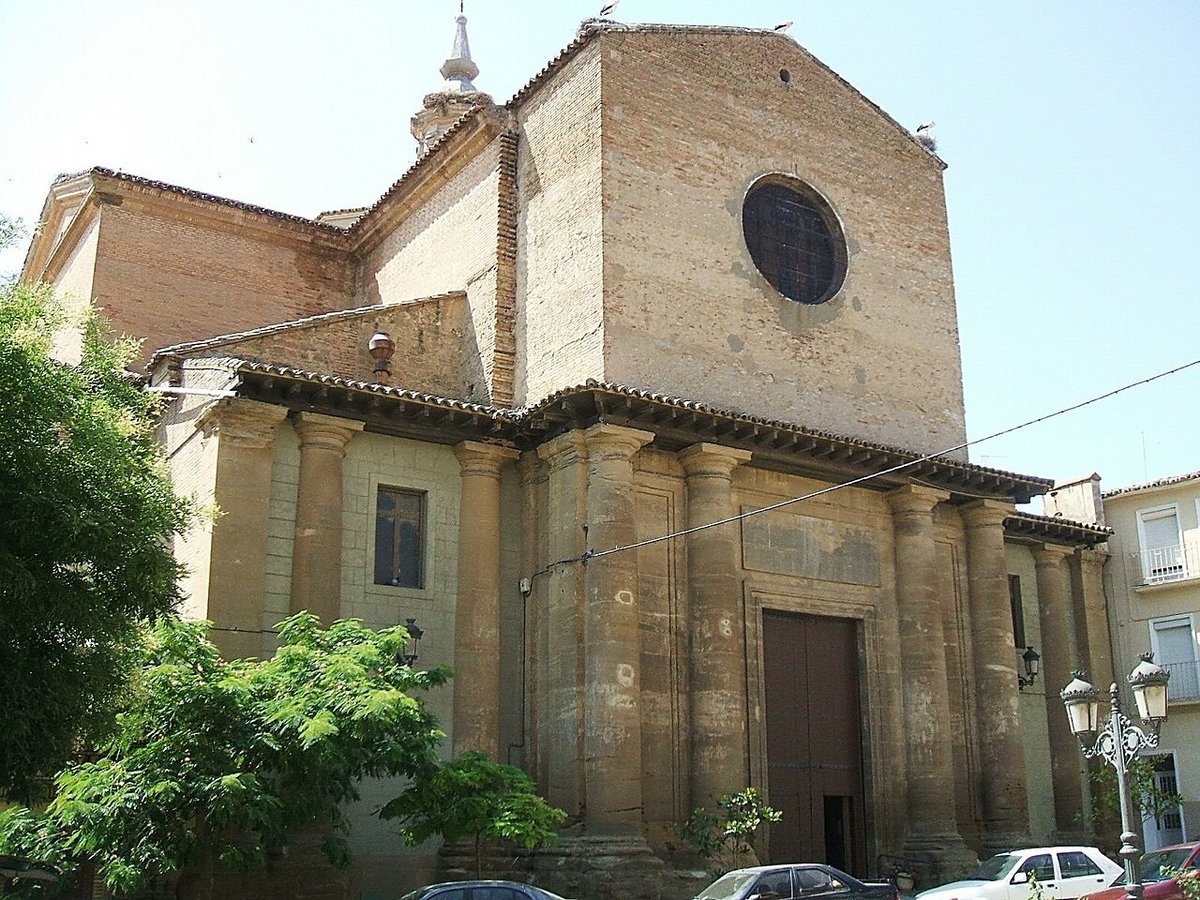
At the centre stands the church of the Asunción. Its origins date back to the 16th century, although what can be seen today includes later alterations. This kind of architectural evolution is common in villages across the area, where churches were adapted over generations in line with changing needs and available resources.
The atrium marks one of the highest points in the town. From here, the view opens out across the surrounding countryside, offering a clear sense of how the land is used. Fields stretch outward in a sequence of cultivated plots, giving a straightforward picture of the traditional economy of this part of Los Monegros.
Older houses in Lanaja are built with a mix of adobe, stone and brick. Many retain internal courtyards, a feature widely used in Aragon as protection against both winter cold and the dry heat of summer. The streets themselves are irregular, shaped by successive additions rather than a predefined urban plan.
Steppe surroundings and changing lagoons
The landscape around Lanaja belongs to the Monegrin steppe. Dry farmland dominates, punctuated by isolated hills and shallow ravines where sparse vegetation takes hold. It is not a landscape that relies on dramatic contrasts, yet it is strongly characteristic of the central Ebro valley.
Close to the town lies the lagoon of Lanaja, an endorheic basin that in some years gathers enough water to attract aquatic birds. Like many lagoons in Los Monegros, its appearance changes noticeably depending on rainfall. In wetter periods, it can host ducks and other migratory species that use these wetlands as temporary stopping points.
The open fields also provide habitat for birds adapted to steppe environments. Among those often mentioned are the lesser kestrel and the little owl. These species find shelter in agricultural buildings as well as in the edges of tracks and small embankments.
Walking the agricultural tracks
Several agricultural paths begin directly from the town. These tracks, used by farmers, make it possible to explore the surroundings without technical difficulty. They also connect Lanaja with nearby settlements across the comarca.
Walking along these routes offers a clear sense of how the land functions. Large cereal plots dominate, interspersed with areas left fallow. At intervals, denser patches of vegetation appear around ravines or small water deposits. The variation is subtle but noticeable.
Season plays a significant role in how the landscape is perceived. Spring brings a brief period of green, when the fields are still growing and temperatures remain mild. By late summer, the colours shift towards ochre tones, reinforcing the austere character often associated with Los Monegros.
Food shaped by the land
Local cooking reflects what has traditionally been available in this environment. Lamb features prominently, alongside spoon-based dishes, migas and vegetables from kitchen gardens when conditions allow. These are straightforward preparations, closely linked to agricultural life and to the dry climate of the region.
The emphasis is on practicality and seasonality rather than elaborate techniques. Recipes respond to what the land can provide in a given year, which means variation is part of the culinary identity.
Dark skies and local celebrations
Night in Lanaja tends to be very dark. Limited artificial lighting in the surrounding countryside allows the sky to be seen with notable clarity, something increasingly difficult in urban settings.
The town’s main festivities take place in summer. They follow a pattern common across villages in the area, combining religious events, activities in the main square and gatherings among residents. These occasions play an important role in the social calendar.
Easter is also marked with traditional celebrations, generally observed with a sober tone that reflects local customs.
Getting there and choosing the moment
Lanaja lies in the southern part of the province of Huesca, within Los Monegros. The most usual approach from the provincial capital is by road, crossing the dry farmland that defines the region.
Spring is often the most comfortable time to explore the surroundings. The cereal fields are still green and temperatures are suitable for walking without the intensity of summer heat. Autumn and winter present a more austere version of the landscape, which remains an essential part of the comarca’s identity rather than a drawback.