Full Article
about Tardienta
Hide article Read full article
A village shaped by open land
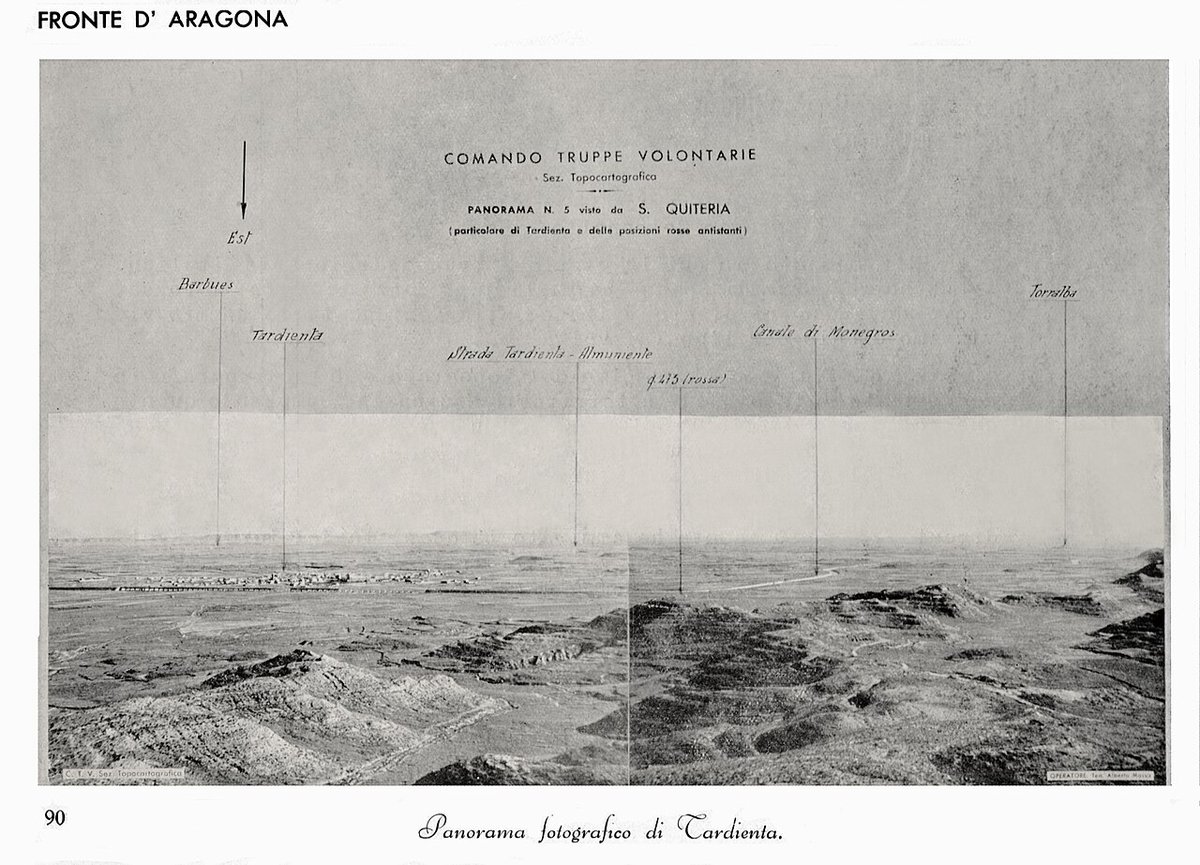
Tardienta sits on the plain of Los Monegros, a geography of exposed horizons between Huesca and Zaragoza. The landscape here is defined by cereal fields and a wind that rarely rests. For centuries, the village has lived from what these dry, gypsum-rich soils can yield.
Its layout tells that story. The streets are straight and practical, lined with two-storey houses of brick and rendered stone. There are no slopes to speak of. The growth was gradual, following the needs of a farming community and, later, the railway line that cut through its land.
The railway’s mark
The Zaragoza-Huesca line arrived in the 19th century and changed the village’s tempo. Grain moved more easily; the station became a fixed point. While lorries have mostly taken over that work now, the tracks remain a physical and visual fact. You hear the trains, you cross the level crossing—it’s part of the background, not an attraction, but a layer of its history.
San Pedro and the village fabric
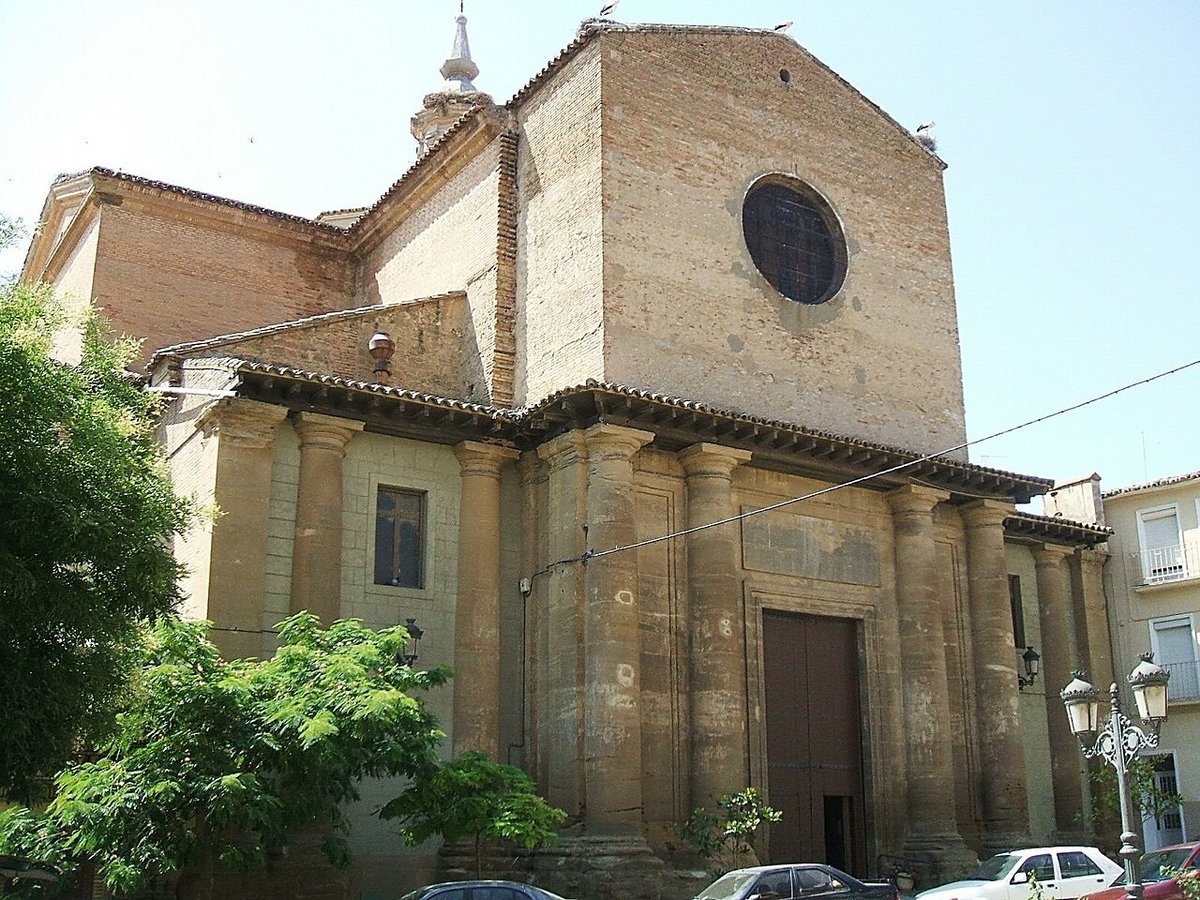
The parish church of San Pedro is the most prominent building. Its origins are 16th century, but like many in rural Aragon, it shows a patchwork of modifications. The tower, visible from several streets, provides a vertical reference in a flat terrain.
The centre is Plaza de España. The buildings around it have a restrained, functional character: iron balconies, wooden eaves, walls that mix materials from different periods. It feels lived-in, not curated. Look for the old interior courtyards and converted storage spaces on side streets; they hint at a domestic life tied directly to the fields.
Calle Mayor runs through the village as a main axis. From it, smaller lanes branch out toward newer housing and, eventually, to the dirt tracks that lead into the farmland.
The Monegros horizon
Walk to the edge of town and the context becomes clear. Cereal fields stretch to the horizon, broken only by occasional low rises and a grid of farm tracks. The vegetation is sparse scrub, adapted to aridity and wind.
This open steppe is habitat for birds like marsh harriers. With patience and binoculars, you might spot great bustards in the distance. The scale is what strikes you: villages are far apart, distances feel amplified by the lack of landmarks.
Rhythm of the year
The main festivities cluster in summer, after the harvest. The patron saint celebrations for San Pedro mix religious events with communal gatherings.
Winter is quieter, dominated by the cierzo wind that sweeps down from the Ebro Valley. Life moves indoors. The annual shift isn’t in the scenery, which remains constant, but in the pace and sound of the place.
A note on visiting
You can walk Tardienta in under an hour. The interest lies in reading its layout and understanding its relationship to the land.
Spring and early autumn are the most comfortable seasons. Summer heat is intense by mid-morning; in winter, the wind is a real factor.
This isn’t a village of monuments. It’s a working settlement where the rhythm is still set by fields, weather, and the occasional train passing through.