Full Article
about Bordon
Hide article Read full article
A village at the end of the road
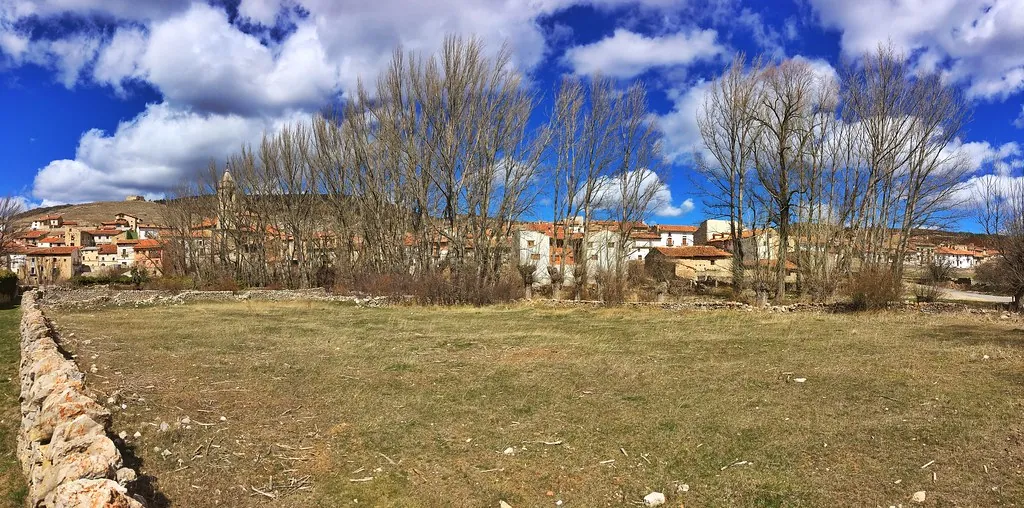
Bordón sits at 828 metres in the Teruel Maestrazgo, where the roads narrow and the landscape opens into a succession of ravines and hills covered with pine and juniper. The population, just over a hundred, has shaped a village that grew from practical needs: houses, corrals, small vegetable gardens. Its layout was not planned for visitors but for work, and that remains its most honest feature. Some buildings are well kept; others show the wear of decades with fewer people. Walking its streets gives a clearer sense of life here than any summary could.
The church as a landmark
The parish church of San Miguel Arcángel dominates Bordón. Its main structure is 16th century, with later modifications typical of these villages where funds arrived in phases. The tower is the visual reference point, visible from the paths that descend from the surrounding sierra. Inside, the single nave is sober, with a baroque altarpiece that is modest in scale but well executed for a rural temple of its time. Its position, slightly elevated, served a practical purpose: it was a watchtower over the valley approaches.
Architecture of necessity
The houses follow the Maestrazgo pattern: masonry walls of local stone, tile roofs, simple wrought-iron balconies. You’ll see stone lintels over some doorways, often with inscriptions or dates from the 18th or 19th centuries, when agricultural activity supported more families. The architecture is functional, without ornament, designed for the climate and the available materials. Look for the older houses with smaller windows and thicker walls, built to retain heat in winter and cool in summer.
Paths as continuity
A network of old livestock trails and footpaths connects Bordón to its surroundings. These routes, still used by locals for walking or accessing fields, are not always signposted. It’s wise to have a map or a GPS track if you plan to explore beyond the immediate vicinity. The paths lead through pine woods and past rocky outcrops where griffon vultures are common, especially in the late morning when thermals form. The value of walking here isn’t in reaching a specific monument, but in seeing how the territory is structured—how woods give way to pasture, and how paths still trace the logic of old transhumance routes.
A calendar tied to the seasons
The main festivity is for San Miguel, at the end of September. It draws former residents back and follows a pattern familiar in rural Aragon: a religious procession, communal meals, and gatherings in the plaza. In summer, informal activities are sometimes organised by neighbours—a barbecue, an outdoor cinema—but their occurrence depends entirely on who takes the initiative that year. These events are small and participatory, reflecting a community where social life is maintained by those present.
Practicalities
Bordón is reached via the regional roads of the Maestrazgo. The final approach is winding and passes through sparsely populated areas. In winter, frost and occasional snow can make driving slower; checking the forecast is advisable. Once there, you can walk the entire village in under an hour. The interest lies in the details: the stonework, the sightlines from the church, the transition from built space to open land. There are no designed viewpoints, but the edge of the village offers clear perspectives of the sierra to the east and the rolling hills to the west. This is a place where the past isn’t curated; it’s simply part of the fabric.