Full Article
about Mirambel
Hide article Read full article
A village that hasn’t been overdone
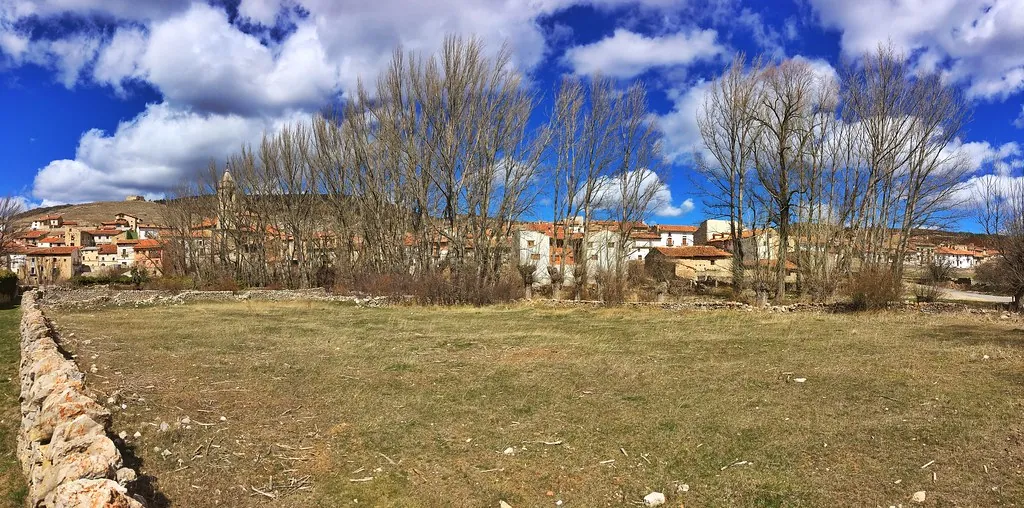
There’s a particular feeling on arriving in Mirambel. It comes from the sense that things haven’t been overly adjusted for visitors. Nothing feels staged or polished. Tourism in Mirambel follows that line. With around 110 residents and set in the north-eastern edge of the Maestrazgo region in Teruel, the village keeps the structure of a medieval settlement: defensive walls, narrow streets and stone houses that have faced centuries of winters.
It is not a place built around tourism. At times it still feels like entering a village that simply continues at its own pace, even with so few inhabitants. In a region like the Maestrazgo, that carries weight.
Stones with a memory
The walled enclosure is the first thing that stands out. It is not a perfectly preserved circuit, but several sections remain clearly visible, along with the historic gateways into the village. The Portal de las Monjas is the best known. Its pointed arch and lattice detail make it hard to walk straight through without pausing. It has the kind of presence that slows your step before you enter.
Inside, everything can be explored on foot without effort. Cobbled streets run between houses marked by coats of arms, and Gothic windows appear here and there. The old quarter is not especially large, yet it feels consistent, as if it developed gradually without losing its original shape.
The parish church of the Natividad also defines the village skyline. Built between the 14th and 16th centuries, it follows a restrained Gothic style. Its octagonal bell tower can be seen from several points around the centre. Inside there are Baroque altarpieces and some older carvings, although access is not always guaranteed and depends on timing.
The Plaza Mayor acts as a small focal point. Arcades line parts of it, with a few stately houses around the edges. Most of the time it remains quiet. For anyone coming from larger towns or more visited destinations, that stillness can feel unexpected.
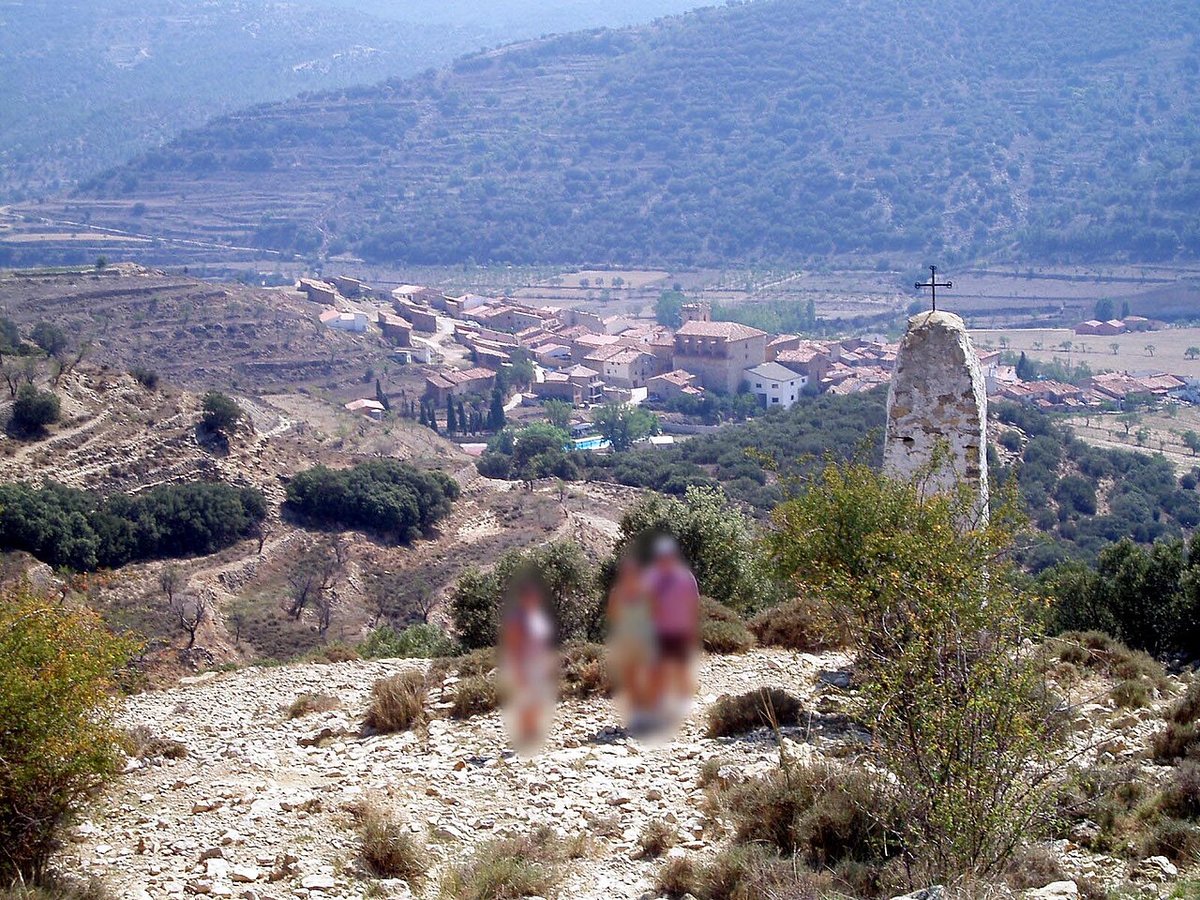
Beyond the built-up area, the landscape shifts quickly. The Maestrazgo is defined by rough terrain, ravines, limestone rock and patches of holm oak and juniper. It is not a lush, green setting, yet it has a strong identity. Those drawn to harsher, more rugged environments tend to connect with it quickly.
Ways to experience it
Mirambel can be seen in a short space of time. That is simply the scale of the place. At the same time, it works well as part of a wider route through the Maestrazgo.
Rural paths leave directly from the village, leading towards old farmhouses, animal enclosures and fields that at times seem held in another era. Walking even a short distance brings a noticeable quiet typical of these uplands, where encounters are more likely to involve a tractor or grazing livestock than anything else.
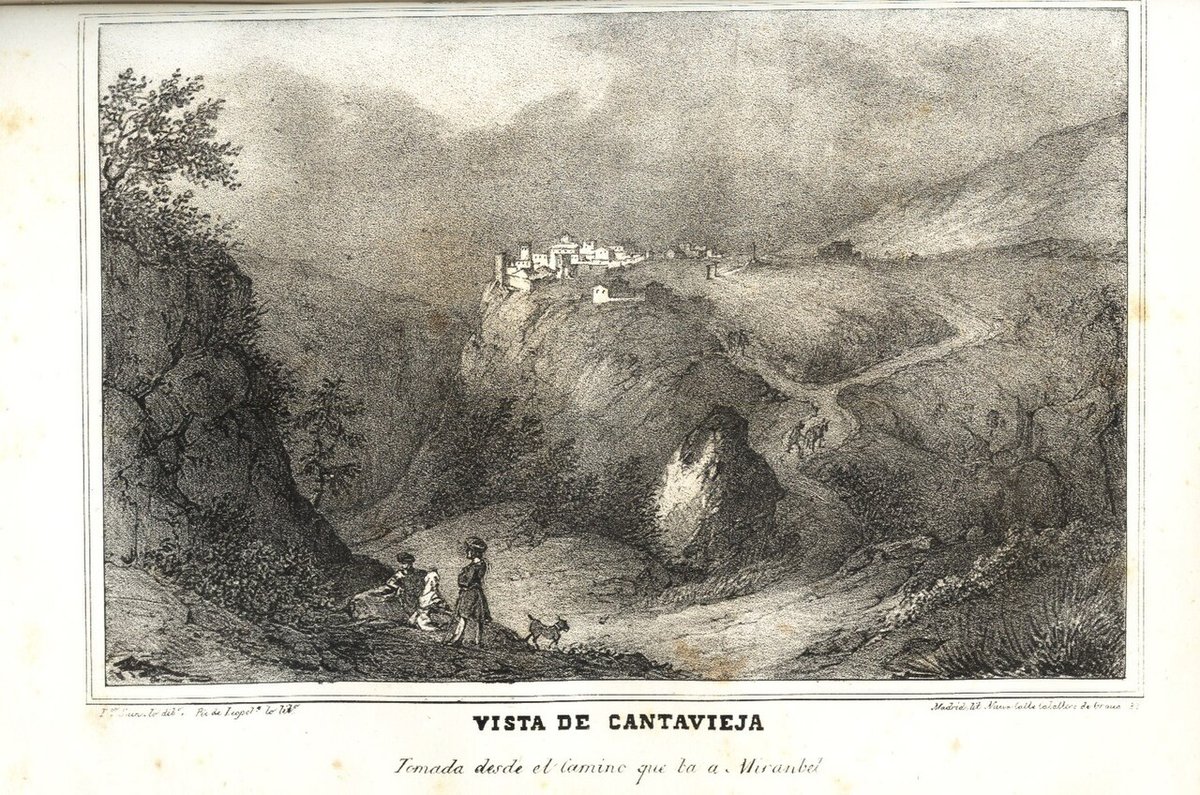
By car, nearby villages such as Cantavieja and La Iglesuela del Cid are relatively close and often included in the same regional route. Each has its own character, though they share the same stone-based architecture closely tied to the landscape.
For those who pay attention to small details, Mirambel offers plenty. Doorways with worn coats of arms, wrought-iron balconies and large wooden doors that once saw the passage of carts and animals over generations all remain part of the streetscape. Light also plays a role in how the village is perceived. Early in the day, the stone tends towards warmer tones. By late afternoon, shadows deepen and bring out edges and textures.
Local cooking still reflects inland traditions. It centres on preserved meats, hearty dishes and products linked to the Maestrazgo such as Tronchón cheese, which has long been made in the area. This is straightforward food, rooted in the need to get through long winters rather than in refinement.
Traditions that follow the village rhythm
The main festivities take place around the Nativity of the Virgin, at the beginning of September. During these days the village becomes a little busier as families return and people with ties to Mirambel come back, even if they now live elsewhere.
At Easter, processions continue through the narrow streets of the old quarter. These are not large-scale events. Quite the opposite. That smaller scale helps preserve the atmosphere of a place where everything happens close together and where people know each other.
In summer there are occasional cultural activities, mainly aimed at those returning for the holiday period. There is no packed calendar designed for visitors. Mirambel continues to function primarily as a lived-in place rather than a backdrop, and much of its appeal comes from that.