Full Article
about Pitarque
Hide article Read full article
A village shaped by rock and valley
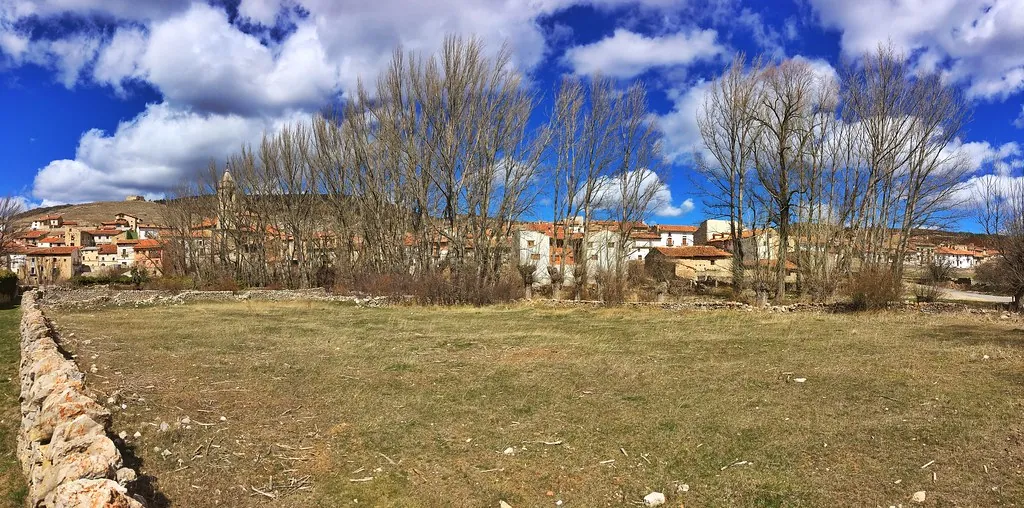
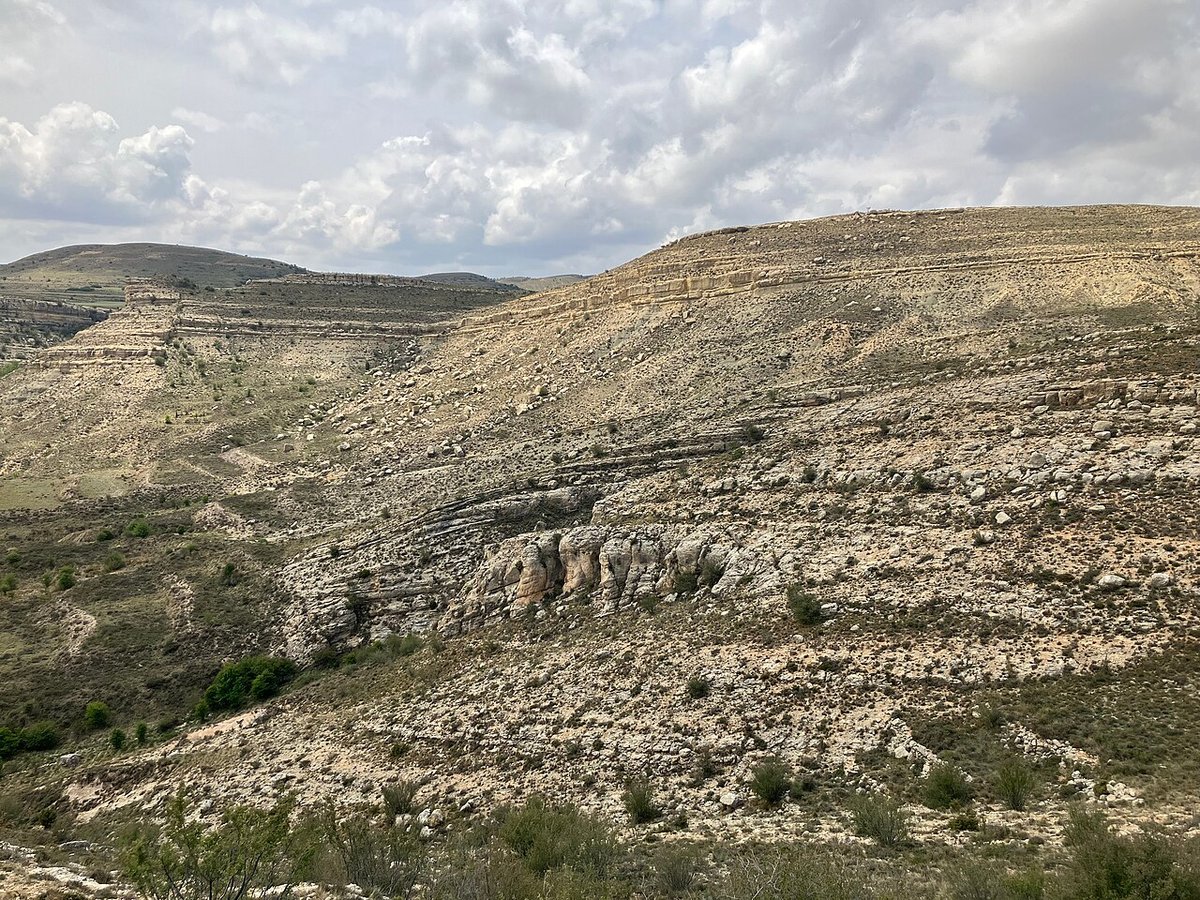
In the far north-east of Teruel, within the Maestrazgo region, Pitarque sits in a narrow valley enclosed by limestone relief. Tourism in Pitarque centres on this rugged setting, typical of much of the comarca: deep ravines, pine-covered slopes and a river that has gradually carved its way through stone. At close to 1,000 metres above sea level and with a very small population, the village has kept a compact form. Its stone houses are adapted to both the incline and the demanding climate of inland Teruel.
Arrival gives an immediate sense of place. The road winds through bare hills and stretches of woodland before dropping into the valley floor. The settlement appears suddenly, gathered beside the river and sheltered by the surrounding slopes. There are no grand avenues or expansive squares. Streets are short and sometimes steep, and buildings follow the terrain rather than any formal plan.
Stone houses and the church of Santa Ana
Pitarque’s built heritage is modest and in keeping with a small mountain community. At its centre stands the parish church of Santa Ana, a simple structure that works as a visual reference point within the village. Its importance lies less in decorative detail and more in its role over time. For centuries, it was one of the few shared spaces in an area where people were spread out across farmsteads and working land.
Many houses retain features of traditional Maestrazgo architecture. Doorways with clearly defined voussoirs are common, along with iron window grilles and wooden eaves that protect the façade. Some properties display carved coats of arms or inscriptions in stone, traces of families that once held a certain standing in the local economy.
On the outskirts, buildings linked to older ways of life still appear: animal enclosures, small threshing areas and fountains that continue to be used. These details help explain how daily life was organised in a place where agriculture and livestock have always been limited by terrain and climate.
The river and the high Maestrazgo landscape
The surroundings account for much of Pitarque’s appeal today. The river that shares the village’s name runs between limestone walls and areas of dense vegetation, forming one of the best-known stretches in the comarca. Slopes are often covered with black pine, mixed with holm oak and Mediterranean scrub adapted to cold winters and dry summers.
This is not a gentle landscape. There are sheer drops, long inclines and sections where paths run close to the water or pass between rocks. That roughness is part of why the area feels largely unchanged.
Walking to the source of the Pitarque river
The best-known route from the village follows the river upstream to its source. The path combines old tracks with sections that have been prepared for walkers, and the full walk usually takes several hours there and back. The gradient is moderate overall, though there are stony stretches and damp areas where care is needed.
As the route progresses, the valley narrows and water begins to emerge directly from the rock. Vegetation shifts too. The bottom of the ravine is typically cooler and more shaded than the open slopes above.
Wildlife is present, even if it is not always seen up close. Vultures often glide above the cliffs. In quieter parts of the hills, roe deer and wild boar move through the landscape, more often detected by tracks than by direct sightings.
Festivities and life in a very small community
The annual calendar revolves around Santa Ana at the end of July. At that time, the village changes noticeably. Families who maintain homes or roots here return, and simple events are organised in the streets and the square. These are celebrations aimed mainly at residents and those who come back each summer.
During the warmer months, small cultural activities sometimes take place in coordination with other villages in the Maestrazgo. These can include concerts, gatherings or talks, although there is no fixed programme each year.
Getting around and practical notes
Pitarque can be explored on foot in a short time. The usual starting point for walks lies close to the village centre, where paths lead into the river valley.
Proper walking footwear is advisable for anyone heading towards the river’s source or along surrounding trails. Even on mild days, the bottom of the ravine tends to feel cooler than the rest of the valley. In winter, temperatures can drop significantly, with frost a regular occurrence.