Full Article
about Tronchón
Hide article Read full article
A hillside village shaped by silence
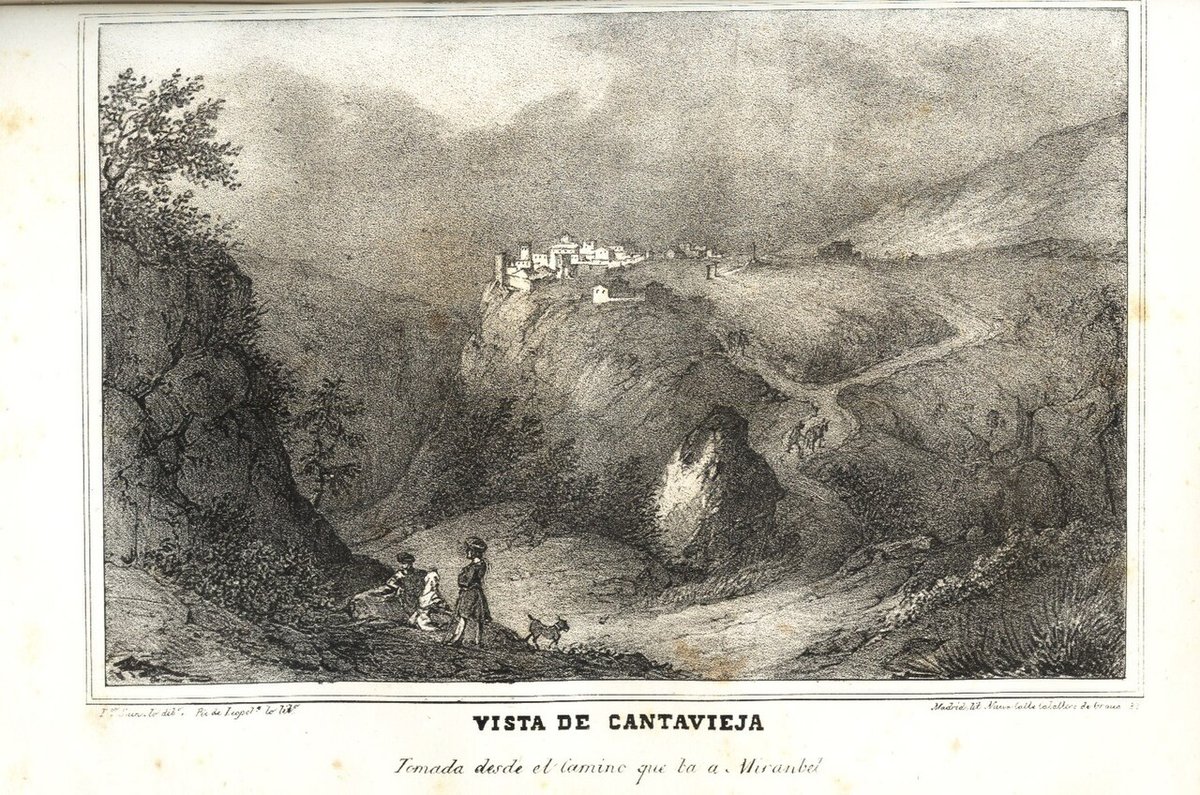
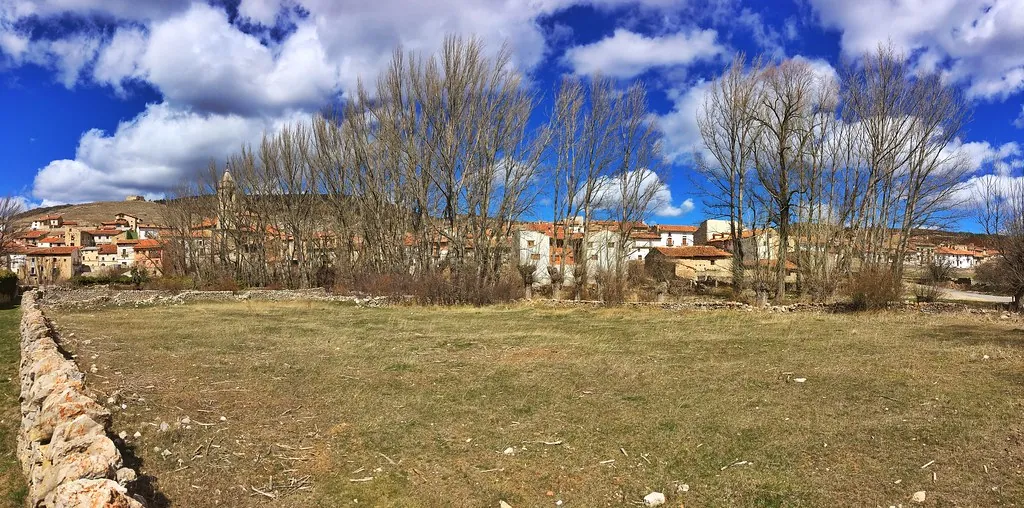
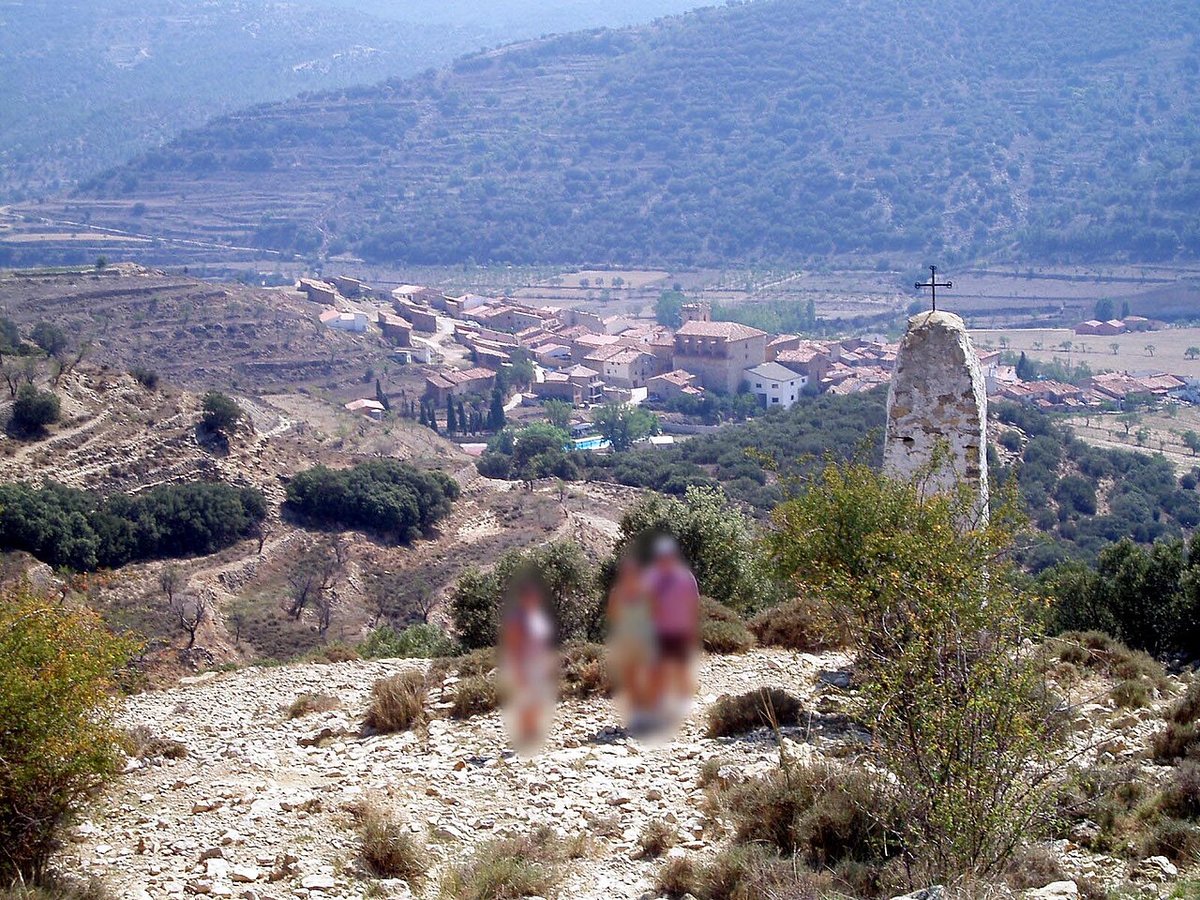
In the early afternoon, when the sun falls sideways across the stone façades, Tronchón is defined above all by quiet. Wind comes down from the high plains and slips through the narrow streets, lifting a little dust along the walls. The village sits on a slope in the Maestrazgo area of Teruel, looking out towards the valley of the Guadalope. Fewer than fifty residents are spread across thick stone houses with reddish roofs that face a hard winter each year.
Tronchón lies a little over an hour by car from Teruel, reached by roads that cross open hills and scattered farmsteads known as masías. On arrival, the scale stands out straight away: short streets, steep inclines that slow your pace, and barely any traffic. It is common to hear a dog or sheep before any engine.
Stone streets and the church of Santiago
Walking through the centre does not take long, though it rewards an unhurried pace. Streets are narrow and steep, with darkened wooden doorways and lintels where old marks can still be made out in the stone. Some houses keep small iron balconies, while others have large doors that once also served livestock.
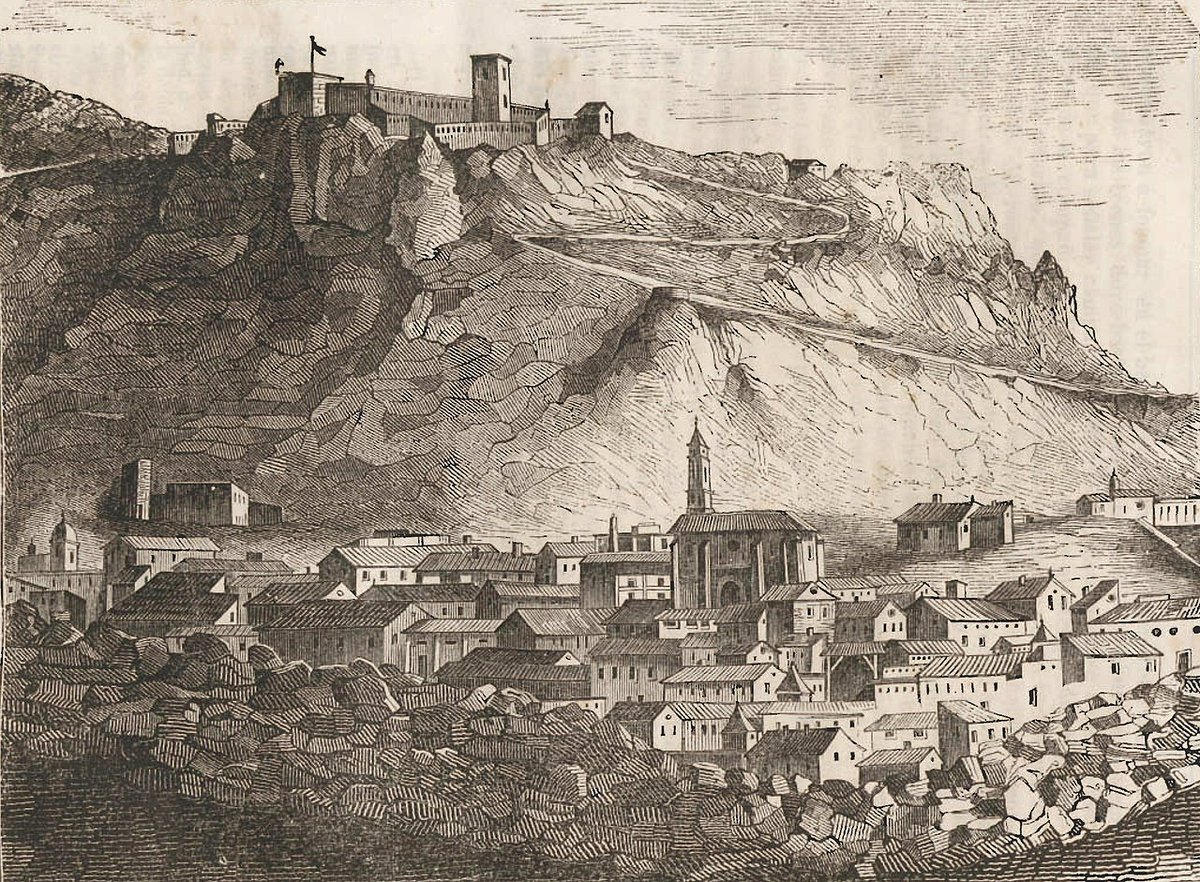
In the main square stands the parish church of Santiago Apóstol, a 16th century building that acts as a reference point within the village. Its tower is visible from almost anywhere in Tronchón and helps you find your way through the streets that climb and dip along the hillside.
By mid-afternoon the square tends to fall quiet. A voice from a window, the solid thud of a door, and little else.
The austere landscape of the Maestrazgo
Step beyond the built-up area and the terrain changes quickly. The land around Tronchón is open and stony, with large rock formations and stretches of low scrub that turn greyish in summer. Among these hills stand stone livestock enclosures and agricultural buildings, many of them decades old.
Much of this landscape is tied to sheep farming, which shaped the rhythm of the village for a long time. Even now, flocks can be seen moving along paths or grazing on the slopes. When they pass, the smell of dry earth and wool tends to linger in the air.
Tronchón cheese and local memory
The name of the village has been linked to cheese for centuries. In the region people still speak of queso de Tronchón, traditionally made from sheep’s milk or sometimes mixed with goat’s milk. The process has long been straightforward: rennet, manual pressing and slow ageing.
Production today is smaller than it once was, yet the memory of the cheese remains strong among residents. Many recall how it was made at home, in small rounds with a distinctive shape that has set it apart for generations.
Paths across plains and masías
Several rural paths leave Tronchón and lead into the wider Maestrazgo landscape. Some connect with nearby villages such as Mirambel or Fortanete, crossing high plains where the horizon feels open and the wind is almost constant.
These are not especially demanding routes, though it is sensible to carry water and protection from the sun, as shade is scarce in many stretches. While walking, it is common to see griffon vultures riding the air currents rising from the ravines.
In spring and early autumn the land shows more colour. At the height of summer it becomes harsher and drier.
Dry stone and working land
Across the countryside stand livestock pens, dry-stone walls and old haylofts. Some are still in use, while others remain standing through the resilience of their materials. The walls, built stone upon stone with little or no mortar, are as much a part of the landscape as the fields themselves.
These structures reflect a time when work was divided between dry farming and animal husbandry. There are still enclosures where sheep can be heard bleating, or stacks of hay kept for winter.
A small place that moves slowly
Tronchón is a very small municipality, with a population of only a few dozen. There is no developed tourist infrastructure and few services designed with visitors in mind. What you find instead are quiet streets, houses that remain closed for much of the year, and residents who know each other by name.
In summer there is usually more movement, as many families return for holidays and for the fiestas of Santiago, traditionally held in August. For a few days the atmosphere shifts: more people in the square, music at night, long gatherings around tables.
Outside those dates, the slower rhythm returns. That is when the place is easiest to understand: wind over the hills, footsteps on stone, and a silence that still forms part of everyday life here.