Full Article
about Villarroya de los Pinares
Hide article Read full article
A village shaped by height and terrain
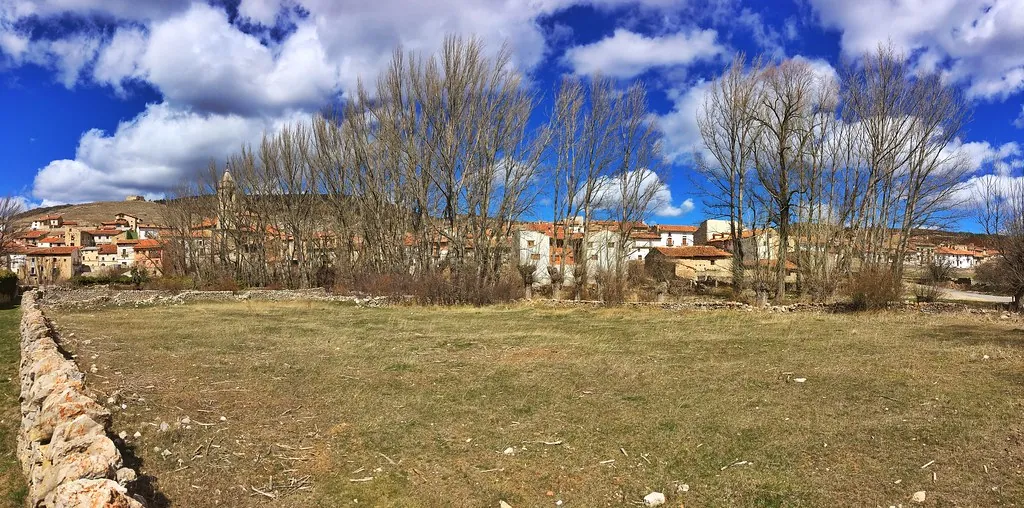
At 1,337 metres in the Teruel Maestrazgo, Villarroya de los Pinares is a village built in response to its geography. The compact cluster of stone houses sits within a landscape of pine forests and rolling hills, where farming has always negotiated with poor soils and a demanding climate. The layout of its streets, the thickness of its walls, all speak of a practical adaptation to altitude and isolation.
For centuries, it functioned as a small agricultural and livestock centre. That origin remains visible in the domestic architecture, designed for resilience. The impression is of a place shaped by necessity.
The church of the Asunción and its Mudejar tower
The parish church of the Asunción anchors the village. Its 16th-century structure has seen later modifications, but the notable element is the tower. Built in the Mudejar tradition, it presents a modest version of that style, scaled to a rural community.
The building is restrained, with stone walls and a single nave. Inside, a Baroque altarpiece occupies the main chapel. The decorative aspects matter less than the building’s historical function: it was the focal point for the settlement, organising both religious and communal time.
Stone houses and carved coats of arms
Several houses display coats of arms carved above their doorways. They are not palaces, but indicate families who held local standing in past centuries.
The street plan is compact, with narrow lanes following the slope. Many buildings show traditional Maestrazgo features: lintelled doorways, thick stone walls, iron balconies. These were solutions for conserving heat and capturing light.
The main square is a small, rectangular space. It has traditionally served as the setting for local celebrations, a shared ground that mirrors the community’s scale.
Pine forests, ravines and old routes
Scots pine and black pine dominate the surrounding forests. Ravines and shallow valleys cut through the terrain. This landscape provided firewood, grazing, and sites for charcoal production; traces of this last activity can sometimes be found in historical records or subtle marks on the land.
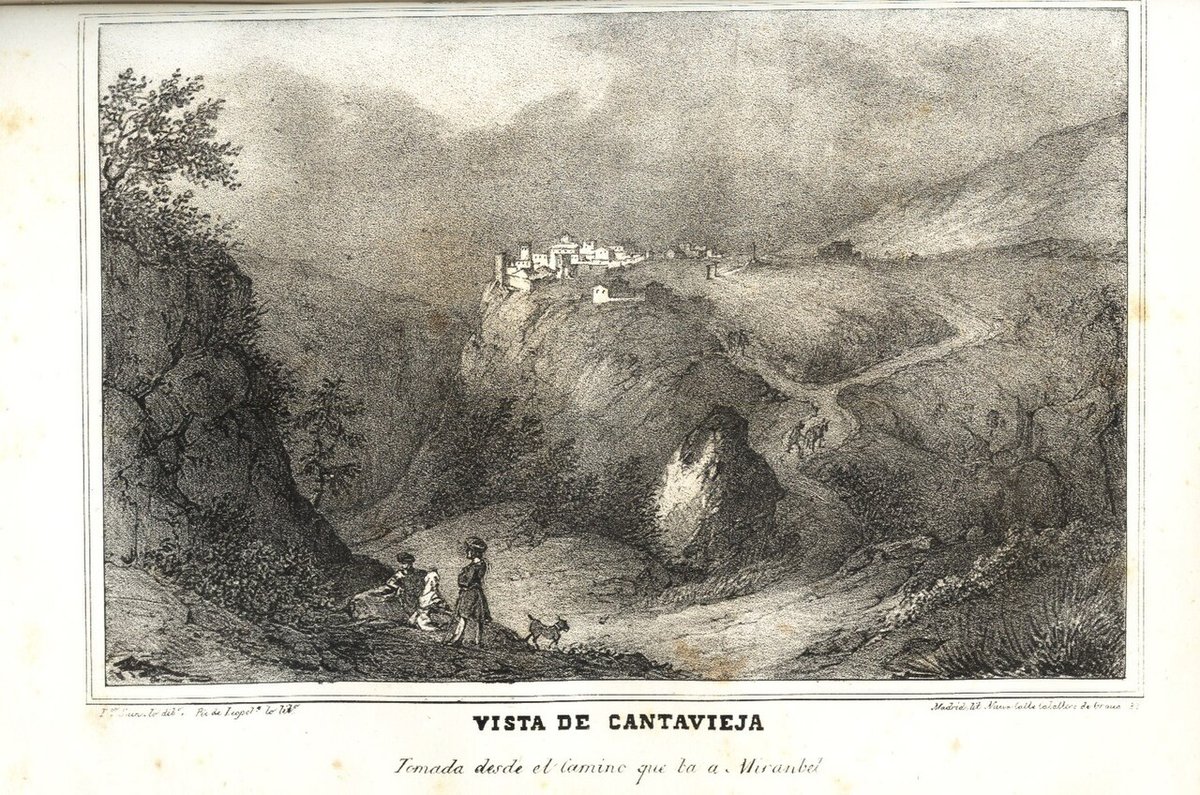
Several old paths begin in the village, once linking it to Cantavieja or Mirambel. Many were mule tracks for shepherds and traders. Some are now used for walking, though waymarking is not always consistent. A map or downloaded route is advisable.
Griffon vultures are common in the skies above. In the pine woods, especially in spring, you hear coal tits, blue tits, and the drilling of great spotted woodpeckers.
Everyday life and inland cooking
Local cooking follows the logic of inland Spain. Dishes are substantial, tied to the seasons and the local provision. Pulses appear often. Pork is central, particularly following the matanza, the annual pig slaughter that historically supplied households.
In autumn, mushroom gathering becomes a routine activity for many residents, connecting daily life to the nearby woods.
The main festivities occur in August for the Virgen de la Asunción. The village becomes notably busier then. For the rest of the year, the pace is calm. Christmas is typically a more private, family observance.
Visiting Villarroya de los Pinares
Villarroya is small. You can walk its streets without hurry in a short time. Look for the details: the stonework, the street layout, how the buildings meet the land.
The altitude brings a variable climate. Summer nights are cool; winter often brings snow and ice, which can complicate access.
The approach roads are mountain routes with many bends. Allow more time than a navigation app estimates, particularly if you are unfamiliar with such driving. Spring and early autumn are generally the most reliable seasons for walking the surrounding hills.