Full Article
about Fuentespalda
Hide article Read full article
A place that grows on you
Fuentespalda has a curious reputation. It rarely comes up in conversation, yet people who visit tend to return with the same understated verdict: it just feels good to be there. There are no big claims or headline attractions. Tourism in Fuentespalda works in a quieter way, more like a place you discover almost by accident and then remember.
The village sits on the eastern side of the Matarraña, close to that soft, shifting boundary between Aragón and Catalonia where accents begin to change and roads start to twist. The journey involves a fair number of bends and that moment of doubt when the route seems uncertain. Then the village appears, and the setting begins to make sense.
Fuentespalda has around three hundred residents and stands just over 700 metres above sea level. It is surrounded by old terraced fields where olive trees, almond trees and some vines still grow. Many of these plots are no longer worked as they once were, something common across this part of the Matarraña, yet the landscape still reflects how people have lived here over generations.
Streets shaped by weather and routine
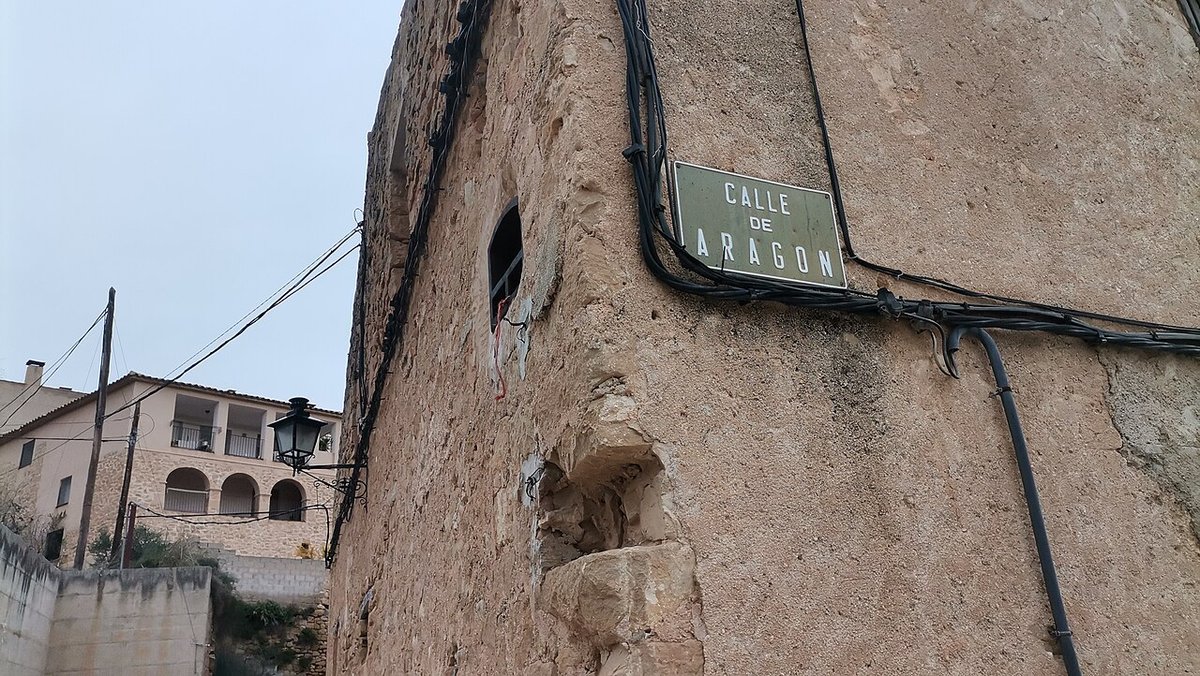
The old quarter is compact, built in stone, with narrow streets that rise and dip without any obvious plan. The layout feels organic, as if the village developed gradually, house by house, guided more by the need for shelter from cold and wind than by any formal design.
Buildings have thick walls, small windows and sloping roofs. Large stone blocks often reinforce corners, a practical detail typical of places where winters can be harsh. A slow walk through the streets reveals old doorways, iron fittings and carved stone details that are easy to miss if you rush.
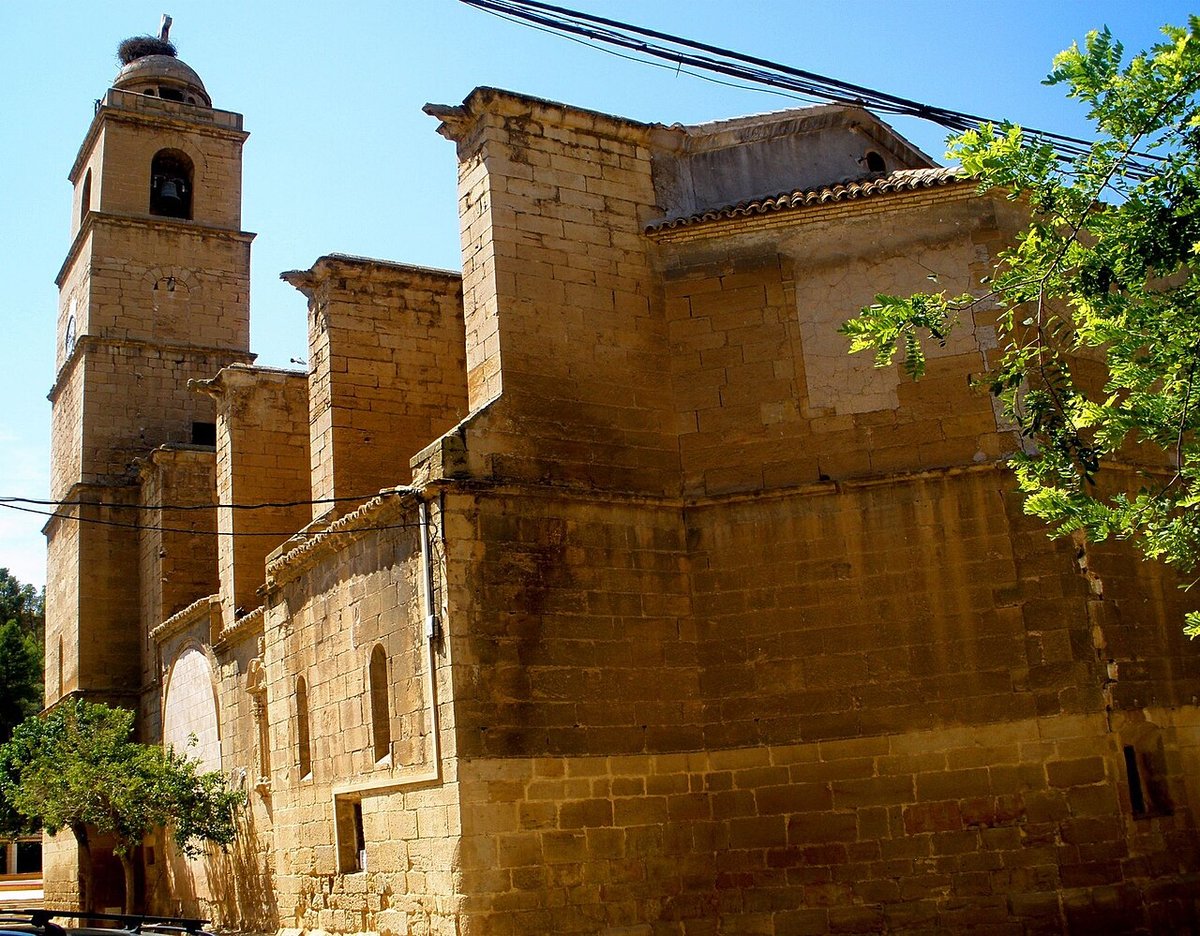
At the centre lies the plaza Mayor, the village’s main reference point. The parish church dedicated to San Miguel stands here, its tower visible from various points in the old quarter. It works as a simple guide when the streets become confusing.
The church combines older sections with later additions. It is not monumental, yet it fits the character of Fuentespalda: solid, restrained and built with materials from the surrounding area.
Terraces and the wider landscape
Beyond the village, the defining feature is the traditional agricultural landscape of the Matarraña. Hillsides are shaped into terraces supported by dry stone walls, forming small, layered plots that climb the slopes. The effect suggests a long process of careful work, carried out over centuries.
There are several spots around Fuentespalda where the valley opens up. These are not formal viewpoints or marked locations. Often, a short walk along agricultural tracks is enough to find a wide view. As the day fades, the light softens and the colour of the stone shifts towards reddish tones, giving the landscape a different feel.
Nearby slopes alternate between olive groves and patches of pine and holm oak. Birds of prey can sometimes be seen circling above the valley. Early morning or late afternoon walks may also bring the chance of spotting a roe deer.
Walking without a fixed plan
One of the most satisfying ways to experience Fuentespalda is simply to walk. Paths link former fields, scattered farmhouses and small wooded areas. There is no need for a detailed plan, as the surroundings encourage a slower pace.
The area is known for caves and limestone formations, which are common across this part of the Matarraña. Many are neither signposted nor adapted for visitors, so local knowledge becomes useful. Asking residents about the routes they use often leads to the most sensible options.
Old farmhouses, known as masías, are scattered across the municipality. Some remain in use, while others stand as reminders of a more dispersed way of life that was once typical in the region.
Food shaped by the land
Food in Fuentespalda follows a straightforward rural logic: local produce and filling dishes. Olive oil from the area appears in much of the cooking, from stews to vegetables and traditional cured meats.
During winter, meals tend to centre on hearty dishes eaten with a spoon. At other times of the year, seasonal vegetables, freshly pressed oil and produce from kitchen gardens take the lead.
The landscape changes noticeably when almond trees come into bloom, towards the end of winter or the start of spring. At that point, walking along the paths between terraces becomes particularly appealing.
Festivities and everyday life
The festivities dedicated to San Miguel bring together much of the village’s social life. Processions, music, jota dancing and shared meals between neighbours mark the occasion. These are not events designed primarily for visitors, but rather celebrations that continue because local people take part.
Rural traditions still have a place in the calendar. Winter customs linked to family life and food preparation continue in some form, alongside the quieter rhythms of daily life in a small community.
Fuentespalda does not try to stand out loudly. Its appeal comes from how everything fits together: the streets, the fields, the routines. Time here is shaped less by attractions and more by the steady presence of landscape and habit.