Full Article
about Monroyo
Hide article Read full article
Arriving and getting your bearings
If you are planning a bit of sightseeing in Monroyo, it is best to leave the car at the top of the village. There is a small parking area closer to the centre, but it fills quickly and there are not many alternatives. Most people stop in the upper part and walk down.
Timing makes a difference. At weekends or in summer, it is worth arriving early to avoid circling for a space. Monroyo sits at around 850 metres above sea level, in the southern part of the Matarraña comarca, already close to the borders with Castellón and Tarragona. The setting gives it a slightly elevated, open feel, though the village itself remains compact.
A compact mountain village
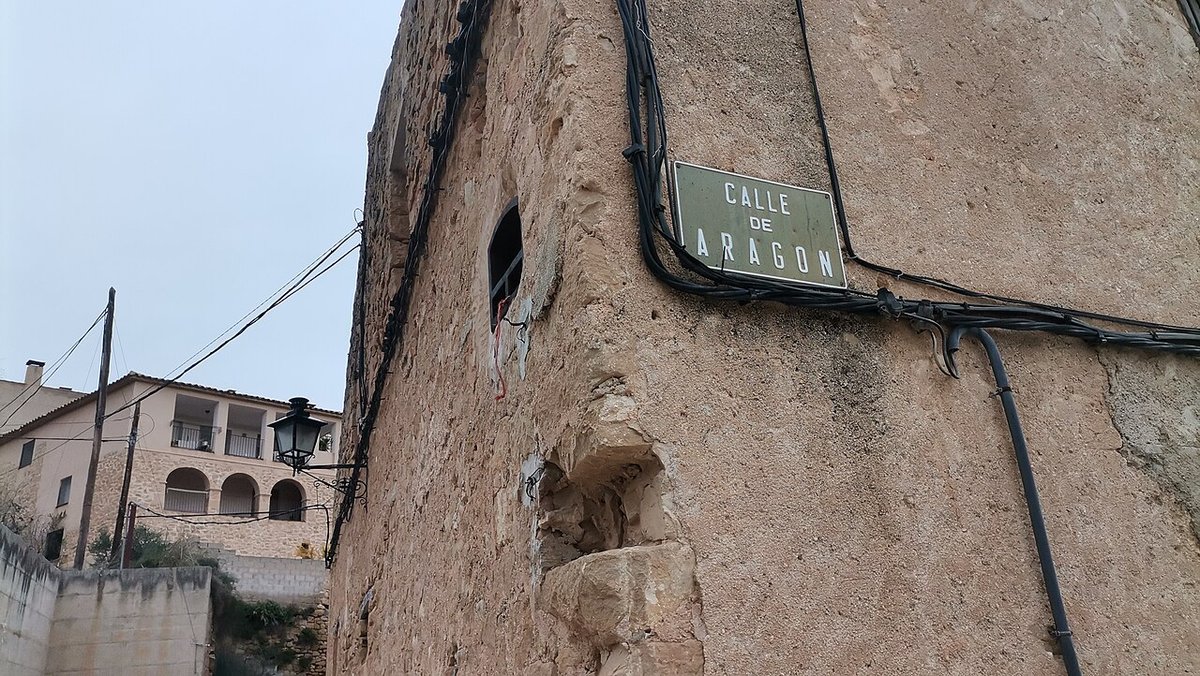
Monroyo is small and easy to cover on foot in a short time. The old centre is tightly grouped, with narrow streets, masonry houses and very little traffic. There are no museums or major landmarks to tick off. What you find instead is everyday village life: neighbours chatting, a tractor parked off to one side, stacks of firewood leaning against façades.
The architecture follows the same pattern seen across this part of Aragón. Stone walls, tiled roofs and metal balconies define most buildings. Nothing stands out on its own as remarkable. The overall impression works because everything fits together in a consistent way rather than because of any standout structure.
Walking through the streets, the pace feels unhurried. There is no sense of a curated or staged place. It is simply a lived-in mountain village, still shaped by routine and practical needs.
The church and the square
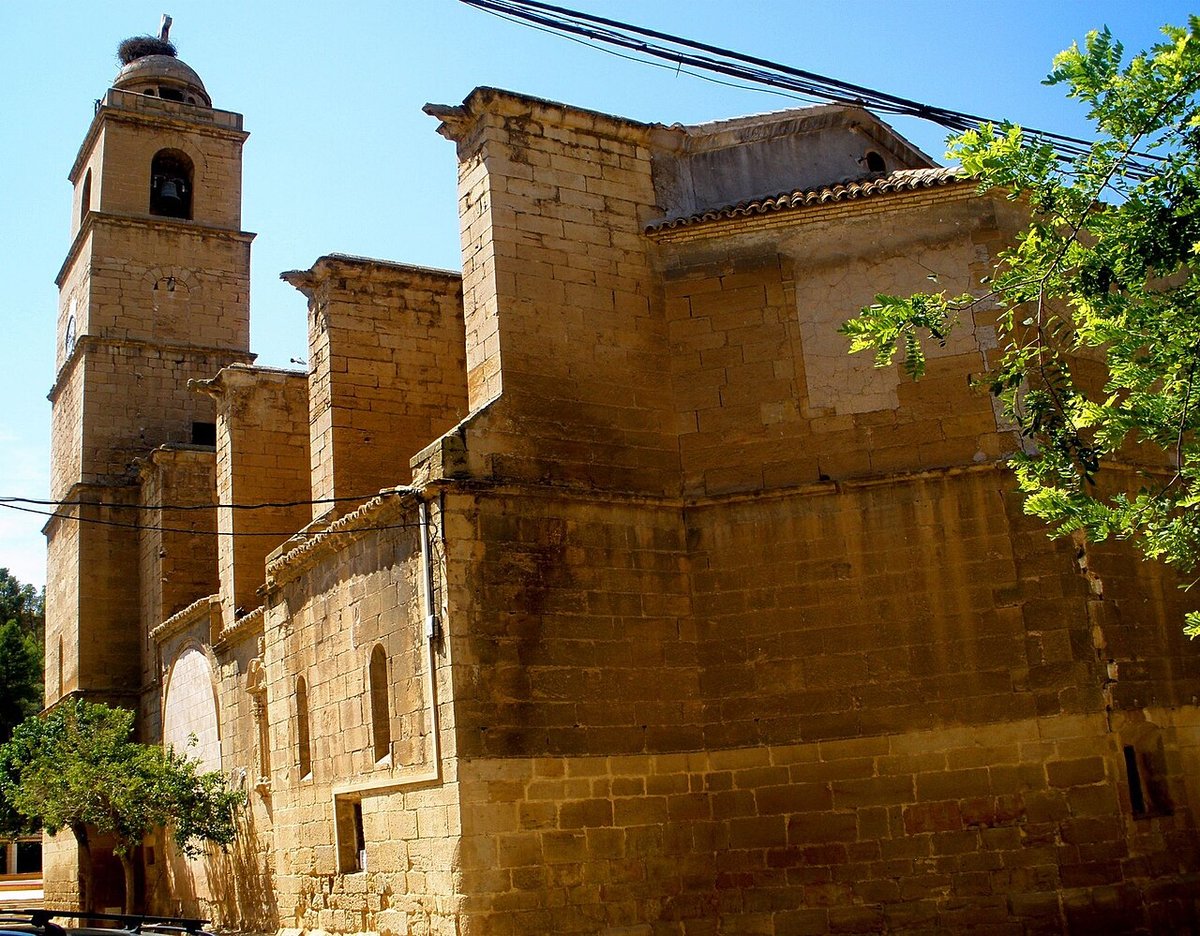
The most visible building in Monroyo is the parish church of the Asunción. Its origins go back to the medieval period, although it has undergone later alterations. Inside, it houses Baroque altarpieces and a number of simple religious carvings.
Nearby, the main square does exactly what a village square is meant to do. There are benches, a fountain and enough space to sit for a while. During the week it is usually quiet, with only occasional movement. It is the kind of place where people pause rather than pass through quickly.
Nothing here is designed to impress at first glance. The appeal lies in how these elements continue to serve their original purpose without much change.
Views at the edge of the village
From several points around Monroyo, especially near the edges of the built area, the land opens out into views of the surrounding countryside. There is no formal viewpoint and no well-known panoramic spot, but stepping just beyond the last houses is enough to take in the landscape.
What you see is typical of the interior Matarraña: terraced fields with old olive trees, patches of pine forest and low, gentle mountain ranges in the distance. It is not a dramatic landscape, yet it gives a clear sense of this part of Teruel.
The terrain feels settled and worked rather than wild. The terraces show how the land has been shaped over time, and the mix of olives and pines reflects the Mediterranean climate, generally dry for much of the year.
Walks around Monroyo
Rural tracks lead out from the village in several directions. These are used both by locals and by walkers, and they are suitable for short outings of a couple of hours without steep climbs.
The routes pass through olive groves, dry ravines and stretches of pine woodland. The ground is typically Mediterranean, with dry soil and sparse vegetation for much of the year. In autumn, the colours shift slightly, and the contrast between the surrounding landscape and the stone of the village becomes more noticeable, especially in photographs.
During mushroom season, when the year has been wetter than usual, some people head into the nearby pine woods to forage. It is not something to approach casually. Without a good knowledge of the terrain or the species, it is better not to improvise.
These walks are less about reaching a specific destination and more about spending time in the immediate surroundings of the village.
Festivities and local atmosphere
The main festivities in Monroyo usually take place in mid-August, aligned with the celebration of the Asunción. During those days, the village becomes noticeably busier than usual. There are open-air dances and communal meals, bringing together residents and visitors.
In winter, the celebration of San Antonio Abad continues to be observed. This festival is closely tied to rural traditions and typically includes the blessing of animals, a bonfire and neighbours gathering around the fire.
These are not large-scale events or extended programmes. They are local celebrations, organised with the village community in mind and for those who return at that time of year.
A short stop on a longer route
Monroyo is not a place that fills an entire day. It works best as a brief stop while travelling through the Matarraña. A walk through the centre and a look out from the edges of the village are enough to get a clear sense of what it is like.
With a little over an hour, you can take it in without rushing. After that, it makes sense to continue exploring other parts of the comarca. Monroyo fits naturally into a wider route rather than standing as a destination on its own.