Full Article
about Adahuesca
Ocultar artículo Leer artículo completo
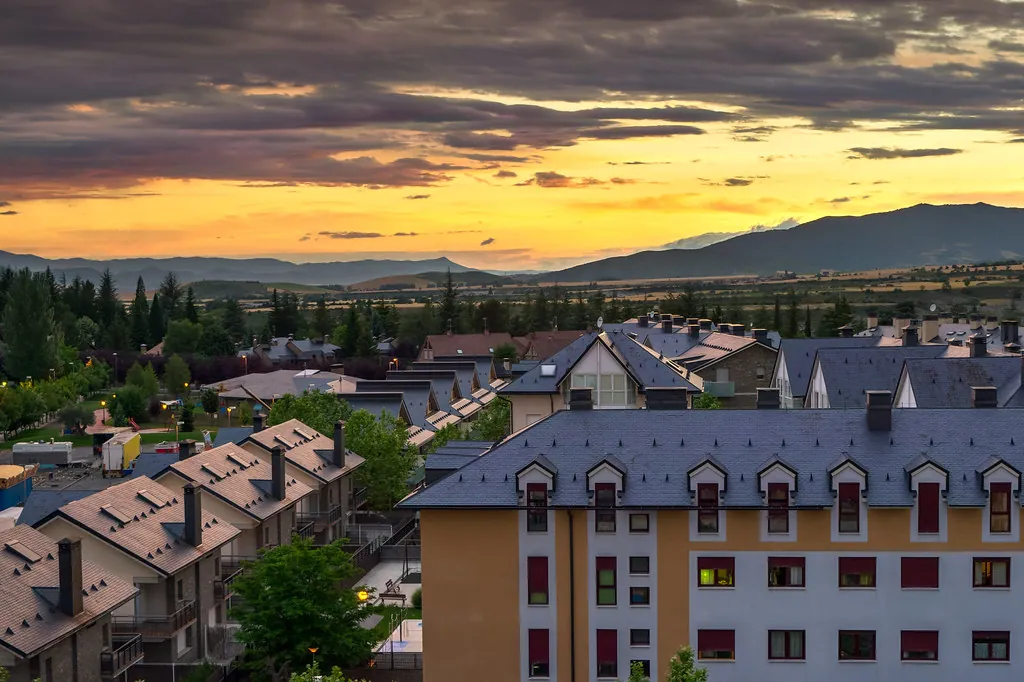
The church bell strikes eight and the only other sound is a tractor reversing down the lane. Adahuesca’s 616-metre perch above the Somontano plain means the morning air still carries a nip even in late May; pull on a fleece before heading out for coffee and you’ll be grateful. From the stone bench beside the war memorial you can watch the sun lift over the outer ramparts of the Sierra de Guara, turning the cereal fields below from pewter to gold while griffon vultures tilt on the thermals overhead. It is the sort of view that makes you count villages, not cities, as the better bargain.
A village that still clocks in with the fields
Adahuesca’s population hovers around 170 – smaller than most British primary schools – yet the place feels alive rather than museum-still. Pensioners sweep their doorsteps, a van from the cooperative winery clatters across the cobbles to collect the last stainless-steel drums of the night’s pressing, and someone is always watering geraniums in a paint-pot hung from a wrought-iron balcony. Houses are built from butter-coloured sandstone quarried a mile away, trimmed with the region’s trademark red brick; roofs slope gently to shed the winter snow that occasionally makes the road from Barbastro impassable for a morning.
The village centre is a single T-junction focused on the plaza Mayor, fifteen paces across and shaded by a single plane tree. There are two bars: Bar Centro opens at seven for the field workers’ brandy-and-coffee, while La Posada fires its grill around ten for the British walkers who have discovered the newly opened Apartamentos Vino Tinto upstairs. The apartments occupy what used to be the grain store; inside you get underfloor heating, oak floors and a pellet stove that glows like a spaceship at night. A one-bedroom flat starts at €85 a night in spring, dropping to €65 once the August fiestas are over – still cheaper than a travelodge on the M4, and the tapas bar downstairs will wrap up a portion of local ham to take on tomorrow’s hike.
Why the church looks too big for its boots
Walk to the top of the village and San Pedro towers above you like a misplaced cathedral. The baroque belfry was added in 1784 after a hailstorm ruined the crops and the villagers, grateful for anything that could still be taxed, lavished money on stone instead of seed. Step inside and the nave is cool, smelling of candle wax and the pungent Somontano wine used to scrub the altar brass. A side chapel keeps a tiny Romanesque virgin brought down from the hillside hermitage of Nuestra Señora de Treviño; the 1.2-kilometre path up to the original shrine begins behind the cemetery and takes twenty minutes if you don’t stop to photograph orchids. Take stout shoes – the local farmers call the route “el sacacostras” because it used to rip the soles off their espadrilles.
Lunch at the edge of the wilderness
Adahuesca’s gastronomy is inseparable from the calendar. In late April the first artichokes arrive, followed by tomatoes so ribbed and blush-pink they are traded like jewels at the Saturday market in Barbastro. The village restaurant, Tomate Rosa, is literally named after them. Midday menus run to three courses plus wine for €16; expect a bowl of migas – fried breadcrumbs laced with pancetta and grapes – then lamb shoulder that has collapsed into its own juices, finishing with the local almond cake served warm so the centre stays almost molten. Vegetarians are catered for if you warn them the night before – the chef keeps a seperate pot of borage and chickpeas for the occasional passing vegan climber.
Somontano wines, once dismissed as bulk plonk, have quietly reinvented themselves. The house red at Tomate Rosa is a one-year-old tempranillo that tastes of sour cherries and river stones; order the carafe, not the bottle, and you’ll still be steady enough for the afternoon walk. If you want to visit a winery, Enate is ten minutes by car – tastings €10, English spoken, but ring first because they shut without warning for bottling days.
Trails that start at the last streetlamp
From the edge of the village three marked footpaths fan out into the Sierra y Cañones de Guara Natural Park. The shortest loop, way-marked in yellow, climbs through holm-oak and rosemary to an abandoned threshing floor; allow ninety minutes and carry water – there is no cafe until you return. Serious hikers link up with the GR-45 long-distance trail which drops into the Vero canyon, a limestone gorge where griffon vultures nest on balconies of rock and the river shrinks to emerald pools deep enough for a bracing swim once the summer heat sets in. Canyoning guides operate out of Alquézar, twenty minutes away, but you can dodge the crowds by starting from Adahuesca at dawn; the only audience will be a shepherd on a quad bike moving his goats between pastures.
Mountain-bike rental is trickier – the village has no shop, so book in Barbastro the day before and strap the bike to the car. Road cyclists love the climb north to Bierge: 11 km of switchbacks, gradient nudging ten per cent, and traffic so light you hear the clank of your own chain echoing off the cliff.
Seasons: choose your colour palette
March brings almond blossom and the risk of a late frost that keeps farmers awake all night burning straw bales in the orchards – the sky flickers orange like a distant city. May is green velvet: wheat shoulder-high, poppies splashing every verge. By mid-July the land turns parchment-yellow and the afternoon wind, the cierzo, barrels up the Ebro valley fast enough to slam unsuspected doors; temperatures still hit 35 °C but nights drop to 17 °C so you sleep under a blanket. September is harvest: tractors nose into the cooperative until midnight, headlights carving tunnels of dust, and the smell of crushed grapes drifts through the streets like a sweet fog. November can bring the first snow; if the white stuff settles the village becomes briefly inaccessible except with chains, and the bar opens only when the owner shovels his doorway clear – usually by ten.
When the fiesta doubles the head-count
The feast of the Assumption on 15 August turns Adahuesca into a different place. Locals who left for Zaragoza or Barcelona troop home, tents sprout in back gardens, and the population swells to 400. A sound system appears in the square, elderly men in berets dance the jota until three in the morning, and someone inevitably sets fire to a rubbish bin with an errant firework. Accommodation is booked months ahead; if you crave silence avoid the week entirely. Arrive instead during the last weekend of October for the Fiesta del Vino y la Castaña – free tastings of new wine, chestnuts roasted on a perforated oil drum, and the one night of the year when the village lights are switched off so you can see the Milky Way from the church steps.
Cash, cars and cautionary notes
There is no ATM; the nearest is a 25-minute drive to Barbastro, so fill your wallet before you leave the A-22 motorway. Mobile coverage wavers on the lanes outside the village – Vodafone disappears entirely half-way up the Treviño path – so download offline maps. The grocery shop on the plaza stocks UHT milk, tinned tuna and excellent local cheese wrapped in waxed paper; it shuts between two and five, and all day Sunday. If you arrive outside these windows you will be eating bar crisps for supper.
Winter visitors should check the weather forecast: the road from Huesca climbs to 720 m and ice can catch out British drivers unused to Spanish gritting habits – essentially none until someone phones the council. Chains live in the boot from December to February.
Should you bother?
Adahuesca will never compete with the Costa’s cocktail menus or Seville’s flamenco beat. It offers instead a distilled version of Spain that package tours skipped: a place where the church clock still governs the day, where the waiter remembers how you like your coffee, and where the loudest noise at midnight is a dog barking at a shadow that might be a wild boar. Come if you want to walk until your boots are chalk-white with limestone dust, drink wine that never saw an airport duty-free shelf, and fall asleep to the smell of woodsmoke and cut alfalfa. Leave the village before the fiesta, or stay for it, but do not expect both experiences to be the same – Adahuesca changes its skin with the seasons, and that, rather than any postcard prettiness, is what makes it worth the detour.