Full Article
about Aladren
Ocultar artículo Leer artículo completo
The church tower rises 783 metres above sea level, which means the bells of Aladrén ring out across Spain's fifth-largest wine region from roughly the same altitude as Britain's highest village. This fact alone tells you most of what you need to know about the place: it's small, it's high, and it's surrounded by vines.
Fifty-nine people live here permanently. On weekdays, the population might swell to sixty-five when the school bus drops off children from neighbouring hamlets. The silence isn't absolute—you'll hear tractors, the clip of pruning shears, and conversations carried across narrow lanes—but it's substantial enough that a car engine three streets away sounds like an event.
The Village That Wine Built
Aladrén sits in Campo de Cariñena, Aragon's most productive wine region, where vineyards stretch to every horizon like a chequeboard drawn by someone who forgot to stop. The relationship between village and vine runs deeper than aesthetics. Local stone walls incorporate marble-sized grapes in their mortar. House numbers are painted on ceramic tiles showing harvest scenes. Even the bakery's morning batch includes pan de viña—bread made with grape must that stains the crumb a faint purple.
The church, dedicated to San Pedro Apóstol, dates from the 16th century though its tower required rebuilding after lightning struck in 1892. Inside, the single nave feels taller than it is wide, a vertical space designed to draw eyes upward through incense smoke towards grape-themed frescoes. The priest conducts mass in Spanish thickened by regional accent; visitors following the English prayer book provided will notice "wine" appears with surprising frequency in the translations.
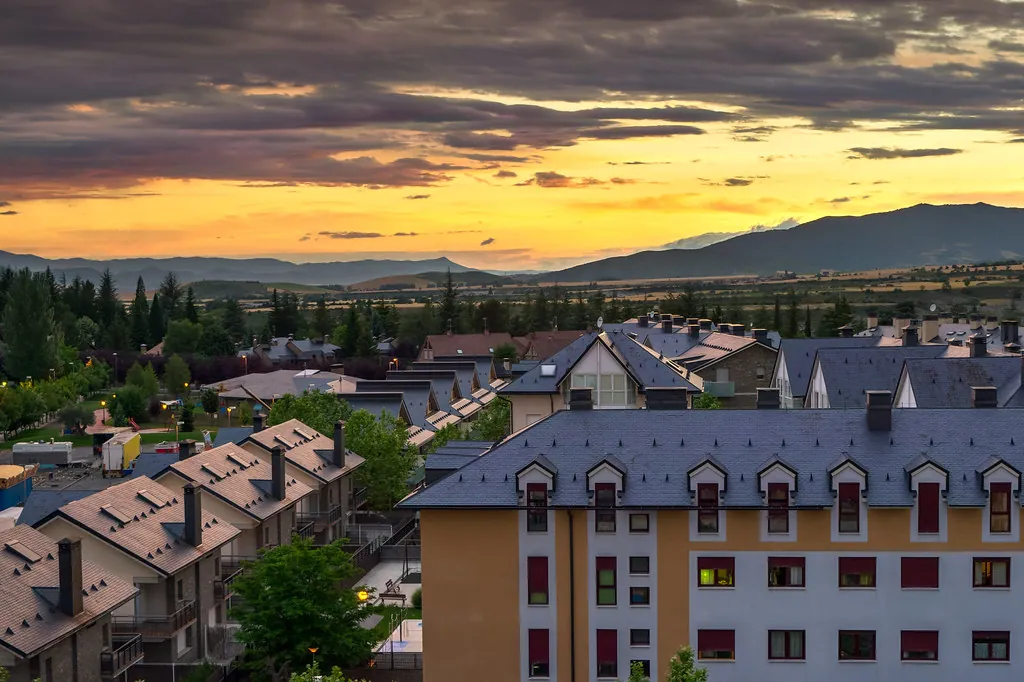
Walking the three main streets takes twenty minutes if you dawdle. Houses cluster in the traditional Aragonese style: stone ground floors supporting upper walls of ochre tapial (rammed earth), Arabic tiles weathered to terracotta, wooden doors studded with iron nails whose patterns identify the original blacksmith. Many retain feeding hatches for chickens, now sealed but still visible as square scars in the masonry. Window boxes spill red geraniums that match the soil when fields lie fallow.
Between Earth and Sky
The altitude matters more than you'd expect. At 783 metres, Aladrén escapes the furnace heat that smothers Zaragoza 45 kilometres west. Summer mornings start cool enough for jumpers; by midday, the air thins and light sharpens, making distant sierras appear close enough to touch. Winters bring snow that lingers just long enough for photographs before the wind scours it away. Spring arrives two weeks later than the valley floor, extending cherry blossom season into May. Autumn—harvest time—delivers the year's finest weather: clear skies, 24-degree afternoons, and nights cool enough to preserve acidity in the grapes.
This elevation shapes the local cuisine as much as the climate. Ternasco de Aragón—milk-fed lamb—requires longer roasting at altitude. Local cooks compensate with slower ovens and frequent basting, producing meat that falls from bone into tomato-rich gravy. The village's single restaurant, Casa Ramón, serves it only on Sundays because preparation begins at dawn. Their wine list fits on a postcard but covers every local varietal: garnacha that tastes of hillside herbs, carinena carrying mineral notes from limestone subsoil, tempranillo lighter than Rioja counterparts thanks to altitude's cooling influence.
Working the Land
Visit during September's vendimia and Aladrén transforms. Tractors pulling trailers heavy with grapes clog lanes barely wider than wheelbases. The cooperative winery on the outskirts hums twenty-four hours, its conveyor belts sorting bobal and macabeo by moonlight. Temporary workers appear—Romanians, Moroccans, students from Zaragoza—sleeping in caravans parked beside vineyards. The bakery opens at 4 am instead of 7; farmers need coffee and magdalenas before dawn starts.
This isn't tourism theatre. If you want to participate, expect hard work. Pickers start at six, break at ten for tortilla eaten in vineyard shade, finish at two when heat becomes unbearable. Payment arrives as bottles rather than cash—twelve per day's labour, equivalent to €30 at cellar door prices. Your back will ache. Your hands will stain purple. The village shower block offers only cold water after 4 pm when solar tanks empty. Nobody photographs this reality for Instagram.
The wine route proper begins five kilometres south where DO Cariñena's grand bodegas occupy modernist buildings of glass and steel. But Aladrén's cooperative, housed in a 1957 concrete block, provides better education. Tours happen whenever someone shows up—ring the bell marked secretaría—and cost nothing beyond tasting purchases. The manager, Jesús, explains how altitude affects fermentation while drawing samples straight from stainless steel tanks. His English extends to "more tannin" and "less alcohol" but enthusiasm transcends vocabulary.
The Quiet Season
Winter empties the landscape. Vines stand black against frost-whitened soil; pruning crews work in silence broken only by secateur snaps. The village bar reduces hours to 10-2, 6-10 because heating costs money. Snow comes suddenly, drifting against doors overnight so residents emerge to find their streets transformed into white corridors between ochre walls. The road from Muel—the only access route—climbs through switchbacks that require chains during heavy falls. Google Maps doesn't always reflect closures; locals learn to check the bakery window where someone posts daily conditions.
This seasonal isolation breeds self-reliance. The village shop stocks only essentials: tinned tomatoes, haricot beans, cured ham, local cheese wrapped in vine leaves. For fresh produce, residents drive twenty minutes to Cariñena's Saturday market or trade excess garden produce. Olive oil arrives in 5-litre containers from cooperatives further south; wine travels the opposite direction in identical vessels. Nothing gets wasted. Grape pomace feeds pigs whose ham will cure in cellars dug beneath houses three centuries ago.
Spring's return feels biblical. First come almond blossoms, white against mud-coloured fields. Then wild asparagus pushes through terrace walls, collected by grandmothers who know which patches lie beyond dog territories. Temperature swings of 15 degrees between dawn and midday create morning mists that dissolve to reveal vineyards stirring green. By May, the population doubles as adult children return from Zaragoza or Barcelona to help with planting. Conversations in the bar switch from crop rotation to football; the television, silent all winter, flickers with Champions League matches.
Practical Notes
Getting here requires commitment. No trains stop closer than Zaragoza; car hire becomes essential. From the airport, take the A-23 towards Valencia, exit at Mallén, then follow local roads through Muel. The final twelve kilometres twist upwards through pine plantations where wild boar cross at dusk. Petrol stations disappear after Cariñena; fill up regardless.
Accommodation means staying in the village or not at all. Casa Ramón offers three rooms above the restaurant—book by telephone as they lack websites. Expect ceiling fans rather than air conditioning, bathrooms where shower curtains touch your elbows, and breakfast featuring the previous day's bread toasted and drizzled with local honey. The alternative lies twenty minutes away in Cariñena: Hotel Suizó, functional and forgettable, but with a pool essential for July visits when temperatures hit 35 degrees.
Bring walking boots. Tracks radiate from Aladrén like vine rows, following dry stone walls built by Moorish hands. The shortest route—forty minutes to the ruined ermita—provides views across four provinces on clear days. Longer circuits connect abandoned farmhouses where swallows nest in rafters; allow half days and carry water as streams run only after storms. Maps exist but trust local directions: "take the path beside the pine with three trunks" makes perfect sense once you're standing there.
Leave the drone at home. Privacy matters here; cameras attract suspicion after years of urbanites photographing villagers like museum exhibits. Ask permission before shooting portraits. Offer to send copies—most provide email addresses written carefully on scrap paper. Return visits receive warmer welcomes; the bar owner remembers who drank café con leche versus who ordered café solo, small kindnesses that mark you as temporary resident rather than passing through.
Aladrén won't change your life. It offers no epiphanies, sells no souvenirs, provides no nightlife beyond stars visible thanks to minimal light pollution. What it gives instead is rare elsewhere in Europe: a functioning agricultural community where strangers nod greetings, where lunch takes two hours, where the church bell still marks time rather than merely tradition. Stay three days minimum. Any less and you'll leave having seen only a quiet village. Stay longer and you might understand why fifty-nine people choose to live 783 metres closer to heaven than the rest of us.