Full Article
about Albelda
Ocultar artículo Leer artículo completo
The tractor driver raising two fingers from his steering wheel isn't being polite. He's acknowledging that you've stepped onto the verge to let him pass, something that happens perhaps twice an hour on Albelda's main street. At 361 metres above sea level, this isn't Pyrenean drama country; it's the horizontal world of La Litera, where the horizon stretches forty kilometres and the only thing breaking the flatness is the 16th-century bell tower of San Miguel Arcángel.
The Horizontal Village
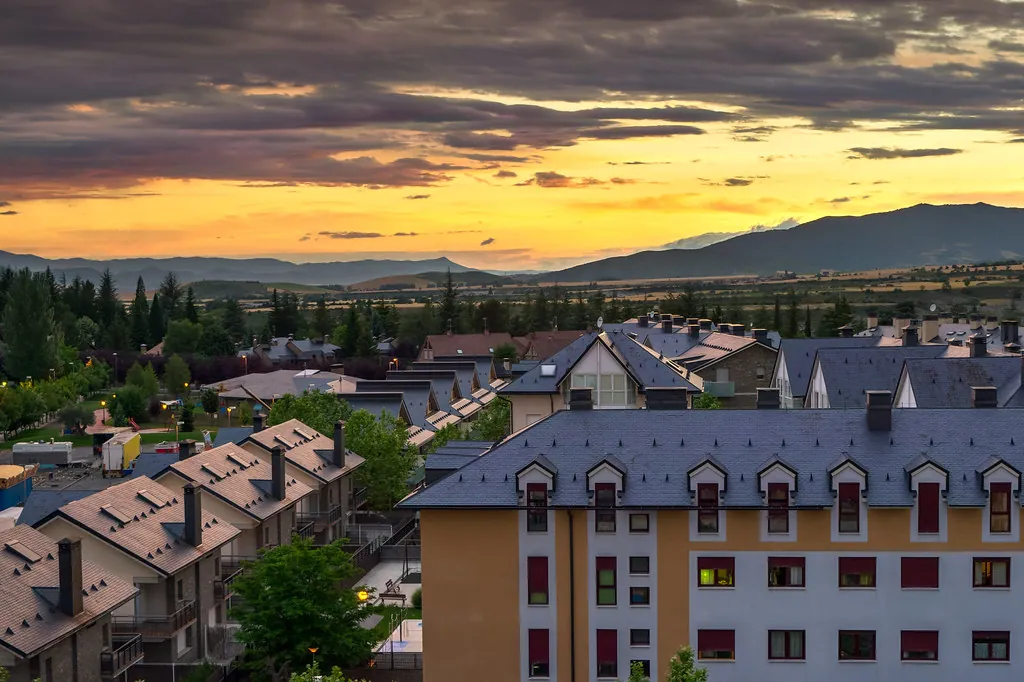
British visitors expecting whitewashed hill towns will find something altogether different. Albelda sits in the middle of a dry-farming plain where wheat, barley and almonds paint the landscape in muted ochres and dusty greens. The houses reflect this palette: stone ground down to sand-colour, bricks that have faded to terracotta, the occasional surprise of a blue-painted balcony someone added in 1987 and never changed. Six hundred and eighty-seven people live here, though that number doubles during the cereal harvest when contractors arrive with modern combines that look like mechanical dinosaurs against the wheat.
Walking the grid of four streets takes exactly twelve minutes, assuming you stop to read the ceramic tiles beside doorways that list the trades once practised inside: "José Castán, herrero 1923-1968", "Antonia Ferrer, costurera". The smithy's been converted into a garage; the dressmaker's house stands empty, its wooden shutters warped enough to show daylight through the slats. This isn't decay so much as a village that never needed to grow beyond its original footprint. When locals want something that isn't here—specialist medical care, clothes that aren't from the travelling market—they drive 45 minutes to Lleida or an hour to Huesca.
What the Fields Teach You
The real geography lesson happens outside the village limits. Pick up the dirt track behind the cemetery and walk twenty minutes south; you'll pass through three distinct agricultural zones without noticing the transitions. First come the cereal fields, their soil so fine it sticks to your boots like flour. Then the olive groves start, trees planted at regulation eight-metre intervals that make perfect shadows on the ground. Finally the almonds, gnarled and lower, their branches showing where farmers have hacked back encroaching wheat.
Spring arrives suddenly, usually during the first week of March when almond blossom turns whole sections of the plain white overnight. British photographers expecting Kentish orchards will find something wilder here—trees that have never been pruned for aesthetics, growing at angles that would horrify a Surrey fruit grower. The blossom lasts ten days, two weeks if you're lucky. After that, the plain reverts to its default setting of brown and green until mid-April when the wheat suddenly remembers to grow.
Summer is brutal. Temperatures hit 38°C by 11 am and stay there until well after British bedtime. The village empties as people adopt the siesta schedule properly—shops open 8-1, 5-8, everything shuttered in between. Even the bar closes from two until five, something that confuses visitors who've read about Spain's 24-hour culture. August brings threshing; giant machines work through the night under floodlights, the only time you'll hear noise in Albelda after midnight.
Eating What the Land Gives You
The weekly market sets up in the plaza every Thursday morning: two fruit stalls, one van selling kitchen utensils, a baker from Fraga with cakes that look 1970s-retro. For anything more ambitious, there's Supermercado Pilar on Calle Mayor, where you'll find tinned asparagus from nearby Navarra and locally-pressed olive oil in plastic bottles that cost €4.20. The oil tastes green and peppery, nothing like the mild stuff British supermarkets sell as "Spanish".
Local cooking hasn't adapted for tourists because there aren't any. In the bar adjoining the petrol station—yes, that's where people eat—Maria serves * migas* at 11 am sharp: fried breadcrumbs with garlic and grapes, the whole lot cooked in olive oil that would make a cardiologist weep. It costs €3.50 and comes with a glass of wine that costs extra unless you know to ask for "agua del grifo". They don't do menus in English; they don't do menus at all. Point at what someone else is eating.
The bakery opens at 6 am and sells out of * coca*—a flatbread topped with vegetables—by eight. British visitors expecting croissants will be disappointed. Aragonese breakfast runs to things you can dip in coffee: * mantecados* (lard biscuits), * rosquillas* (roughly iced doughnuts), or for the health-conscious, toast rubbed with tomato and topped with that peppery oil.
Finding Your Own Way In
Getting here requires accepting that Spain's motorway network hasn't quite reached everywhere. From Huesca, take the A-131 towards Lleida until the turn-off for Tamarite. After that it's 22 kilometres of road that narrows each time you cross a village boundary. The final approach involves counting three irrigation channels on your left, then looking for the cement factory that isn't on any tourist map. When you see the giant metal silos, Albelda's two minutes past them.
Public transport exists in theory. A bus leaves Huesca at 2 pm on Tuesdays and Fridays, returning at 6 am the next day. That's it. Miss it and you're looking at a €70 taxi ride. Cycling works if you're comfortable with drivers who treat the hard shoulder as an extra lane; the plain's so flat you can see your destination an hour before you reach it.
Staying overnight means either the casa rural on Calle San Roque—three bedrooms, €60 a night, bring your own towels—or driving to Tamarite where there's a hotel that serves dinner to businessmen passing through. Book nothing in advance outside festival time; turn up, find the key under the flowerpot, leave money on the kitchen table. This is still how things work here.
The Festival That Measures Another Year
San Miguel, 29 September, transforms the village completely. Suddenly those empty houses contain cousins from Barcelona, grandchildren studying in Zaragoza, the whole diaspora returning for three days. The church bell rings randomly, not just for services. Someone wheels out a sound system that plays Spanish chart hits from 2015 until 4 am, nobody complaining because everyone's related to the DJ.
The religious procession happens at dusk, locals carrying a wooden statue of Saint Michael that weighs more than a British washing machine. They walk the village perimeter, past the wheat fields that will be planted next month, past the olive grove where someone always suggests making oil commercially, past the almond trees that someone's cousin should really harvest properly. It's less about faith than geography—mapping the borders of the world they know.
Then it's over. By 2 October the cousins have gone, the sound system's back in its shed, and Albelda returns to being a place where the most exciting event is the petrol tanker arriving on Wednesdays. The wheat starts pushing through, the almonds drop their leaves, and another year begins measuring itself not in months but in agricultural milestones that make perfect sense if you stay long enough to understand them.