Full Article
about Alcaine
Ocultar artículo Leer artículo completo
The church key hangs on a nail beside the priest’s front door. That single detail tells you most of what you need to know about Alcaine: if the door is locked, someone in the square will know where to find the custodian, and they won’t mind walking you over. Forty-six permanent residents, one bar, two holiday houses and a view that swallows the Martín valley whole—this is rural Aragon stripped of marketing fluff.
A Village That Measures Time in Echoes
Perched at 643 m on a limestone shelf, Alcaine sits thirty minutes beyond Alcañiz along the A-226, the road narrowing until the verges scrape both wing mirrors. Mobile coverage drops out just after Puente de San Blas; by the time the first stone houses appear, EE flickers back to life only on the tiny main plaza. The silence isn’t poetic—it’s practical. Traffic is so scarce that dogs nap in the roadway and the weekly bread van announces itself with a two-tone horn that ricochets off the cliff opposite.
Summer swells the headcount to around a thousand, almost all second-home owners from Zaragoza who reopen shuttered houses and water geraniums. Even then, tour coaches don’t attempt the final hairpins; the largest vehicle you’ll meet is a farmer’s 4×4 or the school minibus that brings half a dozen teenagers back each Friday. Out of season the place empties dramatically—mid-winter tallies drop below ten—and the village generator becomes the loudest sound after nightfall.
Stone, Adobe and the Smell of Woodsmoke
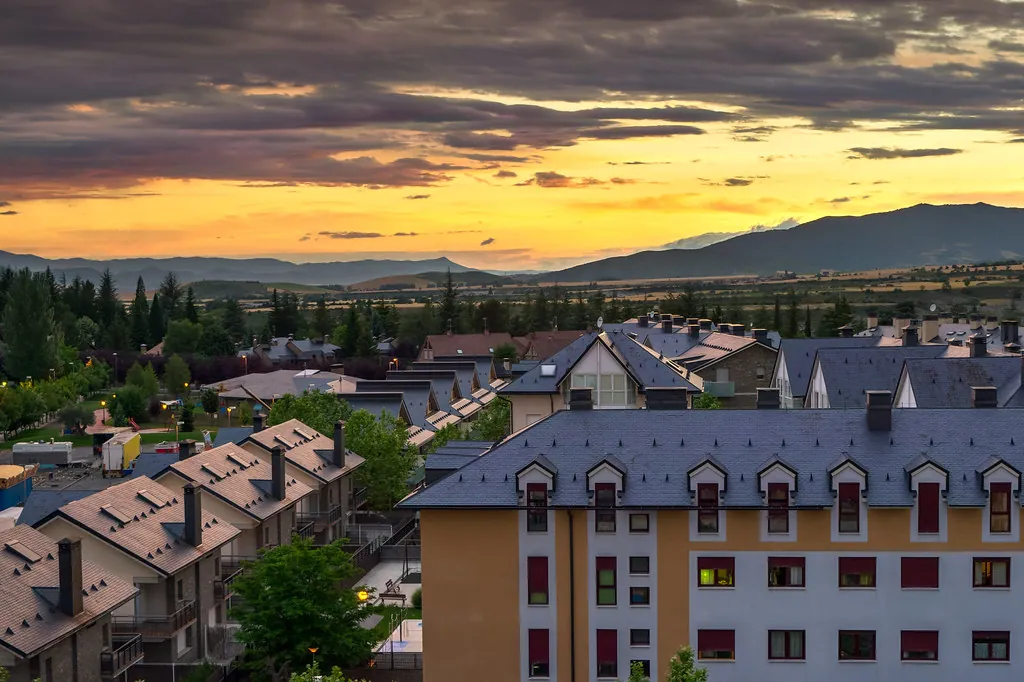
Alcaine’s streets were built for mules, not cars. Alleyways barely a shoulder-width wide zig-zag up the slope, their cobbles polished smooth by centuries of hobnailed boots. Houses are stitched from local stone below, sun-dried adobe above, the whole capped with Roman tiles weighed down by rocks against the cierzo, the cold north-westerly that barrels down the Ebro corridor. Wooden balconies, painted ox-blood red or left to weather silver, project just far enough to catch the low winter sun.
The fifteenth-century parish church keeps its original Gothic doorway but gained a Baroque tower after a 1743 earthquake dropped the first belfry into the nave. Step inside and the temperature falls five degrees; the interior smells of candle wax and the previous night’s incense. There is no ticket desk, no audio guide—just a hand-written notice requesting one euro for roof repairs and a stack of postcards that pre-date the introduction of the euro. If the building is locked, wander across to number 17: María Jesús has the key and is usually happy to open up provided she’s finished watering her tomatoes.
Beyond the last houses a gravel track leads to the mirador, a natural balcony fenced only by a knee-high wall. From here the Martín valley unrolls like a crumpled tablecloth: olive groves on the gentler south-facing slopes, almond terraces clawed into the grittier north sides, and everywhere the reddish limestone cliffs that once sheltered Maquis guerrillas during the post-war years. Griffon vultures ride the thermals above—bring binoculars and you’ll clock fifty before your coffee cools.
Walking, Birding and the Art of Getting Lost
Trails start directly from the upper threshing floors; way-marking is sporadic, so pick up the free leaflet at the bar (open 08:00-14:00, 17:00-22:00, closed Monday) or download the GPS track while you still have 4G. The most forgiving route follows the rambla downstream for 4 km to an abandoned flour mill, a gentle hour each way that stays in shade until noon. If you fancy height, the 12 km circular to the abandoned village of San Miguel climbs 450 m along an old charcoal burners’ path; the summit gives views clear to the Moncayo massif, 80 km distant. Both routes cross private land—farmers don’t mind as long as gates stay shut and dogs remain leashed; livestock have right of way.
Dawn is the money-shot for birders. Eagle owls call from the cliffs before first light; by seven o’clock you can add Bonelli’s eagle, peregrine and the local vulture squadron. The river holds grey wagtail and kingfisher even in late summer when the Martín shrinks to a string of emerald pools. Pack a flask and patience—there are no hides, just river boulders that double as damp seats.
Calories and Carbón
Food is straightforward, winter-weight fare. The bar serves migas—fried breadcrumbs laced with garlic, grapes and scraps of Teruel ham—on Saturdays for €6; order a caña of Alcañiz lager (€2) and you’ll usually get a free tapa of spicy chorizo. The chalkboard menu lists chuletón, a pork chop the size of a side plate; ask for “poco hecho” if you like it blushing. Vegetarians get salad, eggs and the town’s excellent tinned white beans stewed with saffron. Pudding is either flan or seasonal fruit—persimmons in October, cherries in June. House red comes from Bajo Aragón, light enough to drink at lunch and still attempt the afternoon walk.
If you’re self-catering, stock up in Alcañiz before the climb: the village shop opens 10:00-13:00, sells UHT milk, tinned tuna and not much else. Fresh bread arrives Wednesday and Saturday; place your order at the bar the night before or you’ll be left with yesterday’s baguette. Olive oil, wine and vacuum-packed jamón can be bought from the cooperative bodega opposite the church—ring the bell and someone’s cousin will appear.
When to Go, When to Stay Away
May and early June dress the hills in poppies and wild marjoram; temperatures hover around 24 °C and night skies stay clear for stargazing. Late September adds the smell of new olive oil and grape must; migrant hawkers glide through on their way to Africa. July and August are fierce—thermometers touch 40 °C by 11 a.m. and the walking trails become furnaces. Mid-winter brings sharp frosts, occasional snow and the eerie pleasure of having an entire village to yourself, but check the weather: the final 4 km of road ices over and chains become compulsory.
Accommodation is limited to two rural houses—Casa Roque and Casa Armas—sleeping six and eight respectively. Weekends book months ahead; mid-week outside August you can often secure a night’s notice. Both properties retain original beams, open fireplaces and kitchens equipped with more paella pans than forks. Bedding is provided, heating is pellet-fired and costs extra. Neither accepts card payment; bring the exact cash or face a 20 km drive to the nearest ATM.
Leaving Without a Fridge Magnet
Alcaine won’t suit everyone. If you need artisan gift shops, night-life or a latte before eleven, stay in Alcañiz. What the village offers instead is a yardstick for quiet—an acoustic ruler against which you can measure how loud the rest of life has become. Stand on the mirador after dark, listen to nothing but a distant dog and the clink of your own belt buckle, and you’ll realise the place has already given you the rarest commodity of all: unbroken silence. Just remember to hand the church key back on your way out.