Full Article
about Alcala de Moncayo
Ocultar artículo Leer artículo completo
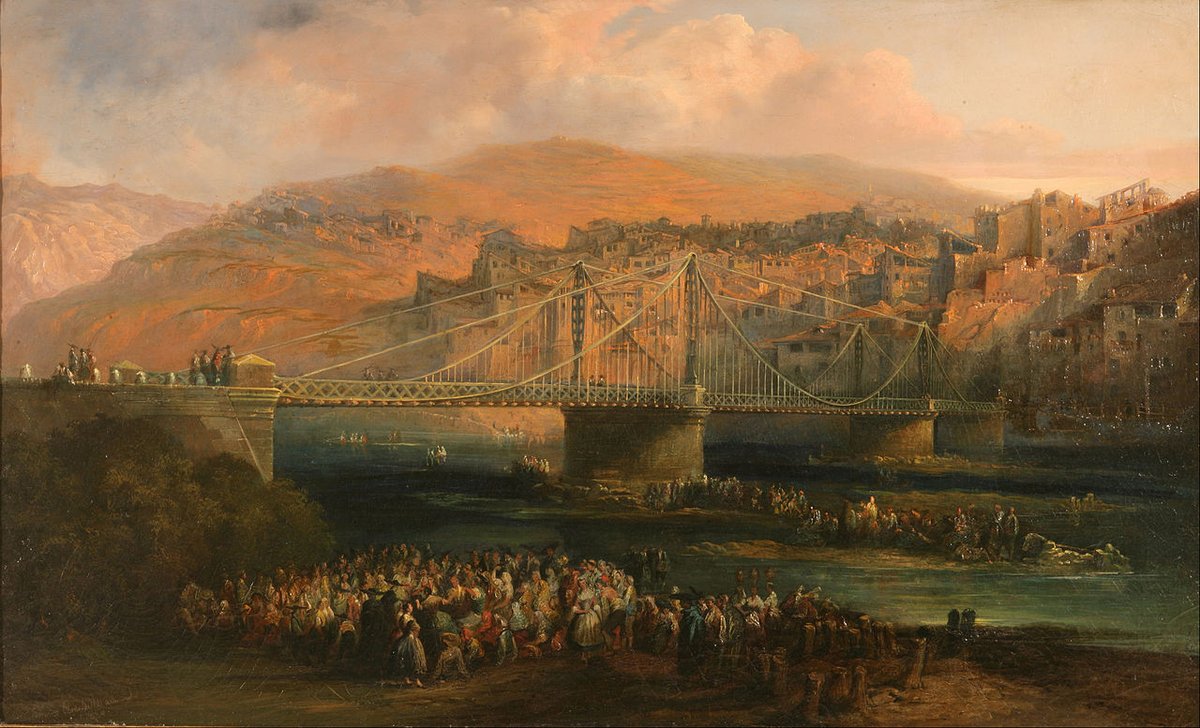
The road ends where the mountain begins. One moment you're winding through cereal fields south of Tarazona, the next the tarmac tilts skywards and stone houses appear to grip the slope like barnacles. This is Alcalá de Moncayo, population one hundred and fifty on a busy weekend, and the last place you expect to find a youth hostel.
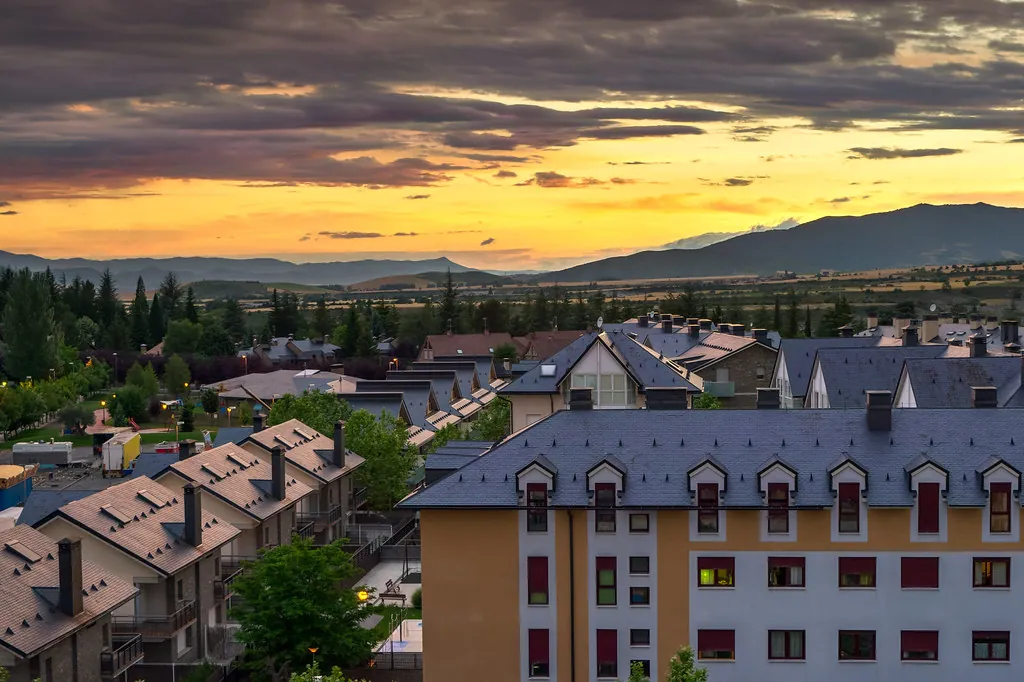
At 766 metres the air thins noticeably. Even in late May the wind carries a nip that sends walkers reaching for fleece while the Ebro plain below bakes at thirty degrees. The village sits on a spur of the Moncayo massif, its streets arranged in medieval layers: newer houses (eighteenth-century) lower down, the ruined castle cresting the ridge like a broken crown. From the top the view stretches across three provinces – Zaragoza, Soria, Navarra – though good luck getting a phone signal to tell anyone about it.
Stone, Slope and Silence
There are no flat pavements here. Cobbled lanes rise and fall like a switchback, narrow enough that elbows brush stone walls painted with the ochre numbers of past fiestas. Houses are built from the mountain itself, blocks of honey-coloured limestone streaked with iron, their timber balconies sagging under geraniums that survive on morning dew. Shutters stay closed against afternoon sun; the only sound is the clink of a farmer's van negotiating a bend built for mules.
The sixteenth-century church of San Blas squats at the physical centre, its late-Gothic doorway surprisingly modest. Inside, the nave feels intimate rather than grand – exactly the right scale for a congregation that could fit in a single London bus. Weekday mass is at nine; if the door is locked, the key hangs on a nail in the bar opposite. That's also where you pay the 1.20 euro for a café con leche and learn whether the castle track is open after last week's storms.
Those storms matter. Up here weather arrives horizontally, whipped across the Meseta by winds that have nothing to slow them until they hit rock. Snow can fall as late as April; in January the final kilometre becomes a toboggan run of polished ice and the village switches to winter time – meaning nothing opens before eleven. Come August the same altitude works in reverse: nights drop to 15 °C while Madrid swelters, so bring a jumper even if the car thermometer read 35 °C down on the A68.
Walking Into the Wind
Most visitors arrive with boots, not guidebooks. The Moncayo Natural Park starts where the last vegetable plot gives up, a mosaic of holm oak and beech that turns copper in October. Waymarking is sporadic but the rule is simple: keep the summit on your left to ascend, on your right to return. A circular route to the Ermita de la Misericordia and back takes three hours, climbing through abandoned terraces where fig trees still fruit for whoever bothers to scramble up the wall.
Serious walkers aim for the 2,313-metre peak of San Miguel, a six-hour round trip that starts from the monastery parking spot five kilometres above the village. The route is clear in Spain's equivalent of the OS map, but fog can roll in faster than you can say "Where's the path?" – British hikers have been known to spend an unplanned night in the refuge hut after missing a cairn in cloud. Mobile GPS works sporadically; download the track before you leave Tarazona.
Back in the village, boots are cleaned at the communal fountain built in 1598. Water arrives via a stone channel from a spring two kilometres up the slope; during drought summers the villagers ration it, so don't expect to sluice half the Moncayo off your trousers. The fountain is also the social noticeboard: a scrap of cardboard announces lambing dates, the price of second-hand hunting rifles, and whose wi-fi password has changed.
What Passes for Food
There is no supermarket. The single bar doubles as grocer, baker and gossip shop, stocking UHT milk, tinned tuna and packets of Cola Cao that arrive twice a week in the same van that takes the rubbish down to Tarazona. Fresh bread appears at nine; by ten-thirty it's gone. The daily menu (weekends only, 12 €) might be migas – fried breadcrumbs with garlic and scraps of chorizo – or a plate of chuletón, lamb chops the size of a small shoe. Vegetarians get eggs, salad, and sympathetic shrugs.
To eat properly you need to have booked a table at Casa Fermín, a dining room wedged into a former stable. Fermín buys his lamb from a cousin in the next valley, his wine from a cooperative in Cariñena, and his mushrooms from anyone who brings them in a basket. The set meal runs to four courses: soup thick with noodles, piquillo peppers stuffed with salt cod, grilled meat, and a slab of queso de oveja that tastes of thyme and sheep in equal measure. Dinner starts at nine sharp; if you arrive late the family will already be on dessert and the kitchen closed.
Breakfast options are simpler. Buy a loaf from the bar, a triangle of local cheese, and walk to the castle ruins. From the broken keep the plain below spreads like a tawny quilt stitched with olive groves; on clear days the Pyrenees float on the northern horizon, white teeth against blue sky. Eat slowly – the descent is steep and the cheese is older than it looks.
When the Village Wakes Up
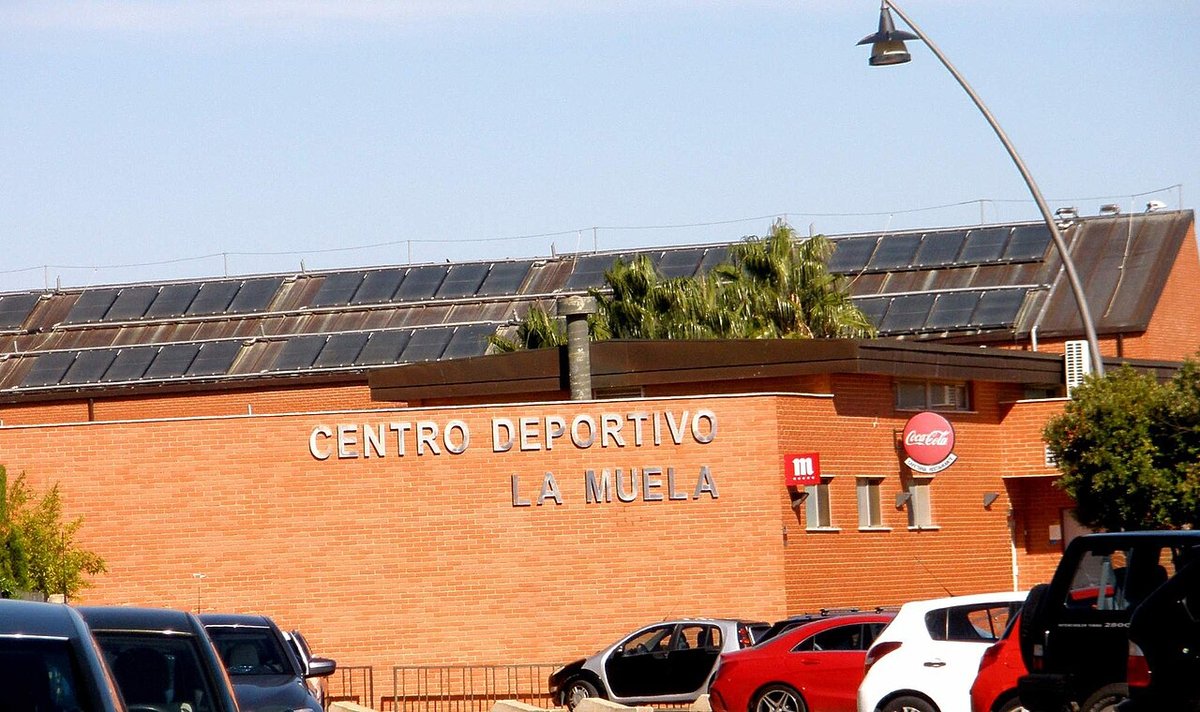
For fifty weekends a year Alcala de Moncayo whispers. Then August arrives and the population quadruples. Cars with Barcelona plates squeeze into alleyways never designed for anything wider than a mule, teenagers colonise the youth hostel (bring a sleeping-bag liner; recent British guests reported mattresses of uncertain vintage), and the bar runs out of beer by Friday night. The fiesta programme is pinned to the church door: foam party in the polideportivo, paella for two hundred cooked in a pan the diameter of a satellite dish, and a disco that finishes at seven in the morning despite the priest's best efforts.
February brings a different crowd. The fiesta of San Blas packs the church for a service that smells of candle wax and wet wool; outside, villagers hand out blessed rolls tied with ribbon to protect against sore throats. Temperatures hover around freezing, but the plaza fills anyway for the distribution of chocolate so thick it coats the spoon. By midday everyone has disappeared back indoors – the wind is sharper than the priest's sermon and even the swallows have the sense to stay south.
Driving Out
Leaving feels like winding back down a timeline. The road drops through almond terraces, then vineyards, then the industrial estate on the outskirts of Tarazona. By the time you reach the N122 the Moncayo is just a blue wall in the rear-view mirror and the thermometer has climbed ten degrees. Fill the tank before the motorway; there are no services for forty kilometres.
Some visitors stay a week, walking every track the ranger can name. Others drive up for lunch, photograph the castle, and are gone by four. Both leave with the same realisation: places this small survive by refusing to be anything else. Alcala de Moncayo doesn't do boutique hotels, doesn't sell fridge magnets, and certainly doesn't care whether you ticked it off a list. The mountain was here first; the village simply hung on.