Full Article
about Allueva
Ocultar artículo Leer artículo completo
The thermometer read six degrees on the first morning of July. At 1,200 metres above sea level, Allueva’s altitude isn’t a footnote—it’s the main character. Dawn light slid across cereal fields that rolled like a pale ocean towards the horizon, and the only sound was the wind testing loose shutters on stone houses that hadn’t seen a permanent resident since the last century.
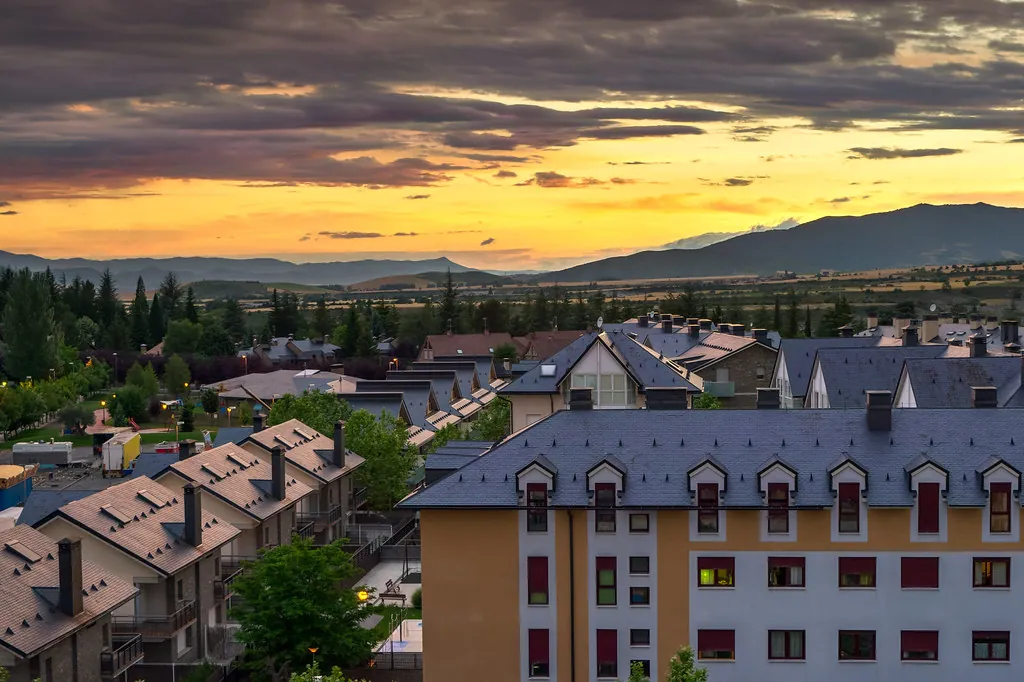
Twenty-two names appear on the municipal register, though you’ll meet more sheep than people on a weekday. The village sits on a high ridge that divides the Jiloca basin from the Mesa valley; step out of the single bar and you look south over fifty kilometres of empty plateau. Drive up after sunset and you’ll understand why amateur astronomers treat the place as an open-air observatory—there is no street lighting, and the Milky Way feels close enough to snag on the church bell-tower.
Getting here means committing to a 35-minute climb once you leave the A-23 at Monreal del Campo. The final twelve kilometres twist through holm-oak scrub before the road straightens onto the ridge. In winter the tarmac can glaze over; locals fit chains and keep going, but hire cars have been known to spend the night wedged against a stone wall. April and October give the kindest driving conditions, plus fields that flip from emerald to copper in the space of a fortnight.
Stone, Silence, and the Smell of Rain on Adobe
Allueva was never rich. The church, dedicated to San Pedro, went up in the 1700s with whatever limestone lay nearest, its tower skewed slightly by ground that shifts with every hard frost. Inside, the paint has faded to tobacco tones and the confession booth smells of sun-warmed timber. No audio-guide will greet you; push the heavy door and hope the swallows nesting above the altar don’t object.
Around the building run four lanes wide enough for a mule cart, now used by the occasional 4×4 heading to check a distant tractor. Houses are built shoulder-to-shoulder, the shared walls thicker than a London terrace is wide. Adobe bricks the colour of digestive biscuits peep through missing render; when rain is coming the whole village exhales a scent of damp clay that perfumers have yet to bottle. Some roofs still carry Arab tile—curved, cinnamon-glazed, lethal when the moss turns slick. Restoration grants arrive in waves: one summer you’ll see builders mixing lime mortar by hand, the next you’ll find the same house padlocked, its new owners back to city jobs.
Peek through any half-open gate and you’ll spot the original stable, now repurposed as a photography studio or simply stacked with rusted harrows. Property prices hover around €35,000 for a three-storey dwelling with a threshing floor on top. The catch? You inherit the neighbour’s right to walk his sheep across your courtyard at dawn, a clause dating to 1837 and still enforced by village consensus rather than courts.
Walking into Nothing (and Enjoying It)
Maps of Allueva show a spider’s web of dotted lines—farm tracks rather than way-marked trails. Head east and you drop gently towards the Barranco de la Cruz, a ravine where griffon vultures ride thermals so close you can hear the creak of primary feathers. Go west and the path skirts wheat circles irrigated by centre-pivot systems that squeak all night like a rusty weather vane. Either direction offers twenty-kilometre loops with under 300 metres of ascent, perfect if you like your hikes cerebral rather than calf-burning.
Take water. The altitude dries you out faster than seaside Spain, and the only public fountain dribbles at a rate that makes a kettle fill feel like meditation. Mobile reception vanishes within a kilometre of the village, so download tracks before setting off—GPS still works even when the signal bars don’t. In May the fields blaze with crimson poppies that stain boot leather; by late August the same ground is stubble that crunches like broken biscuits.
Night hikes have a following. Torches are frowned upon—let your eyes adjust and you’ll pick out the glow-worm spots marking old threshing circles. Temperatures can dip to single figures even in August; pack a down jacket and someone’s grandmother will nod approvingly when you return for a late cortado.
A Calendar Marked by Pig and Pilgrim
Festivity here is measured in decibels per resident. The fiesta mayor lands around the second weekend of August, when the population swells to roughly 120. A sound system the size of a Transit van appears in the square, powered by a generator that competes with the cicadas. Dinner is lamb roasted on vine cuttings; tickets cost €12 and sell out by word of mouth on the previous Tuesday. If you miss it, you’ll eat your slice of tortilla at the bar and like it.
The pig slaughter, once a January necessity, now happens symbolically on the last Saturday of February. Two animals are dispatched at dawn, then every cut is used in a cooking class that ends with bowls of migas—breadcrumbs fried in lard until they resemble savoury granola. Vegetarians have been known to attend purely for the theatre, though they’re advised to bring their own lunch.
October brings the romería to the Santuario de la Virgen de Rodanas, eight kilometres away down a stone track. Half the village walks, the other half follows in 4×4s chucking almonds at pedestrians for luck. By midday the sanctuary terrace hosts an impromptu picnic of cold chorizo and hot aniseed liqueur; if the mist rolls in, conversations shrink to whispers and the place feels half church, half cloud forest.
Where to Lay Your Head (and Find a Decent Meal)
Accommodation is limited to three self-catering houses bookable through the ayuntamiento website. Expect stone floors, wood-burning stoves and Wi-Fi that arrives via satellite—streaming anything heavier than radio invites buffering purgatory. Prices start at €70 a night for two, linen included. Bring slippers; nights are cold enough to make bathroom tiles feel like Yorkshire stone in February.
There is no hotel, no pool, no yoga retreat. Breakfast options reduce to the bar on the square: café con leche served in glasses that chip if you stare too hard, plus tostadas rubbed with tomato and enough garlic to repel vampires. For lunch you drive ten minutes to Fuentes Claras, where Casa Ramón dishes out a €13 menú del día—lentil stew, roast lamb, and a half-bottle of local garnacha that tastes like blackberries left in a leather glove.
Evening meals require forward planning. The village co-op will sell you a kilo of chuletas cut from a sheep you probably saw grazing that morning; fire up the cottage grill and the neighbour may lend you rosemary sprigs the size of cricket bats. Supermarket choice is in Teruel, 45 minutes down the mountain—stock up before you ascend or learn to love tinned beans.
The Honest Verdict
Allueva delivers altitude without attitude: no souvenir stalls, no guided tastings, nobody pressing leaflets into your hand. That silence can tip into boredom if the weather closes in; mist can sit for days, turning the village into a set for a low-budget period drama where the extras never arrive. Come prepared with boots, layers and a tolerance for your own company, and the place repays in wide skies and zero light pollution. Expect nightlife and you’ll leave after one restless night; bring a telescope, a stack of paperbacks and a willingness to speak Spanish to the guy replenishing the fountain, and you might finally understand why twenty-two people refuse to live anywhere else.