Full Article
about Almohaja
Ocultar artículo Leer artículo completo
The church bell strikes noon and the only other sound is a tractor ticking itself cool in a stone yard. At 1,200 m on the Teruel plateau, Almohaja is already closer in spirit to the steppes of central Spain than to the tiled roof terraces of Valencia, barely ninety minutes away by car. Sixteen permanent residents, one asphalt road in, zero cafés: this is the arithmetic that governs daily life.
British visitors usually arrive after the long haul up the A23 from Valencia or Zaragoza airports, then peel off onto the TE-V-9031, a single-lane strip that wriggles across wheat fields and suddenly deposits them on the village’s only junction. Mobile signal dies somewhere around the 900 m contour; by the time the engine is switched off the silence feels almost medicinal.
Stone, wind and wide open sky
Almohaja has no “old quarter” to speak of. Houses, barns and low outbuildings grow out of the bedrock in the same honey-coloured stone, their Arabic tiles weathered to the colour of strong tea. Rooflines jog up and down because each dwelling was enlarged when a son married or a goat herd expanded. The effect is less chocolate-box, more workaday medieval: walls built to shoulder the winter tramontana that can whistle across the plateau at 70 km/h.
Inside the parish church – the one building tall enough to act as landmark and lightning conductor – the air smells of candle smoke and sun-baked pine. The nave is barely twenty paces long; frescoes are absent, bar a faint blue halo round a 19th-century St Isidore. What you do get is a cool 18 °C on an August afternoon when the mercury outside has just kissed 34 °C. Altitude matters here: nights stay chilly even in July, and the first frost of autumn often arrives before the BBC has finished broadcasting Strictly.
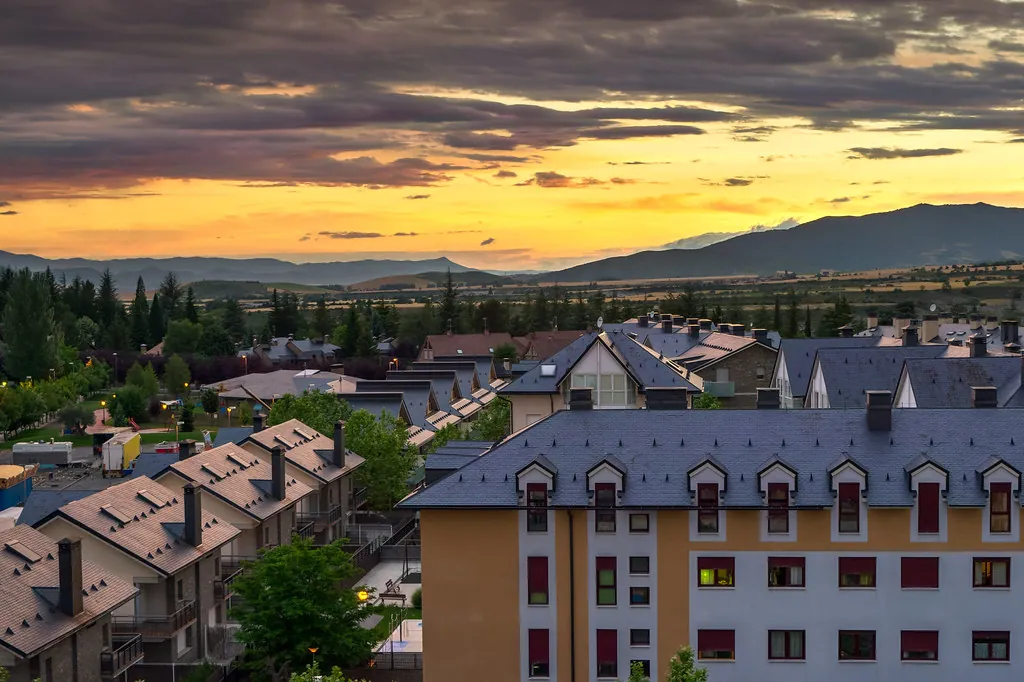
Outside again, glance up and the panorama explains why people stayed. North-east lies the Sierra de Javalambre, snow-dusted from November to March; south-west the land tilts toward the Muela de San Juan, a limestone whale-back striped with abandoned almond terraces. Between them spreads a tawny chessboard of cereal plots and carrascas (holm-oak) whose acorns once fed local pigs now vanished with the residents.
Walking without way-marks
There are no signed trails, yet it is hard to get lost. A lattice of farm tracks fans out from the last house, each one offering 3–8 km of level walking across an empty grid. Head east and you reach the abandoned corral de los Pastores in twenty minutes; buzzards usually appear overhead, riding the same thermals that carried lammergeiers until the 1980s. Continue another half-hour and the path dips into the Rambla de Valdelosa, a dry watercourse where wild rosemary scents the air and you can fill a pocket with fossilised oyster shells – this was seabed once, after all.
Carry water. The plateau looks gentle but shade is non-existent and the sun reflects off flint and chalk. Even in May, walkers underestimate the breeze: a light fleece weighs little and prevents that curious Alpine chill that arrives when someone opens a farm gate and the wind finds a straight run from the Pyrenees.
If you prefer mileage without map-reading, drive ten minutes to Santa Eulalia del Campo and pick up the PR-TE 71, a circular 14 km route that climbs 400 m onto the ridge of El Castellar. The payoff is a 50-km view back across the high plain: on clear days you can clock the communications mast at Teruel cathedral, 45 km away.
Eating: bring it with you
Almohaja has neither bar nor shop, so picnics are obligatory. Teruel’s supermarkets – Mercadona on Avenida de Valencia or the smaller Consum by the bull-ring – will sell you jamón de Teruel, a DOP cured ham milder than Jabugo and half the price. Add a loaf of pan de pueblo, some queso de Tronchón (the semi-firm goat-cow blend that appears in Don Quixote) and you have a plateau lunch that tastes better for the wind in your hair.
Should you want a tablecloth, the nearest restaurant is La Masía in Santa Eulalia, 9 km back toward the motorway. Weekday menú del día runs to €14 for three courses: expect garlic soup, roast lamb and a half-bottle of local Cariñena that punches above its €2.50 cost. They close Tuesdays; don’t bank on dinner after 9 p.m.
When to come, when to stay away
April–mid-June and mid-September–October give warm days (18–24 °C) and cold starry nights perfect for an evening drink on a rented cottage terrace. Spring adds a brief, almost English green to the fields; autumn tints the oaks copper and brings thrushes migrating from Scandinavia – bring binoculars.
July and August are doable but harsh. Midday hits 34 °C with no shade; the village’s abandoned houses act like storage heaters, radiating warmth until midnight. If you must come, walk at dawn and siesta in the car with air-con, or better, base yourself in Teruel’s Hotel Isabel de Segura where rooms run €70–90 and the plunge pool is child-free after 7 p.m.
Winter is a gamble. The TE-V-9031 is routinely gritted, yet a 15-cm snowfall can still maroon the hamlet for 24 h. Photographers love the contrast of ochre stone against white, but you will need chains, a full tank from Teruel and supplies for an extra night in case the wind drifts the road shut. Day length is short: the sun drops behind the Sierra at 4.30 p.m. in December.
Beds, or the lack of them
No hotel, no B&B, no Airbnb exists within the village boundary. The closest beds are in Santa Eulalia (10 min) or Torrelacárcel (20 min), where stone cottages go for €80–120 a night on Casai or rural booking sites. Most have wood burners and terraces facing south; all require a car. Camping is technically allowed beside the track leading to the corral but there are no facilities – wild campers should pack a trowel and take everything away.
Talking to the 16
Stop to read an information board and someone will appear. Ask about the 1953 snow that reached the window lintels, or why the school closed in 1978, and you will get the full director’s cut. English is patchy, yet curiosity is currency; a few phrases of Spanish – “¿Cómo está la cosecha este año?” – unlock invitations to see an 18th-century olive press or a barn full of hand-threshed rye. Politeness dictates you accept a thimble of aguardiente if offered; driving afterwards does not.
The honest verdict
Almohaja will never feature on a Spanish tourism poster. There is no pool, no gift shop, no sunset bar. What you do get is space, silence and a crash course in how empty parts of western Europe still are. Come prepared – picnic, petrol, offline map – and the village repays with big-sky walking and conversations you will repeat in the pub back home. Arrive expecting a cappuccino and you will drive away again within the hour. The plateau does not do hand-holding; that, for some, is precisely the attraction.