Full Article
about Alobras
Ocultar artículo Leer artículo completo
The road to Alobras starts betraying you ten kilometres out. Google Maps buffers, Spotify stutters, and suddenly you're navigating by instinct and the occasional finger-post pointing towards "Comunidad de Teruel." At 1,110 metres, this stone hamlet of sixty-seven souls sits above the digital world rather like a hermit on a pillar—connected to nothing except the wind and whatever weather's blowing in from the Iberian plateau.
The Climb and the Pay-off
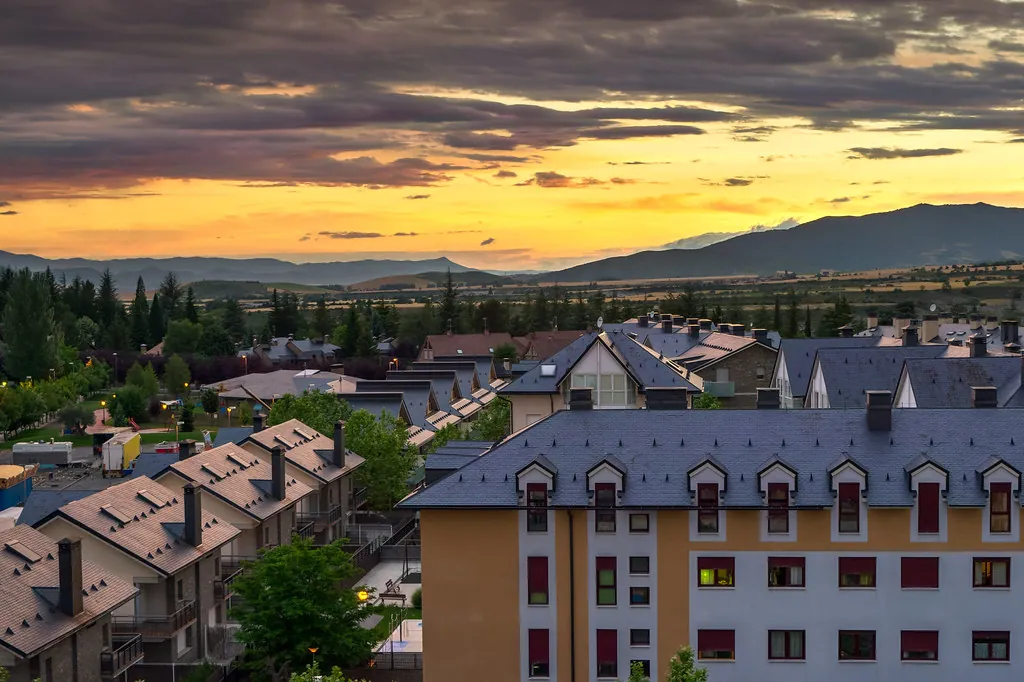
From the A-23 motorway the TE-61 switchbacks upwards through rosemary-scented scrub. It's single-track, no barriers, and when two cars meet one must reverse to the nearest passing place. Hire cars return with fresh scrapes; locals in battered Landini tractors barely slow down. After twenty minutes the engine cools, the air thins, and Alobras appears: a ridge-line of thick-walled houses the colour of burnt toast, their terracotta roofs weighted against the gales that rake the sierra in February.
There is no centre, just a slight widening where the lane kinks past the church. Park here—there's room for six cars if everyone breathes in—and walk. The only sound is your boots on granite setts polished by two centuries of hobnails and tractor tyres. Windows are shuttered against the sun; a elderly man in a beret nods without breaking stride. He'll be heading to the bar, open mornings and whenever the owner feels like it, for a cortado and the day's gossip about rainfall and sheep worming.
What You Get Instead of Wi-Fi
The parish church of San Pedro is locked unless the key-keeper, Doña Pilar, spots you loitering. She lives three doors down, keeps the key in a tobacco tin, and will unlock the nave for the price of a brief conversation. Inside: thick stone walls, a single aisle, a Baroque altarpiece gilded with the donations of muleteers who once drove salt northwards to Zaragoza. The temperature drops five degrees; swallow nests clog the clerestory. Light a candle (€1, honesty box) and you’ve subsidised next month's incense.
Beyond the houses the land folds into a dry mosaic of holm-oak, thyme and erosion gullies. Paths strike out towards abandoned threshing circles and, further off, the pine-dark summits of the Sierra de Cucalón. Waymarking is sporadic—look for stone cairns and the occasional stripe of yellow paint. A ninety-minute loop eastwards reaches the ruins of an ice-house where snow was once compacted for summer market. Return at dusk and you'll understand why Spanish urbanites talk of "el silencio absoluto": no distant motorway, no aircraft, just your pulse and, if the wind shifts, the faint clank of a cowbell three valleys away.
Seasons, Temperatures and the Truth About August
Spring arrives late. April can still throw out night frosts that blacken almond blossom, yet by midday the thermometer touches 18 °C—perfect for walking the old mule track down to Cella, six kilometres and 400 metres below. May paints the hillsides poppy-red; wild asparagus appears in the ditters and locals emerge with carrier bags and knives.
Summer is a split personality. Mornings are crisp until ten, then the sun slams down and shade becomes currency. The village bar does a brisk trade in chilled claras (lager with lemon) but shuts at two and may not reopen if the owner decides to siesta through until cooler hours. Nights compensate: temperatures fall to 14 °C even in July, so bring a fleece for star-watching. August fiestas swell the population to perhaps 120. There's a communal paella, a brass band that hasn't tuned since 1987, and—crucially—a cash machine installed in the bakery wall for three days only. Miss that window and it's a 30-minute drive to the nearest ATM.
Winter is serious. The TE-61 gets gritted sporadically; snow can trap the village for 48 hours. Electricity lines ice up and log smoke drifts horizontally. Yet the light is extraordinary—low, amber, sculpting every ridge—and the apartments at La Capellanía keep wood-burners fed with €5 sacks of almond prunings. Book only if you're comfortable with self-reliance: the supermarket delivery van doesn't come up here when the thermometer reads –8 °C.
Food Without Fanfare
There is no restaurant. The bar serves tapas ranging from decent to memorable depending on who's cooking. Order the caldereta—lamb shoulder slow-stewed with potato and mild ñora peppers. It tastes like an Irish stew that spent a year studying in Zaragoza. Migas, fried breadcrumbs laced with chorizo and grapes, appears on windy days; the theory is that field labourers needed the calories. Vegetarians get tortilla or... tortilla. Pudding is almond cake, dense enough to grout tiles, but dip it in coffee and you'll forgive the texture.
Shopping is similarly binary. The village shop opens 9–11, stocks tinned tuna, UHT milk, local honey and, mysteriously, British digestive biscuits three months past date. For anything greener than an onion drive to Monreal del Campo, 35 minutes down the mountain, where the Día supermarket sells fresh veg and the pharmacy stocks Ibuprofen larger than 600 mg.
Where to Lay Your Head
Accommodation divides into two clusters of self-catering cottages. La Capellanía has three converted labourers' houses sharing a pool hacked out of the rock; log-burners, slate showers, and terraces that stare across a ravine the colour of burnt paprika. British repeat visitors leave notes in the visitors' book: "No phone signal for six days—bliss" and "Bring slippers, stone floors are cold." Expect £95 a night for two, minimum stay three nights off-season, a week in August.
Rincón de Alobras, 200 metres closer to the church, is cheaper (£70) and smaller—one-bedroom flats in a 19th-century grain store. Walls are a metre thick; Wi-Fi arrives via a wobbly 4G router that works on Tuesdays. Both outfits leave starter packs: coffee, olive oil, a bottle of Campo de Borja garnacha that costs €4 and tastes like €14 after the drive up.
Walking, or Just Sitting
You could map out a three-day trek linking Alobras with the neighbouring pueblos of Libros and Sarrión, sleeping in village casas rurales and carrying only daypacks. More honest is to admit that many visitors never leave the ridge. They read on the terrace, photograph the same sunset twice, and discover that silence has a texture—flecked, like tweed, with distant goat bells and the soft thud of almonds dropping onto corrugated iron. If that sounds like therapy, it costs considerably less than a retreat in Devon and the food is better.
How to Arrive, How to Leave
Ryanair's morning flight from Stansted to Zaragoza lands before Spanish lunchtime. Collect a hire car—diesel, for the torque—join the A-23 towards Sagunto, exit at Teruel, and follow the signs for Cella. Total driving time: 1 h 45 min if you don't stop for the jamon bocadillo in Daroca. Allow extra for photos when the road first tilts across the meseta and the village appears like a ship on a stone ocean.
Leave on a Wednesday if you can. The bar owner closes early for grandparents' day, the bread van honks its horn at eleven, and you wind down the mountain with the windows open, radio still useless, hairpin after hairpin until the phone pings back into range. The message queue loads: weather alerts, work emails, a photo of rain back home. Delete them all. You won't need forecasting apps to know that tonight Alobras will be clear, cold, and quiet enough to hear your heart slow to the pace of the sierra.