Full Article
about Anadon
Ocultar artículo Leer artículo completo
The church bell strikes noon, yet only a tractor's diesel note answers back. At 1,050 metres on the southern lip of the Sierra de Teruel, Anadón has reached that point where human voices become an optional extra. Thirty-three residents are officially on the books; on a weekday in March you will be lucky to spot three.
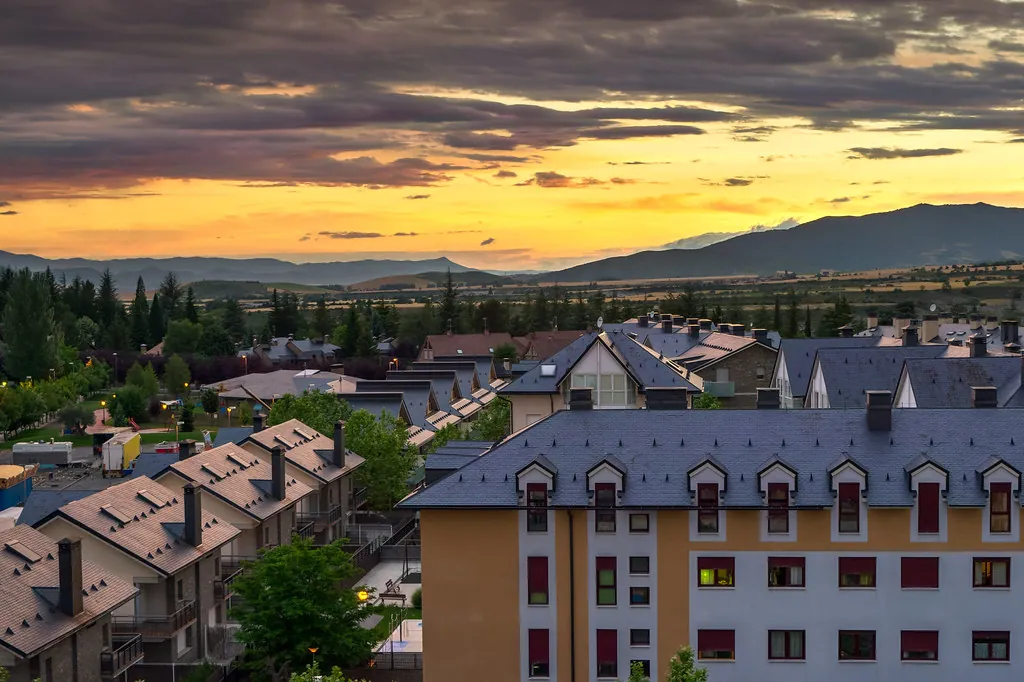
This is mountain Aragón stripped to essentials. Stone houses shoulder together along a single lane that tilts with the slope, their Arabic tiles darkened by decades of thaw and frost. Most façades are neat, a handful still bruised by boarded windows. Electricity cables sag across the street like washing lines. There is no bakery, no bar, no souvenir embroidery. The village's only public lighting after dusk is the glow from half-open kitchen shutters and, on clear nights, the Milky Way spilling over the ridge.
Why height matters
Anadón sits high enough for the air to feel sharpened. Even in late May the wind carries a nip that sends visitors reaching for fleece bought an hour earlier in temperate Teruel. Summer brings relief rather than heat: afternoons hover around 26 °C, nights demand a blanket. Winter is another contract entirely. Snow can cut the TW-442 approach road for a day or two, and the final 7 km from El Vallecillo become a curling ribbon of packed ice. Chains go on, second gear is engaged, and the village turns into a balcony above a silent white amphitheatre. Locals insist the isolation is exaggerated – "the grader usually comes within twenty-four hours" – yet the supermarket run still requires forward planning.
Walking tracks leave the last cottage and dissolve immediately into low maquis: kermes oak, lavender, terebinth. Marker posts appear when someone remembers to replace them; otherwise navigation reverts to instinct, the contour line of a ravine, or the GPX file you should have downloaded beside the municipal noticeboard. Distances feel longer than they are because every ridge reveals another fold of empty country. A circular tramp to the ruined corral above Barranco del Miedo takes two unhurried hours; add another forty minutes if you stop to watch griffons lift on thermals from the opposite cliff.
What passes for sights
The medieval church of San Miguel Arcángel squats at the top of the slope, its belfry patched with mismatched stone after the 1919 earthquake. Step inside and daylight slants onto whitewashed walls – no baroque excess, just a single retablo gilded in the 1730s and wooden pews polished by five centuries of Sunday coats. The key hangs in the door; if it doesn't, knock at number 14 across the plaza – Señora Pilar keeps the spare.
Below the church a narrow alley squeezes between houses whose ground floors still show feeding troughs. This was the original stable row; families slept above livestock until electricity arrived in 1963. One lintel is carved with the date 1624 and the word "PAZ" half-eroded by wind. Further down, a stone bench faces west: the local strategy for sunset is to sit, smoke and say nothing while the sierra bruises from ochre to plum.
There is no museum, no interpretation centre, no artisan cheese shop. Instead you get the working museum of a mountain water system. A spring 400 m east of the village feeds two public washing troughs built in 1921; water rushes through stone channels fast enough to rinse lettuce. The troughs are still used on Mondays by the few women who refuse to let automatic cycles steal the ritual. Visitors are welcome to fill bottles – the council tests the source monthly and charges nothing.
Eating (or not)
Anadón does not do lunch. The last grocery closed when its proprietor died in 2017; the nearest bread is 18 km away in Cañada de Benatanduz. Self-catering is mandatory unless you are invited inside a private kitchen, an event that becomes likelier the more broken your Spanish sounds. Accept if offered – the usual dish is conejo al ajo arriero, rabbit simmered with garlic, bay and sweet paprika, served on earthenware that predates the euro.
For those unwilling to charm their way to a table, the practical sequence is: fill a rucksack in Teruel's Mercado Municipal before leaving, or detour to the Saturday farmers' market in Albarracín (08:00–14:00). If you must eat out, the closest asador, Casa Juánico in El Cuervo, opens weekends only and sells roast lamb at €18 a quarter; phone ahead because they buy whole animals and close when the last shoulder is gone.
Timing the trip
Spring brings almond blossom to the lower slopes during the first fortnight of April – photographic, never crowded. Mid-May to early June layers the countryside with yellow genista and enough birdsong to make silence feel deliberate rather than deserted. Autumn is equally gentle; the encinas flush bronze and the track to Corral de Muerte smells of damp mushroom and wet slate. Both seasons offer daytime temperatures comfortable for walking and nights cool enough to justify the region's weighty red wines.
High summer is tolerable if you arrive from the UK expecting siesta logic: walk before eleven, read through the glare, resume after five. August weekends pull in descendants of emigrants from Barcelona and Valencia; suddenly every second house ejects folding chairs and the plaza hosts a portable sound system spinning 1980s Madrid pop. Accommodation that was €45 midweek becomes €65 and needs booking – still cheap, but the hush is compromised.
Winter delivers the sharpest light and the greatest risk. A blue-sky January morning above untracked snow is compensation for many inconveniences, yet ice can keep the TW-442 closed until late afternoon. Carry snow socks, a full tank and the Spanish equivalent of a red warning triangle. Mobile reception is patchy on the best of days; in a blizzard the village is genuinely cut off.
Beds for the night
Four village houses have been restored as tourist accommodation. The largest, La Casa del Tío Paco, sleeps six and retains its original threshing floor turned slate terrace; expect Wi-Fi that flickers every time the router remembers it relies on a 4G antenna 12 km away. Prices hover around €70 per night for the whole house, falling to €45 between November and March. Owners leave a bottle of Sierra de Teruel olive oil and instructions to strip the beds on departure – self-service tourism in its most literal form.
Smaller studios are listed under "Anadón alojamiento rural" on the regional website. Heating is by pellet stove; instructions are in Spanish but the pictograms are clear. None provide breakfast ingredients beyond coffee sachets, so plan accordingly.
Leaving without hurry
Check-out time is "when you like, just lock the door". Drive slowly; goats own the lane downhill. At the first bend the village slips from view, replaced by a horizon of successive ridges that look increasingly hypothetical. Twenty minutes later the radio catches RTVE and you re-enter Spain of traffic lights and roundabouts. The silence you leave behind is not theatrical, simply the sound of a place that long ago decided noise was optional.