Full Article
about Aninon
Ocultar artículo Leer artículo completo
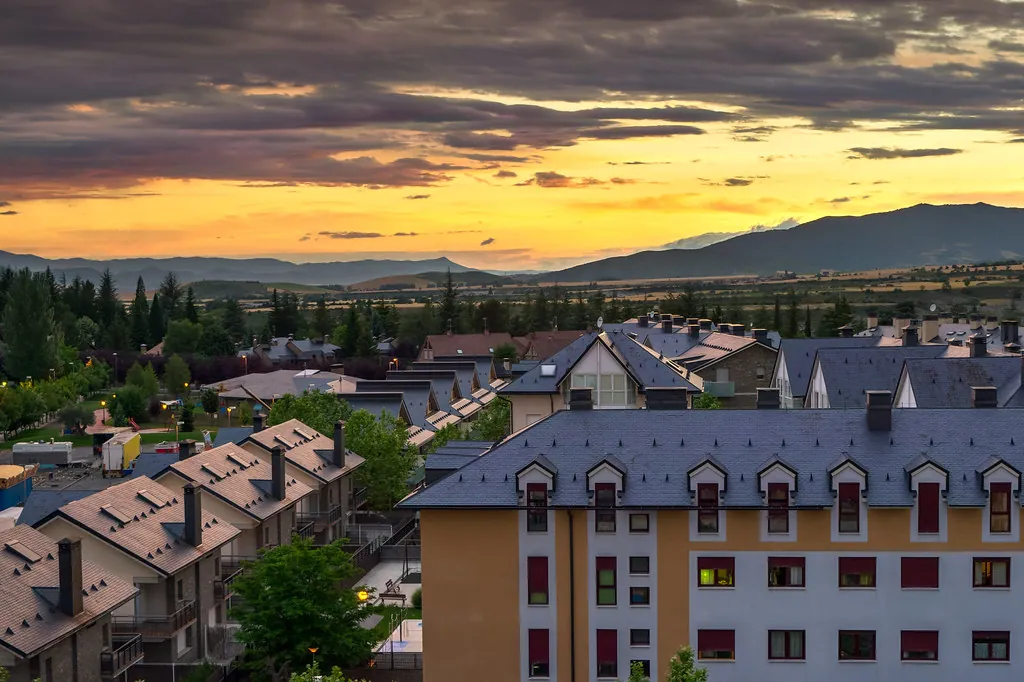
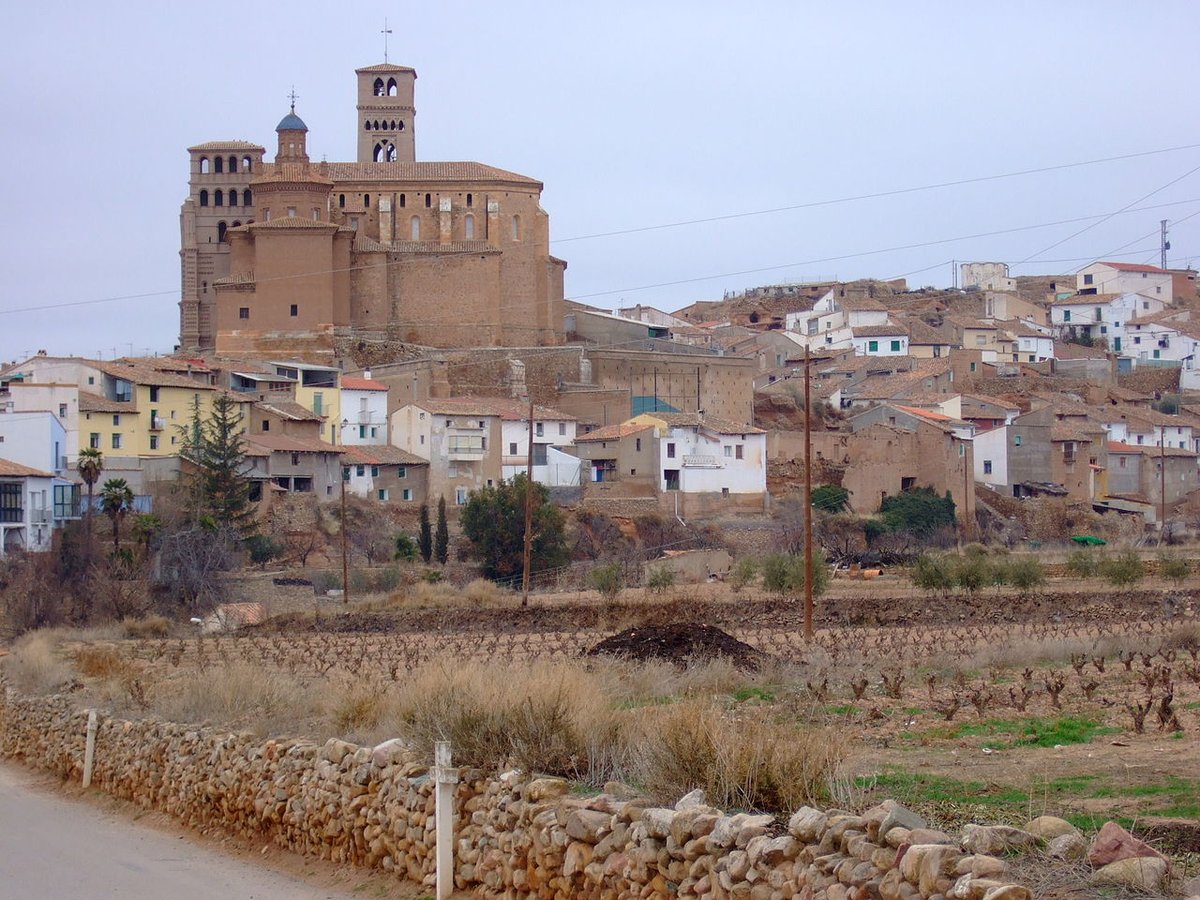
The church bell strikes eleven and the only other sound is a single tractor grinding up the hill. From the mirador outside the 16th-century tower you can watch the whole village tilt towards the Jalón valley, stone roofs the colour of burnt toast, fields of young wheat stitched into the red clay below. No souvenir stalls, no interpretive centre, not even an ice-cream van—just the smell of diesel and warm bread drifting from the one bar that happens to be open.
Aniñón sits at 729 m on a fold of the Iberian range, eighty-five kilometres south-west of Zaragoza. It is not on the way to anywhere in particular, which explains why most Ryanair passengers race past the exit on the A-23 bound for postcard Teruel or fortified Daroca. Turn off at junction 252, however, and the road narrows to a single lane that corkscrews through almond groves until the village suddenly appears, clamped to the ridge like a barnacle.
Stone, Sun and Silence
The place is small enough to circumnavigate in twenty minutes, yet the gradients demand longer. Alleyways built for mules dip and rise between houses chiselled from local limestone; iron balconies sag under geraniums that have never heard of Instagram. The ayuntamiento has painted house numbers by hand—blue on white—and every third doorway frames an elderly resident on a plastic chair, curious but not effusive. Stop to read the plaque outside the Iglesia de la Asunción and you will learn that the squat tower is Mudéjar, rebuilt after the Castilian civil war, its brickwork patterned in the diamond lattice more usually associated with nearby Calatayud. Inside, the nave is cool and bare; the altarpiece, gilded and slightly garish, waits for the priest who only appears on alternate Sundays. If the door is locked, ask in Bar Aniñón for Paco—he keeps the key in a kitchen drawer next to the coffee spoons.
Beyond the church the lane peters out into a gravel track that climbs to the cemetery. From the top the view stretches across a checkerboard of cereal plots to the pale cliffs of the Sierra del Moncayo, thirty kilometres distant on the horizon. Sunrise here is worth the alarm: the valley fills with pink haze and the village roofs glow like embers. Photographers should come before ten—by midday the Aragón sun flattens every colour into khaki.
What You Can (and Can’t) Buy
There is no cash machine, no petrol station, no Sunday bakery. The single food shop doubles as the post office and opens at nine, closes at two, reopens at five if the owner feels like it. Stock up on mild, almost buttery sheep cheese from the cooler by the door—produced by the Fuentes de Jiloca cooperative and mild enough for Cheddar-trained palates. Local honey, sold from a card table on Calle Mayor, costs four euros a jar and tastes of rosemary and roadside thyme. If you need sterling converted, the nearest bank is eighteen kilometres away in Daroca; if you need paracetamol, bring it with you.
Bar Aniñón, on the small square, serves a weekday menú del día for twelve euros: lentil stew, grilled pork shoulder thick as a paperback, and a wobbling custard flan. Wine is from a five-litre plastic jug kept behind the counter; ask for “tinto joven” and you’ll get a tumbler of something that stains the teeth purple. Kitchen hours are rigid—food finishes at three thirty, no exceptions. Arrive at four and you will be offered crisps and polite sympathy.
Walking Without a Backpack
You do not need Gore-Tex to explore here. A web of farm lanes fans out from the upper houses, flat enough for trainers yet quiet enough to hear larks. One thirty-minute loop heads south to an abandoned grain store whose walls are tattooed with 1970s tractor adverts; another drifts north along the ridge to a stone cross where villagers once prayed for rain. Spring brings poppies between the wheat rows; autumn smells of fennel and damp earth. If you crave something steeper, the GR-24 long-distance path passes five kilometres away—drive to the Fuente del Hierro car park and climb into pine and juniper country where wild boar rustle at dusk.
Cyclists should note the asphalt is patchy and the gradients sneaky: what looks like a gentle roll can turn into a twelve-per-cent ramp without warning. Mountain bikes are overkill; a sturdy hybrid with generous gears is perfect.
Fiestas and Other Noisy Moments
Visit in mid-August and the decibel level quadruples. The fiestas de la Asunción haul sound systems into the plaza, host evening bingo, and culminate in a firework display that ricochets off the stone houses until two in the morning. Half the diaspora returns—number plates from Zaragoza, Barcelona, even Basel—so every spare room is taken and the bar runs out of beer by Sunday. The upside is street food: stalls selling churros dusted in sugar that drift across the square like edible confetti.
January brings San Antón, when dogs, donkeys and the occasional sheep are led to the church door for a sprinkle of holy water. It is short, photogenic and finishes with anise liqueur handed out from a dust-covered bottle. Easter is quieter: a single procession, hooded penitents, drums echoing off the walls, over in forty minutes.
Beds, Buses and Honest Timing
You cannot sleep in Aniñón itself; the last attempt at a casa rural closed when the owner retired to Valencia. Most visitors base themselves in Calatayud, twenty-five minutes north-west, where the Hotel Castillo de Ayud occupies a converted 18th-century hospital and charges around eighty euros for a double with breakfast. From there Aniñón works as a half-day detour combined with Daroca’s medieval walls or the wine cellars of Cariñena.
Public transport is theoretical: a Tuesday-only bus from Calatayud market returns at four, but it has been known to leave early if empty. Without wheels you are stranded, so hire a car at Zaragoza airport (Ryanair from Stansted, two hours ten, then ninety minutes’ drive). Mobile signal on UK networks flickers between one bar and none—download offline maps before you leave the autovía.
When to Cut Your Losses
Mid-July to mid-August the plateau turns into a pizza oven; temperatures push 38 °C and shade is scarce. Winter can be crisp and beautiful—snow on the Moncayo, almond blossom in February—but dusk arrives at six and the village switches off by nine. The sweet windows are late April to early June and mid-September to October, when the air is warm enough to sit outside yet cool enough to walk at noon.
If you arrive and the bar is shuttered, the church locked, the square empty, do not despair. Sit on the stone bench opposite the fountain, listen to the water trickling into the trough, and watch the swallows stitch the sky. Aniñón does not perform; it simply is. After half an hour the farmer you passed earlier will probably return with the key, a bottle of warm lemonade, and a story about the day the river froze. Accept the lemonade—there is nowhere else to spend your euros anyway—and enjoy the pause.