Full Article
about Anon de Moncayo
Ocultar artículo Leer artículo completo
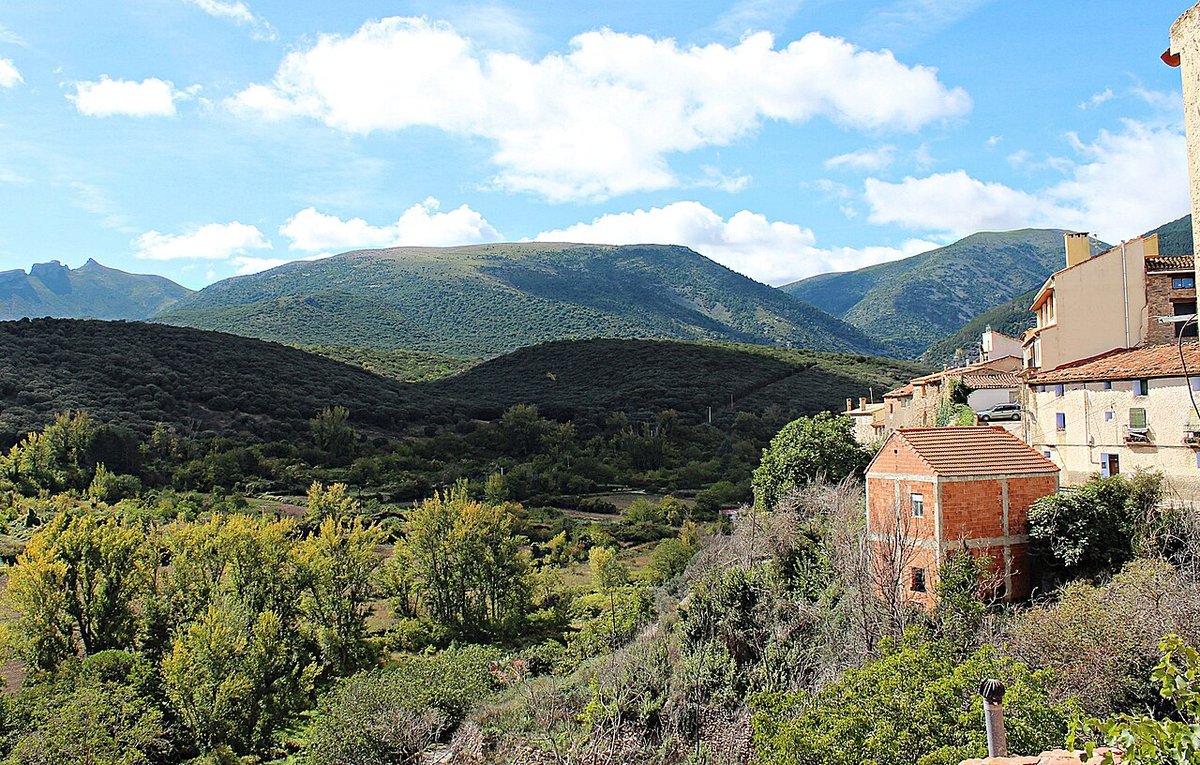
The last kilometre is the giveaway. The road corkscrews upward through holm-oak and rockrose until the stone walls of Añón de Moncayo appear suddenly, back-lit by the Moncayo massif itself. At 836 m the air is thinner and the mobile signal thinner still; both return in force once you step onto the roof terrace of the Castillo de Añón, the village’s only lodging and its accidental tourist office.
A village that never quite left the Middle Ages
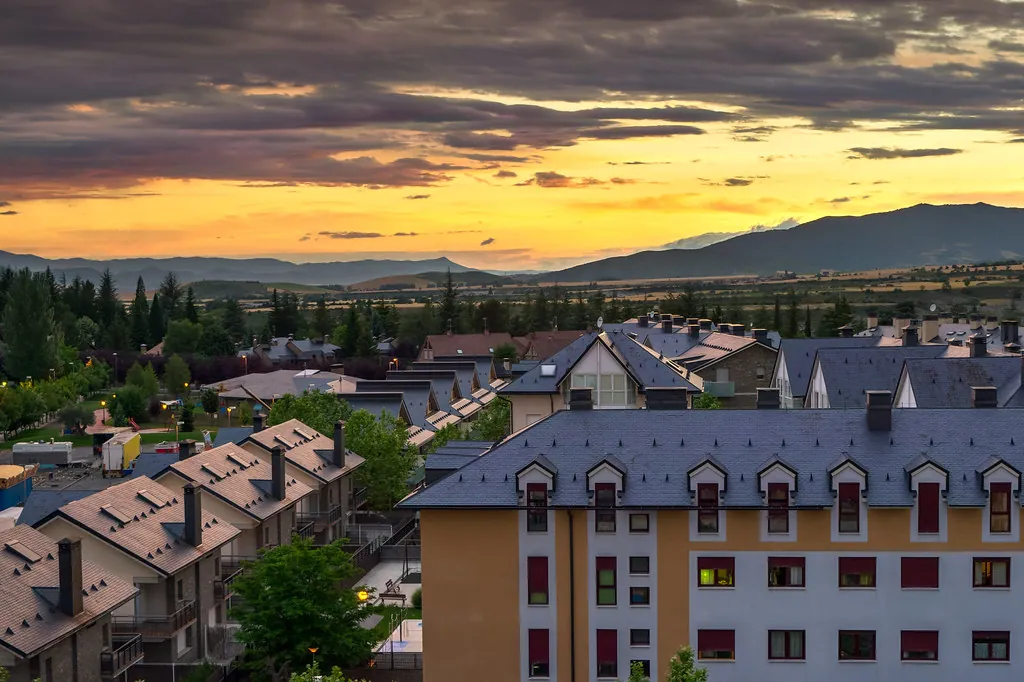
Añón’s footprint is so small that the castle bell can be heard in every corner within thirty seconds. Roughly 200 people live here year-round, enough to keep the parish church of San Blas open and the single bar stocked, but little more. Houses are built from the same honey-coloured limestone that pokes through the scrub on the ridge; roofs are slate, chimneys squat, balconies iron-wrought. Nothing is “restored” in the theme-park sense—walls lean, doorframes shrink in winter—yet the place feels cared for rather than frozen. Geraniums erupt from terracotta pots, woodpiles are stacked with Germanic precision, and someone has swept the previous night’s chestnut leaves into neat crescents outside every doorway.
The castle itself is a 13th-century keep that spent four centuries as a ruin before being patched up in the 1970s. Inside, the spiral staircase is so narrow that guests are handed a rope instead of a banister; pack flip-flops unless you fancy bruised shins on the 3 a.m. bathroom run. Bedrooms are beamed, whitewashed and deliberately free of televisions—management’s way of nudging visitors toward the ramparts, where sunset turns the cereal plains of Navarre violet and the only sound is the wind flipping the weathervane.
Walking straight into four seasons
Añón sits inside the Moncayo Natural Park buffer zone, which means hiking trails begin where the asphalt ends. The easiest route, way-marked with green and white daubs, follows the Añamaza stream for 45 minutes to the ruined ermita of La Virgen del Moncayo. Mid-autumn the path becomes a carpet of copper beech leaves; in April it smells of lemon balm and wild garlic. Fit walkers can continue another three hours to the 2,313 m summit, passing from Mediterranean scrub to Pyrenean-style firs and, finally, a wind-scoured ridge that delivers views across four provinces.
Spring and autumn are kindest. Summer temperatures can top 35 °C on the valley floor, while winter locks the upper trails under snow from December to March. When that happens locals switch to shorter loops: the 4 km “Ruta de las Neveras” passes two 16th-century ice houses once used to store snow for Tarazona’s fish market, now roofless but still three metres thick at the base.
One bar, one menu, no rushing
There is no restaurant row in Añón. Meals are taken in the castle dining room or at Bar La Plaza, open from 08:00 until the last customer leaves—usually around 21:30. The menu is chalked daily: migas de pastor (fried breadcrumbs with grapes and ham) for breakfast, torrecilla bean stew at lunch, chuletón de cordero for anyone who orders in advance. Vegetarians survive by requesting the stew sin chorizo; vegans should bring supplies. Wine comes from Borja, twenty minutes west, and is poured by the glass for €2.30. Locals drink it slightly chilled, even in January.
The nearest shop is 12 km away in Vera de Moncayo, so most guests stock up in Tarazona on the way through. Mercadona on the town’s ring road has the widest choice; the Saturday farmers’ market in Plaza de San Francisco sells local honey labelled by postcode and a sheep’s-milk cheese that keeps for a fortnight without refrigeration—useful if you are self-catering in one of the castle apartments.
When the village throws a party
San Blas on 3 February turns the silent streets into a drift of candle wax and aniseed. After Mass the priest blesses throat-shaped loaves; by dusk the bar is serving mistela (sweet muscat) thickened with almonds. Summer fiestas arrive mid-August, when emigrants return from Zaragoza and Barcelona and the population triples. A foam machine is hosed into the tiny plaza at midnight, followed by a lottery whose top prize is a live goat. The goat usually ends up back with its original owner, but not before everyone has danced until the castle bell rings 04:00.
September brings the romería to the mountain hermitage: a 7 a.m. departure, guitars at the first spring, and a communal paella eaten on the stone floor. Tourists are welcome but not announced; if you want to join, simply fall in behind the statue of the Virgin as it leaves the church.
Getting here (and away)
Zaragoza airport, served by Ryanair and easyJet from London-Stansted, Manchester and Bristol, is 90 minutes by hire car. Take the A-68 towards Logroño, exit at junction 21 for Tarazona, then follow the N-122 and local road TE-704. The final 8 km climb 400 m through beech forest; meeting a lorry requires both drivers to breathe in, but barriers are new and asphalt wide enough for a Fiesta, if not a Range Rover. In heavy fog the Guardia Civil sometimes close the road—check @DGAtraffic before setting out.
Public transport exists but tests patience: a weekday bus leaves Zaragoza’s Estación del Norte at 15:00, reaching the turn-off at the bottom of the hill at 17:25. From there it is a 25-minute uphill walk; the driver will point, shrug, and pull away. A taxi from the airport costs €140 if pre-booked through Radio Taxi Zaragoza, more if you wait until arrival.
Worth the effort?
Añón de Moncayo will never tick the “lively nightlife” box. Evenings finish early, mobile signal drifts, and the castle’s hot water is solar—mistimed showers run lukewarm. Yet for travellers who measure value in silence, star-saturated skies and stone walls that have outlasted kingdoms, the village delivers without trying. Book the tower room if you crave authenticity, the ground-floor annex if knees object, and bring slippers either way. After the first night you will start measuring other destinations against a new metric: does the bell still ring for a village of 200, and can you hear it from your pillow?