Full Article
about Aragues del Puerto
Ocultar artículo Leer artículo completo
A Bridge, a Bell Tower and Absolute Silence
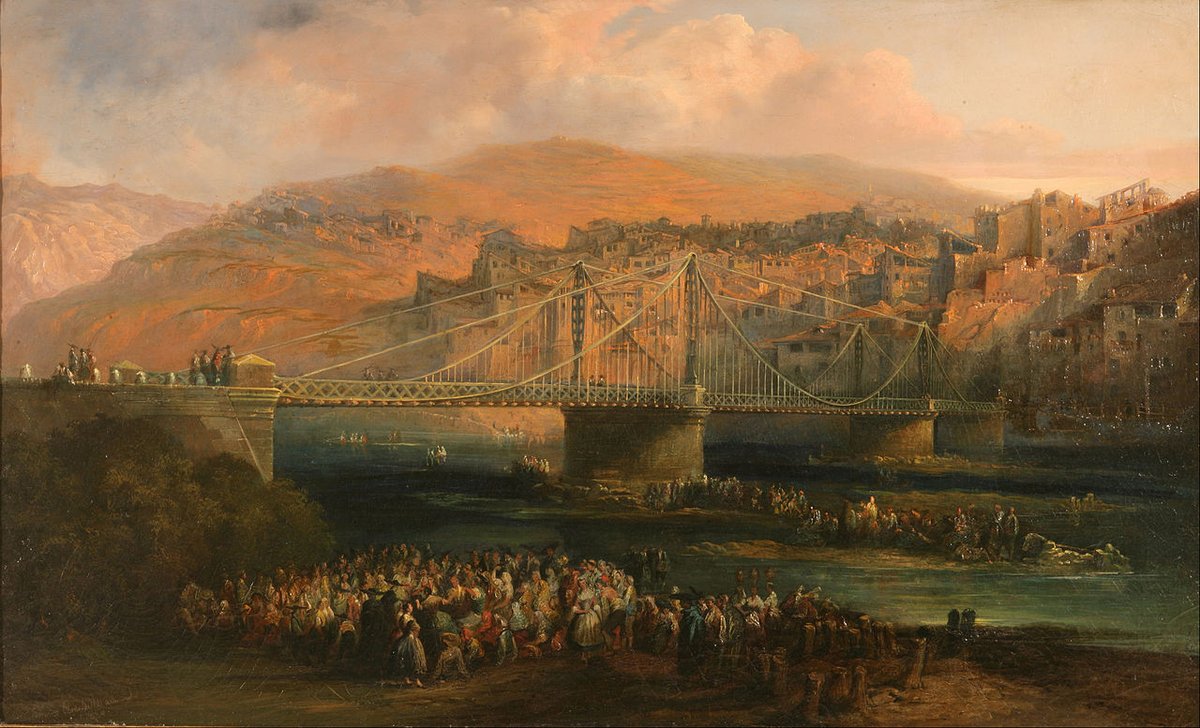
The first thing you notice is the lack of sound. Stand on the medieval bridge at dawn and the only noise comes from the Río Aragüés pushing melt-water down-valley towards the Atlantic. No cafés blasting reggaetón, no coach engines idling, not even a distant chainsaw—just water, wind and the odd clank of a cow bell. At 970 m above sea-level, Aragüés del Puerto is the last place in Spain where traffic truly thins out; beyond here the road climbs to the Somport pass and slips into France without bothering to collect a queue.
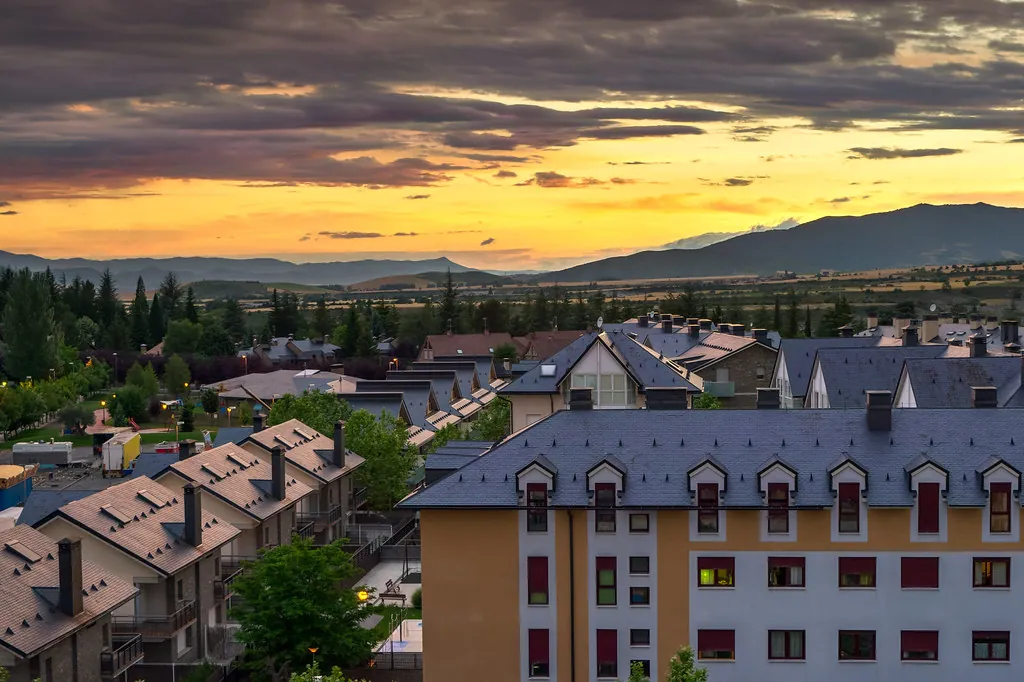
Most British travellers thunder past on the A-1601, eyes fixed on the ski resorts of Candanchú or Formigal 25 km further north. That single fact explains why the village still looks like a set from a 1950s travelogue: stone roofs weighted with slate tiles, wooden balconies painted ox-blood red, and a single tavern whose door hinges have been whining since 1893. The permanent head-count is 115, plus whichever grandson has come up from Zaragoza to help with the hay.
Stone, Snow and the Smell of Lamb
The architecture is stubbornly practical. Houses are built from local limestone so pale it almost glows at sunset, and every roof ridge carries a row of snow brackets—short stone arms added after the winter of 1933 collapsed half the village. Peer through the ground-floor windows and you’ll still see stone mangers built into the walls; families once slept above the animals for warmth. A few of the old communal bread ovens survive, padlocked now but easy to spot: half-mouths bulging from alley walls like stone igloos.
Walk uphill past the church of San Esteban and the lanes narrow until you’re brushing shoulders with hay bales. The church tower is 14th-century Romanesque, patched so often the mortar resembles dental work. Inside, fragments of fresco survive—faint ochre outlines of saints that once brightened winter services when the temperature indoors matched the outdoors. Services are monthly these days; the priest drives in from Jaca and brings the Host in a Tupperware box.
Boots, Bikes and the Occidental Pyrenees
The real map starts where the tarmac ends. Three signed footpaths fan out from the top of the village; the easiest follows the river to a string of abandoned mills in 45 minutes, the hardest zigzags 900 m up to the Collado de Lizarrieta for a skyline that includes the 2 000 m bulk of the Peña Foratata. Spring brings carpets of white narcissus; October turns the beech woods copper and the air sharp enough to make the lungs ache pleasantly. Mountain bikers use the forest track that contours to the neighbouring valley of Aísa—no technical stunts, just 18 km of empty gravel with vultures overhead.
Wildlife is shy but abundant. Dawn walkers often surprise groups of roe deer grazing old vegetable plots; their footprints pepper the muddy lane to the chapel. Wild-boar diggings appear overnight, and the local ranger swears the occasional brown bear shuffles through in late summer. Sightings are rarer than a British heatwave, but the information board outside the tavern lists emergency numbers just in case.
The Only Bar in the Village—Literally
Food options are limited to Bar Casa Manolo, open Thursday to Tuesday (it shuts at 16:00 on Mondays so Manolo can drive to the cash-and-carry in Jaca). There is no menu del día; instead Manolo chalks up what his wife feels like cooking. Expect chilindrón de ternera—beef simmered in mild red pepper until it collapses—or trout from the river, tasting like a kipper that’s taken up yoga: firmer, subtler, no smoke. The house red comes from Somontano, costs €2.50 a glass and performs the basic miracle of keeping you warm when the Atlantic weather rolls in.
Vegetarians get tortilla, salad and a sincere apology. Pudding is usually cuajada, a sheep’s-milk junket sprinkled with honey that arrives whether you ordered it or not. Pay in cash; the card machine is “roto” and has been since 2019.
When to Come, What to Pack
April to mid-June is prime hiking time: snow still caps the high ridges but the valley paths are clear and the gentians are out. September–October delivers gold-leaf beech woods and morning mists that photographers pay good money to chase elsewhere. July and August turn the village into a low-key family reunion—population triples, the bar runs tables on the terrace, and you’ll need to book one of the two casas rurales at least a month ahead. Expect 28 °C at midday, 12 °C after dark; bring a fleece even in August.
Winter is a different contract. The road stays open except during the heaviest snowstorms, but chains are compulsory from October to April. Cross-country skiers head for the 12 km loop that starts 3 km above the village; the Somport pass offers deeper circuits and a tiny café that opens only when the proprietor feels snow in the air. Overnight lows of –10 °C are routine, and the casas rurales switch on the heating reluctantly—pack a jumper and expect to pay €10 extra per day for firewood.
Euros, Signal and Other Minor Obstacles
There is no petrol station; the nearest pump is 18 km south in Canfranc, so top up in Jaca before you leave the N-330. Phone coverage flickers—Vodafone survives on the main street, EE gives up entirely. Download an offline map; Google’s blue dot has been known to place visitors in France while they’re still sipping cortado. The cash machine lives in Canfranc too, and the village grocer (open 09:00–13:00) prices everything for locals who still think in pesetas—carry notes.
Leaving Quietly
Stay a night and you’ll wake to church bells that ring the half-hour all through the darkness; stay a week and the silence starts to feel like a pressure system. Either way, when you drive back down the valley you’ll meet the evening migration of truckers heading for the tunnel, and the realisation hits that Aragüés del Puerto isn’t hidden—it’s simply never been loud enough to compete. Come for the walking, the lamb and the certainty that no one will ask you to buy a fridge magnet. Leave before the quiet becomes too persuasive; the next village with an open pharmacy is 45 minutes away, and that’s a long way when you finally need paracetamol.