Full Article
about Aranda de Moncayo
Ocultar artículo Leer artículo completo
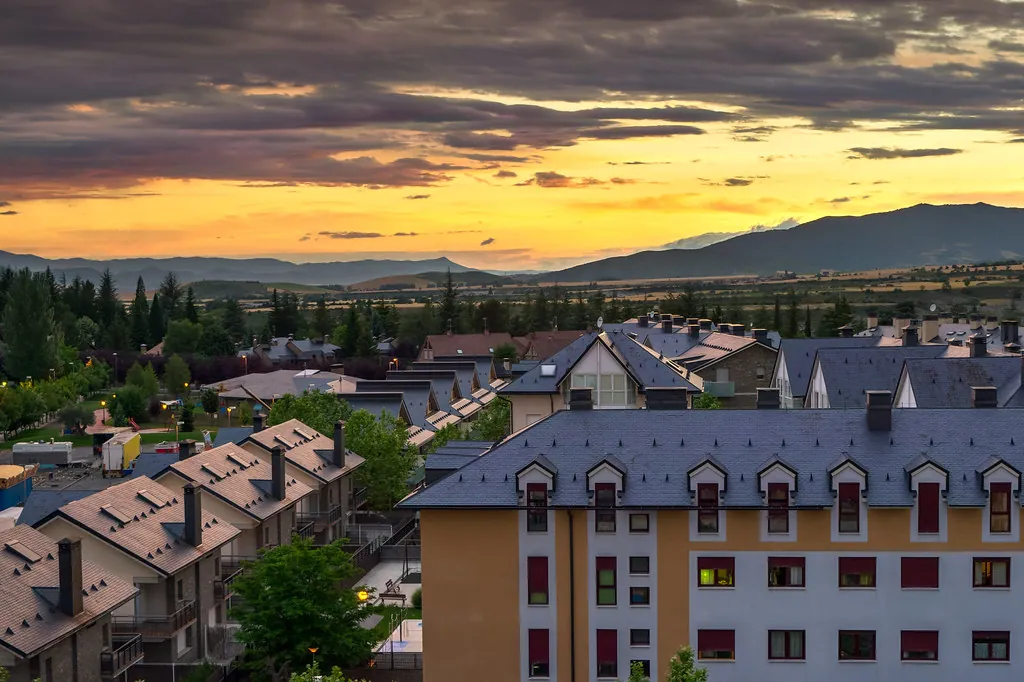
The road to Aranda de Moncayo climbs so steeply that second gear feels ambitious. Suddenly the tarmac narrows, stone walls press in, and the hire car's wing mirrors skim rosemary bushes that smell sharp in the afternoon heat. Then the engine noise stops echoing—you've crested the ridge—and there it is: a scatter of terracotta roofs balanced on a limestone spur, with the great grey wall of the Moncayo massif filling half the sky.
At 907 metres, Aranda isn't the highest village in Aragón, yet it feels loftier. The air thins, carrying the resinous scent of holm oaks instead of diesel. Swallows dive between houses built so close together that neighbours can pass a borrowed egg without leaving their kitchens. This is hill-country Spain at its most matter-of-fact: no souvenir stalls, no ticket kiosks, just 132 permanent residents who still close their shutters when the sun drops behind the ridge.
Stone, Wind and Silence
The village architecture won't make Instagram swoon, and that's the point. Walls are the colour of local rock—buff, grey, rust—held together with lime mortar that flakes like old pastry. Roofs carry the minimum legal pitch for snow load; drainpipes are painted the same green as the church bell-frame. Walk Calle de la Fuente at 7 a.m. and you'll pass three generations of the same family sweeping their thresholds with identical straw brooms. Nobody hurries; the only clock that matters is the church bell that rings the quarters day and night.
Pause in Plaza Mayor and you can see the whole social circuit. The priest unlocks the 16th-century church, its tower patched after lightning in 1934. Two farmers lean against the fountain discussing rainfall in millimetres, not inches. Outside the only shop, a Yorkshire terrier sleeps tied to a chair leg while its owner buys tinned tomatoes and gossip. The shop accepts cash only—euros, not card—and stocks tinned tuna alongside tractor bolts. If you need diesel, the nearest pump is 26 kilometres back down the mountain; fill up before you leave the A-23.
Walking into the Moncayo Shadow
Three way-marked paths leave the upper edge of the village, but the best plan is simply to follow the GR-90 long-distance footpath westwards. Within twenty minutes the last cabbage patch is below you, and you're alone on a stony track that switchbacks through kermes oaks. Look back: Aranda shrinks to a toy fort on its ridge, the Ebro valley a hazy plain stretching towards Soria. Ahead, the Moncayo's summit bristles with telecom masts and, in May, residual snow that feeds the village spring.
The going is moderate—300 metres of ascent over 5 kilometres—but the altitude magnifies sun and wind. On clear days you can pick out the Pyrenees 150 kilometres north; more often the horizon dissolves into a cobalt haze that painters call "air blue". Take water: there are no cafés, no fountains, and phone signal vanishes as soon as you drop off the watershed. A paper map costs €8 from the tourist office in Tarazona, thirty minutes away, and is worth every cent when cloud drifts in faster than forecast.
Autumn transforms the slopes into a slow-motion fire. Oak leaves turn copper, then rust, then the colour of burnt toffee. Wild boar rut in the beech litter; their hoof prints look like small cloven hearts pressed into the mud. Mushroom hunters appear with wicker baskets and the focused expression of people who'd rather not share grid references. Stick to the path and you're safe; stray onto private land and you may meet a farmer who explains property rights with gestures that need no translation.
What You’ll Eat (and When You Won’t)
Food here is calendar-led. In late April the first cherries arrive from irrigated orchards in the valley—small, sharp, irresistible. By June the menu switches to lamb: ternasco de Aragón, milk-fed and roasted whole in wood-fired ovens whose chimneys smoke from dawn mass until siesta. August brings tomatoes the size of cricket balls, their skins splitting in the heat, served with nothing more than local olive oil and a pinch of salt strong enough to make a British palate blink.
Outside these windows, choices shrink. The village bar opens Thursday to Sunday only, its terrace three plastic tables on a patch of concrete that catches the afternoon sun. Order a caña and you'll get a free tapa—perhaps migas, fried breadcrumbs laced with chorizo that sits in the stomach like ballast. Try the house red from Campo de Borja: Garnacha grapes grown at 600 metres, bottled young, tasting of blackberries and the garrigue herbs that sheep graze on. A bottle costs €12 to take away, €3 by the glass.
Monday to Wednesday you self-cater or go hungry. The tiny supermarket stocks UHT milk, tinned sardines and locally made chistorra sausages that keep without a fridge. Most visitors book half-board at Casa Maidevera, the only guesthouse with an English-speaking owner. Breakfast arrives on a tray: bread toasted over gas flame, rubbed with tomato and dribbled with oil that tastes of green peppers and rain. Guests who arrive expecting bacon leave converted, if slightly wistful.
The Seasonal Exodus
Winter is serious at this altitude. The first frost usually lands mid-October; by January nighttime temperatures drop to –8 °C and the single access road ices over. Residents scatter—some to relatives in Zaragoza, others to coastal flats bought with decades of lamb sales. The church bell still marks the hours, but the only footprints in the snow belong to the priest and a stubborn English pensioner who rents the old schoolhouse year-round and claims the silence is "better than therapy".
Come Easter the exodus reverses. Families return to whitewash façades, replace roof tiles and argue about whose turn it is to prune the vine that drapes the communal pergola. If you're here during Semana Santa, you'll witness a procession that consists of twelve men, two women and a statue of the Virgin lashed to a wooden frame. They carry her down the main street at dusk, singing the Salve Regina in dialect so thick even Spanish visitors look puzzled. Afterwards everyone drinks sweet muscatel from mismatched glasses and eats sponge cake that tastes of lemon zest and wood smoke.
Leaving the Ridge
Departure is best done early, before the sun heats the tarmac and makes the descent smell of hot pine and clutch plates. In the mirror Aranda shrinks to a single line of stone against limestone, the Moncayo still looming like a misplaced alp. Phone signal returns at the first bend; emails download, the world reasserts itself. Down in the valley the temperature rises ten degrees, petrol stations appear, and you realise how quickly quiet can be replaced by ordinary noise.
Whether the village will still be there in twenty years is an open question. Young people leave for university and don't come back; the school closed in 2018 with only four pupils. Yet someone keeps planting geraniums in olive-oil tins, and the church roof was retiled last autumn with money raised by selling raffle tickets and a herd of goats. Aranda doesn't need visitors, but if you do make the climb, bring cash, decent shoes and an appetite for lamb. The Moncayo will provide the rest—wind, shadow and a silence that lingers longer than the road back down.